These photos are courtesy of John Bradburn, West Midlands – of his father, Chindit John Henry Wallis Bradburn of the 1st Battalion, King’s own (Liverpool) Regiment
John Henry Wallis Bradburn in India with other members of his unit, prior to boarding gliders. On the reverse, he has identified the other men in the photo
Bradburn in Durban
Yank Magazine, 14 May 1944, carries a photo of Bradburn within
Bradburn (indicated by the cross mark) watches another Chindit chug down a drink before Operation “Thursday”
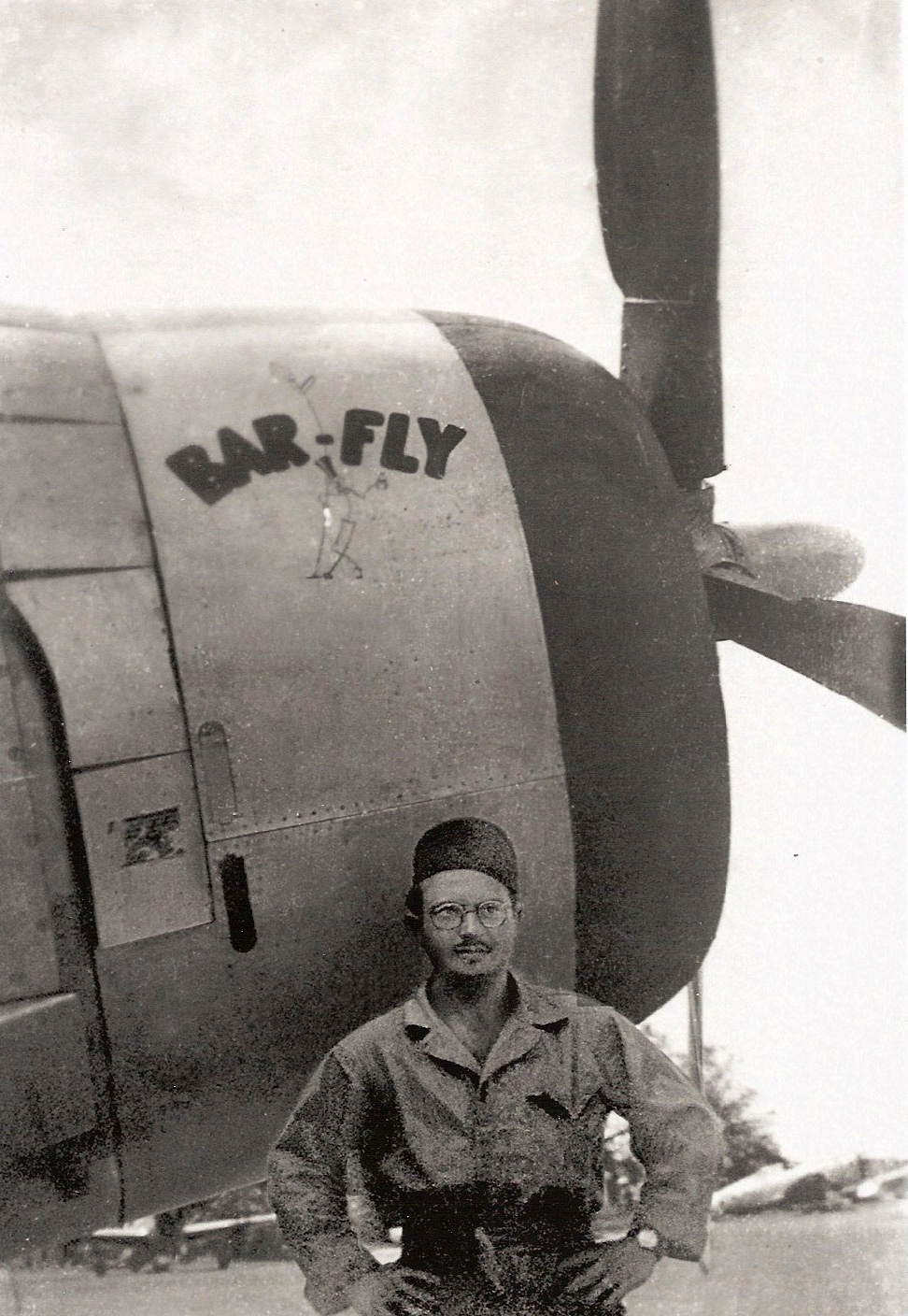
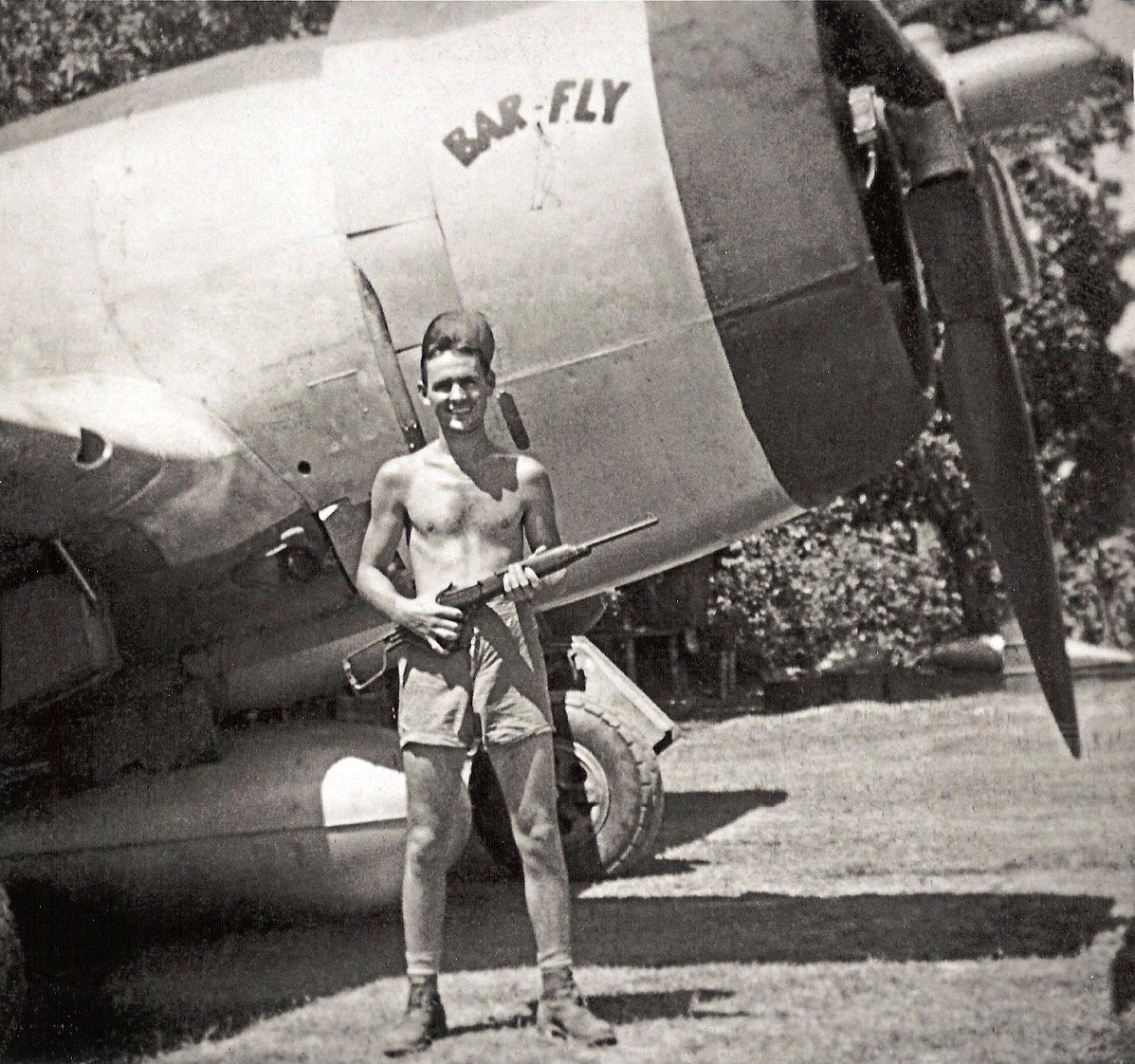
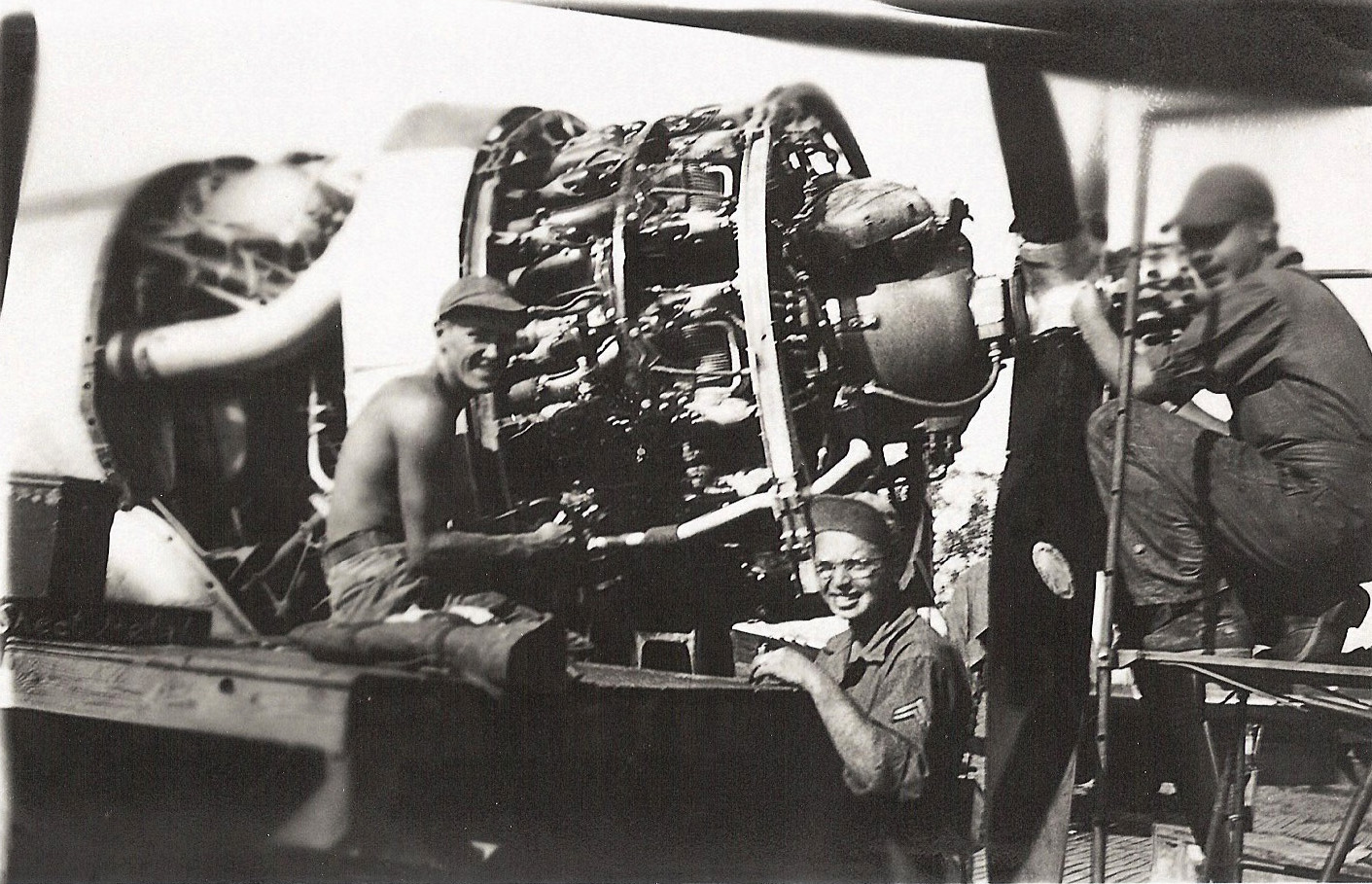
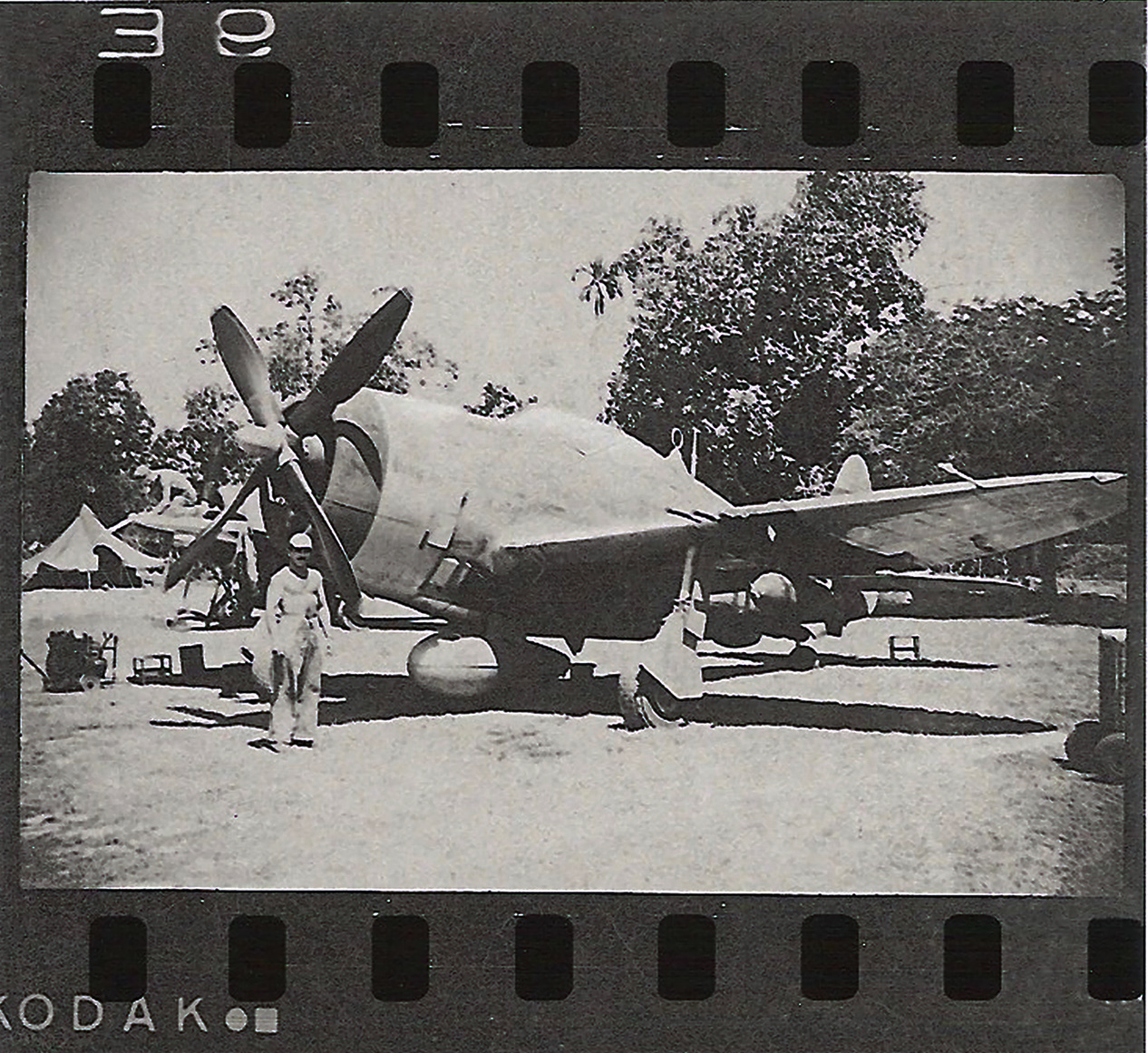
Thanks to Glenn for contributing these photographs from his father’s collection. They deal with the 6th Fighter Squadron, 1st Air Commando Group. If anyone can identify the other men in these photographs, do let me know.
(LEFT) Norman Goldsher in late-1944. An aircraft mechanic, Goldsher was stationed in Asansol and Harpers Ferry, India (RIGHT) Unidentified member of the 6th Squadron poses in front of “Bar-Fly” with an M1 carbine.
(LEFT) Unidentified ground crewmen of the squadron gather in front of the unit’s latest mount, a new P-51D Mustang, circa 1945. (RIGHT) Mechanics refit a P-47 Thunderbolt with a new engine.
(LEFT) Norman Goldsher with “Bar-Fly,” simmering in the heat.(RIGHT) A P-47 undergoes routine maintenance, either at at Asansol Airfield or at Cox’s Bazar, India.
Captain Tommy C. Roberts of 5 Column as he appeared in 1943, in the incarnation of a Lieutenant (note the two pips on his epaulets). Roberts, a member of the 13th King’s (Liverpool) Regiment, commanded 5 Column’s Support Group. Captured in Burma as the first expedition wound down, Roberts spent the rest of the war at the notorious Changi POW camp in Singapore, having been designated as a “special case” by the Japanese Secret Police. Happily, Roberts survived captivity and returned to Liverpool in October 1945, despite difficult conditions at Changi and despite being emaciated by Beriberi. (Photo courtesy of Robert’s daughter, Patricia Ireland)
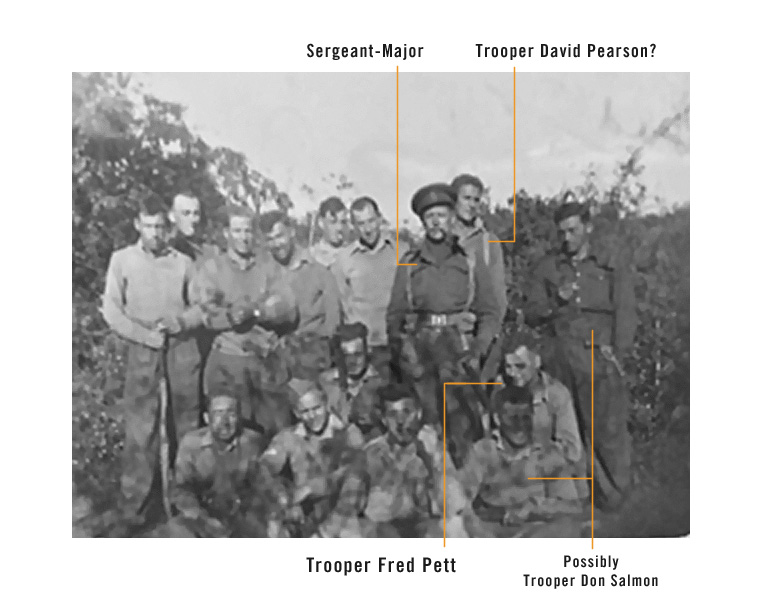
Members of 7th Troop, ‘A’ Squadron, 45th Recce Regiment. Trooper Fred S. Pett is the second man from the right, kneeling. Trooper Prett sadly perished at the tender age of 23 under known circumstances. (Photo courtesy of Pett’s daughter, Jane Barlow)
The family of David Pearson (see below photograph) believe their father is the tall figure, standing second from right.
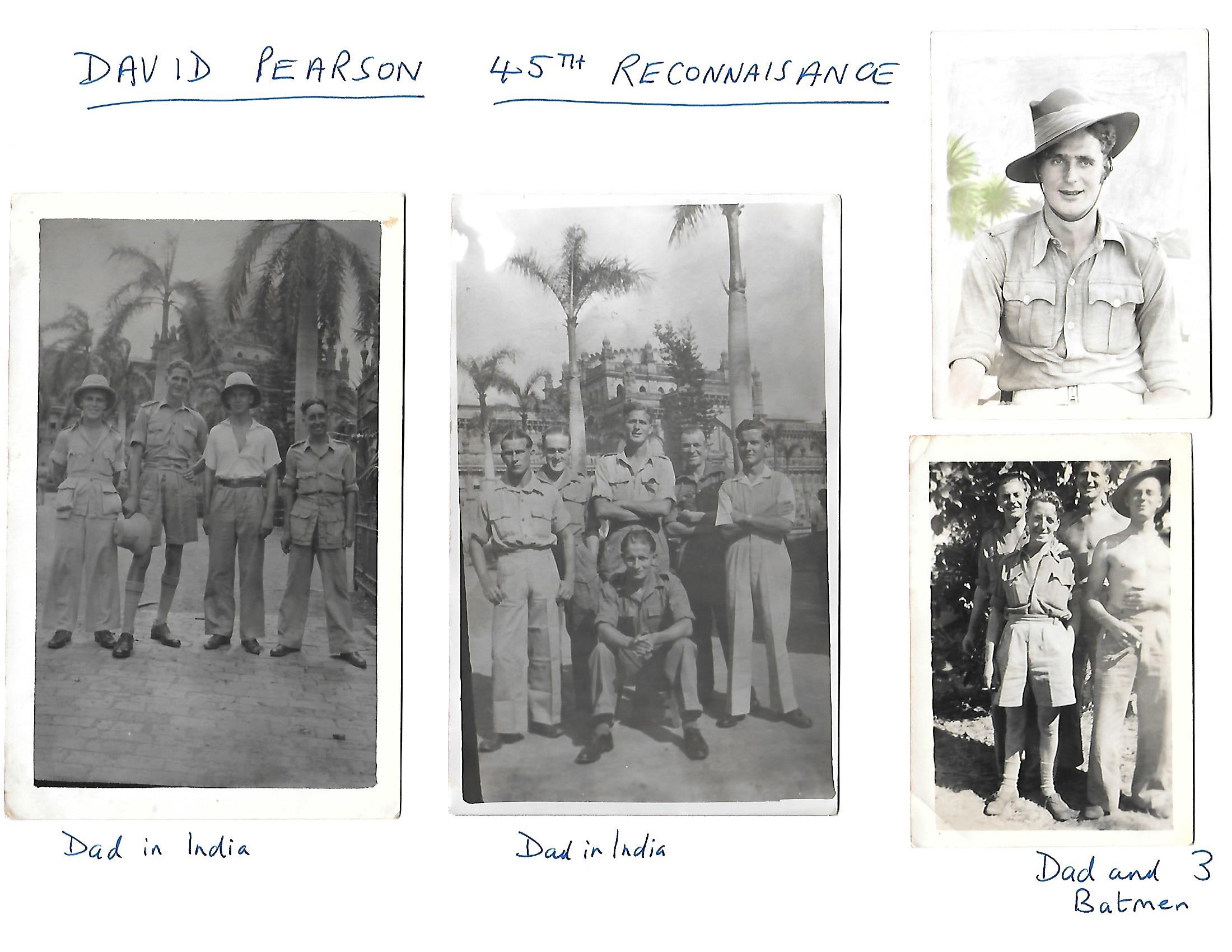
Trooper David Pearson of the 45th Recce. A native of Grimsby, Lincolnshire, Pearson was employed as an office boy before joining the army in 1941. He was posted to the 45th Recce in August 1942 but was transferred to the South Staffordshire Regiment after the conclusion of Operation “Thursday.” He survived the war, was demobbed in 1947 and later set up his own business at the Grimsby Fish Docks.
Although he preferred not to talk about the war, his most persistent recollection was of a night in the jungle when a group of Japanese soldiers walked over him and other members of his troop, oblivious to the fact that they were treading over enemy soldiers.
(Photo courtesy of Pearson’s children, David Pearson II and Jill Finn)
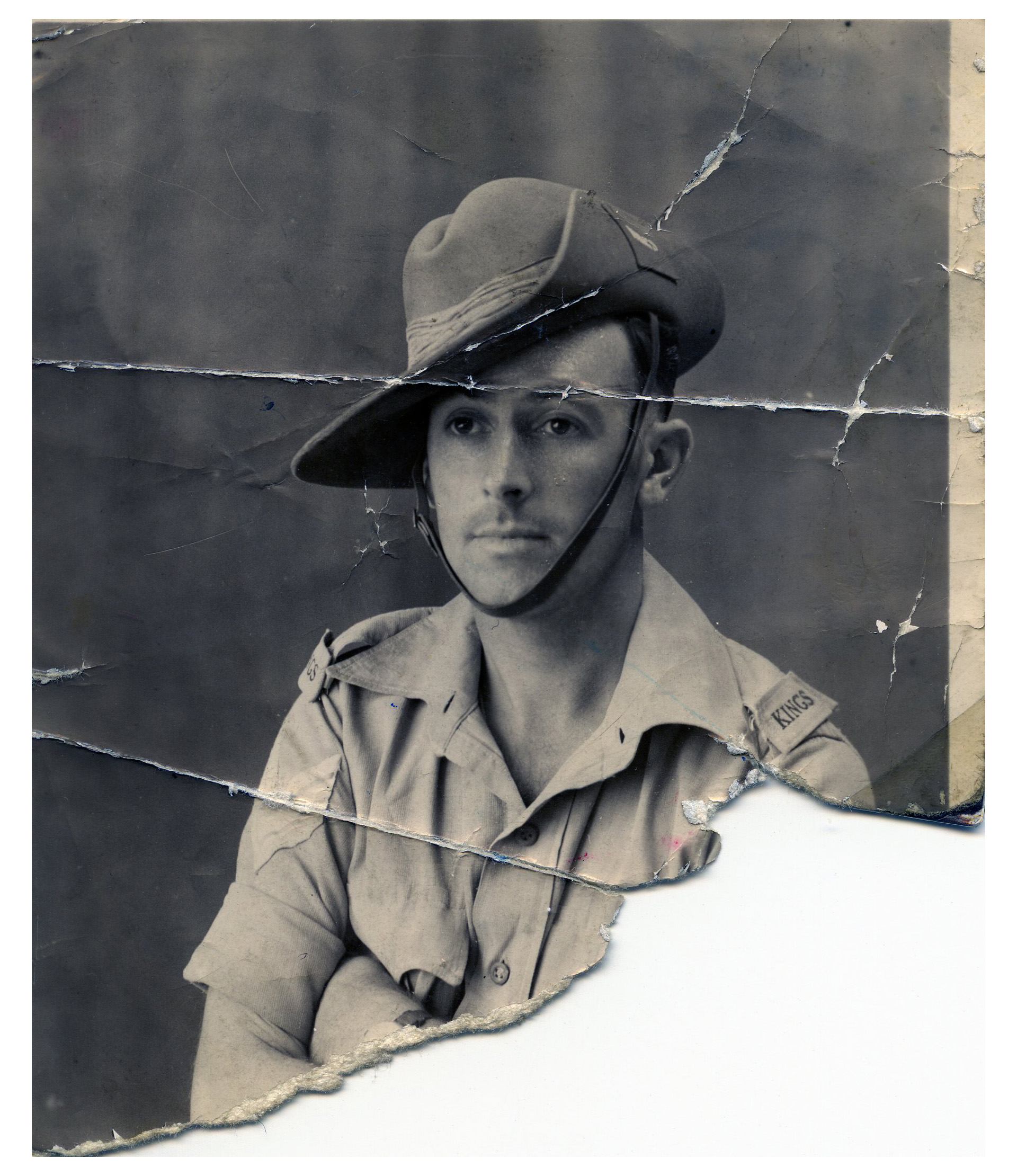
Sergeant Tom Stephens as he appeared at the end of 1943. A member of Lt-Colonel Walter Scott’s 81 Column (1st King’s (Liverpool) Regiment), Stephens survived the campaign. After the war, he returned to Liverpool where he lived for the rest of his life.
Stephens was in the first wave of gliders which landed at “Broadway” on the night of March 5, 1944. In another glider being towed by a C-47 Dakota was his best friend and fellow soldier, Jack Shaw. They had enlisted on the same day at Formby Barracks, just north of Liverpool and had gone through Chindit training together. On the flight in, however, Shaw’s glider was prematurely cut loose from its tug. Stephens watched helplessly as the glider drifted helplessly across the Burmese jungle, never to be seen again. In all, 12 gliders were lost in this way during the flight in, with nine crashing behind enemy lines. Years after the war, Stephens sought out Shaw’s widow and was able to tell her how her husband had perished.
According to Tom’s son, Robert Stephens, the Liverpool-based the survivors of 81 and 82 column held a reunion in 1974 which Walter Scott was able to attend. “It was a wonderful event, full of reminiscing and the telling stories…by the end of the evening, he felt like they had all ‘re-fought’ all their battles.”
The Chindits, the Marauders, and the Air Commandos in 1944 – Orders of Battle and Resources –
3rd Indian Infantry Division
The Chindits were officially known as the “Special Force” or the 3rd Indian Infantry Division, but one should note that title “3rd Indian division” was purely a deceptive title to fool the Japanese. The bulk of the division contained Britons, West Africans, Gurkhas, Burmese and a few Indians in the engineering and service companies. At the division’s core were the units of a disbanded British unit, the British 70th Infantry Division (see below for additional details).
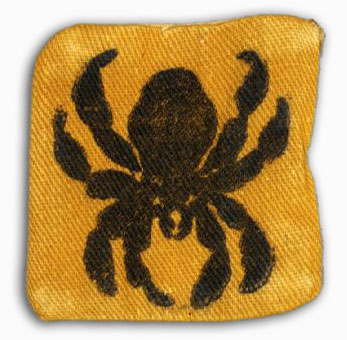
Virtually a double-strength division, the 3rd Indian had an unprecedented six brigades under its control– each referred to by a nickname. Each brigade had its own headquarters situated near an airfield with a headquarters column in the field.
Below is the divisional order of battle:
Commanding Officer (CO)
(1) Major-Gen. Charles Orde Wingate (KIFA 24 March) (2) Major-Gen. Walter D.A. Lentaigne (From 30 March)
Deputy CO (1) Maj-Gen. G.W. Symes (Resigned, early April) (2) Brigadier Derek Tulloch(Replaced Symes but being unpopular with both Symes and Lentaigne, was bypassed in the chain of command. Lentaigne instead preferred Col. Alexander)
Brigadier, General Staff CO (Rear HQ) (1) Brigadier Derek Tulloch (2) Col. Henry T. Alexander
GSO 1 (Ground), Chief Operations Officer (1) Lt-Col. Francis Piggott (Sacked) (2) Lt-Col. Henry T. Alexander GSO 2 (Ground), Assistant Operations Officer — Major David Tyacke
GSO 1 (Air), Chief Operations Officer? GSO 2 (Air), Assistant Operations Officer —Major Frank Barns GSO 3 (Air), Liaison Officer to Air Commandos — Capt. Paul Griffin (Jan 1944 to Mar 1945)
Chief Supply Officer — Brigadier Neville Marks Signals Chief — Colonel Claude Fairweather
Headquarters:
Rear HQ — Gwalior, India Main HQ — First at Imphal, then at Sylhet, Assam Launching HQ — Lalaghat Tactical-Forward HQ — Shaduzup, Burma
The 70th British Division: Of the four primary reasons for the regular army’s hatred of the Chindits, the 70th Division constituted possibly the third. A veteran of the 1942 fighting for Tobruk in North Africa, the division had begun the war as the 7th Division under Maj-Gen. Richard O’ Conner. Initially held in British Palestine, the division was renumbered as the 6th Division on 3 November 1939 while in Egypt, and although its members expected to see action, none came and the division returned to Palestine. This nonchalant state of affairs continued until June 1940 when the unit returned to Egypt only to be disbanded and its men sent to other units as replacements.
Reconstituted the next year, on 17 February 1941, the division seemed set to repeat the old pattern of rear-line deployment, but then on October 10, found itself re-designated the 70th Division and transferred to the legendary sea fortress of Tobruk between 13 and 20 October — primarily to relieve the heroic 9th Australian Division which had defended the seaport all that year. In November, the division fought its way out of the fortress and linked up with the rest of the British army, an act that officially broke the Axis siege of Tobruk. But by this act, the unit also passed from being a front-line unit and into a reserve division. In March 1942, it was transferred to far-off India to meet the Japanese threat.
Initially bivouacked at Bangalore in the south for a sustained period of rest, the division became the pride of the armies in India. It was the only fully-trained, completely-equipped British division in the theatre, and when orders came that it was to be broken up to augment the Chindit Force, it generated considerable resentment at General HQ India. It did not help that few of the senior army types trusted Wingate or his eccentric nature.
The other reasons for army anger included what was perceived as a Chindit “poaching” of good men and material for their unconventional, “highly-dubious” endeavor; a general suspicion of all special operations by the straight-laced Indian-British Army leadership (the list of detractors even included the popular General William “Uncle Bill” Slim), and resentment over Wingate’s favor with Churchill, Field Marshal Wavell and other leaders in England — all of which amounted to a fear that the Chindits would overshadow regular army operations against the Japanese in Burma.
It must be mentioned that Wingate also held a bias against the conservative Indian-British Army and Indian troops, whom he termed “second rate” — an unfair estimation considering the outstanding campaign conducted by these men in the recapture of Burma and elsewhere. Arguably, this was another source of friction for William Slim, the commander of the British 14th Indian Army, who took grave exception to Wingate’s opinions about the army.
Meantime, the 70th Division began to reorganize for the role of “long range penetration” on 6 September 1943, relinquishing its units to the 3rd Indian Division or “Special Force” (the Chindits) on October 25th. The divisional HQ ceased to function on that day and the division itself ceased to exist on November 24th.
Chindit Columns
As I go through more of my sources, the order of battle below with its list of commanders may one day be complete. In the meantime, if you have any information that could be of importance, kindly send me a message. Updated – 6 July 2016. (All dates indicated below are by day/month)
3rd West African “THUNDER” Brigade(Brig. A.H. Gillmore (sacked 18/4), Brig. Abdy H.G. Ricketts) 6th Bn, Nigeria Regiment (Lt-Col P.G. Day (sacked 17/3 after battalion suffered an ambush), replaced by Lt-Col. Gordon Upjohn) —- 66 Column (Battalion CO) —- 39 Column 7th Bn, Nigeria Regiment (Lt-Col. Charles Vaughn) —- 29 Column (Maj. Charles Carfrae) —- 35 Column (Battalion CO) 12th Bn, Nigeria Regiment (Lt-Col. Pat Hughes) —- 12 Column —- 43 Column HQ, 7th West African Field Coy – 10 Column 3rd West African Field Ambulance
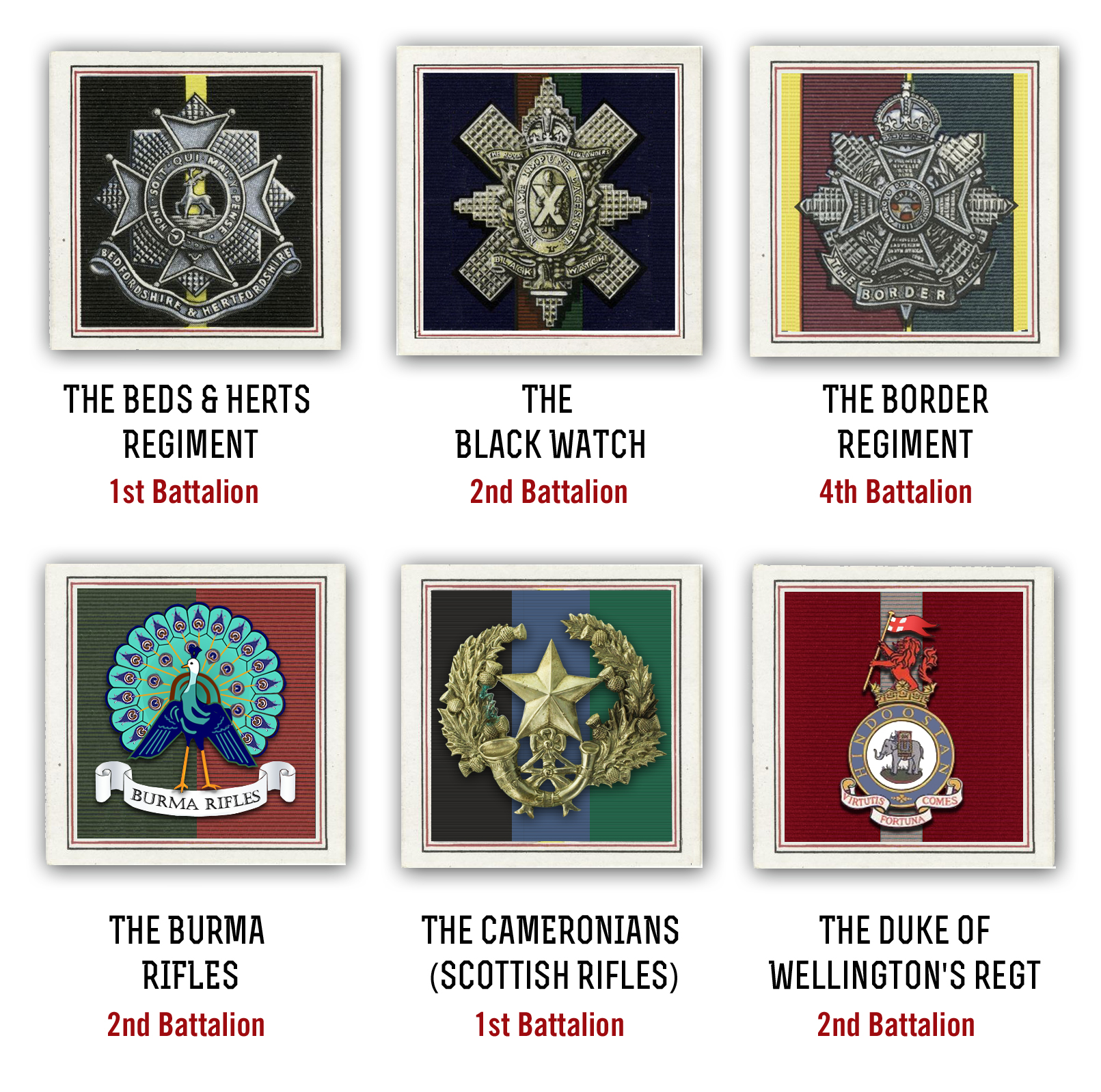
14th “JAVELIN” Brigade(Brigadier Thomas ‘Ian’ Brodie) HQ Column – 59 Column 2nd Bn, Black Watch (Lt-Col George Green) —- 42 Column (Maj. D.M.C. Rose) —- 73 Column (Battalion CO) 1st Bn, Bedfordshire & Hertfordshire Regt (Lt-Col Pat Eason (ill in May of scrub typhus, died in hospital), repl by Lt-Col. T.J. Barrow) —- 16 Column (Battalion CO) —- 61 Column 2nd Bn, Yorkshire & Lancaster Regt (Lt-Col P. Graves-Morris, MC) —- 65 Column (Maj. B.S. Downward) —- 84 Column (Battalion CO) 7th Bn, Leicester Regiment (Lt-Col. F.R. Wilford) —- 47 Column (Battalion CO) —- 74 Column (Maj. J. Geoffrey Lockett) 54th Field Coy, RE Medical Detachment
16th “ENTERPRISE” Brigade (Brigadier Bernard E. Fergusson, DSO) HQ Column – 99 Column (Brigade Major: Maj. J.H. Marriot, MC) Rear HQ (Lalaghat, India) – 2IC: Lt-Col. F.O. ‘Katie’ Cave 1st Bn, The Queen’s Royal (West Surrey) Regiment (Lt-Col J.F. Metcalf (evac in April), repl by T.V. Close) —- 21 Column (Metcalf, Maj. Clowes) —- 22 Column (Maj. T.V. Close → repl by Maj. G.F. Ottaway) 2nd Bn, Leicester Regiment (Lt-Col. Claude ‘Jack’ Wilkinson, DSO (WIA 26/3), Lt-Col H.N. Daniels) —- 17 Column (Battalion CO, Maj. Dalgliesh, MC) —- 71 Column (Maj. H.N. ‘Dafty’ Daniels) 51st/69th Royal Artillery (Lt-Col. R.C. Sutcliffe) (Composed of RA personnel) —- 51 Column (Maj. A.C.S. Dickie) —- 69 Columns (Battalion CO) 45th Recce Regt (Made from Recce units) (Lt-Col Cumberledge (evac 30/3), Lt-Col. G.H. Astell) —- 45 Column (Maj. Ron Adams KIA 26/3, Battalion CO) —- 54 Column (Maj. Varcoe (evac sick), Maj. E. Hennings (KIA)) 2d Company, RE Medical Detachment
23rd Long-Range Penetration Brigade Brigadier(Brigadier Lance ECM Perowne) (Never joined the Chindits in the field. Was instead used to quell Japanese attackers in the Kohima area.) HQ Column – 32 Column 1st Bn, Essex Regiment —- 44 Column —- 56 Column 2nd Bn, Duke of Wellington’s Regiment (Lt-Col. E.W. Stevens, MBE) → Bn fought in the Naga Hills —- 33 Column (Maj. S.R. Hoyle, MC) —- 76 Column (Battalion CO, Maj. A.D. ‘Tony’ Firth, DSO) → Known as “The Smugger’s Column” 4th Bn, Border Regiment —- 34 Column —- 55 Column 12th Field Company, RE Medical Detachment
77th “EMPHASIS” Brigade (Brigadier J Michael Calvert) HQ Column – 25 Column (Brigade Major: Maj. Francis Stuart) Rear HQ (LZ Broadway) – Bde 2IC: Col. Claude Rome, DSO) Mixed Field Coy, RE/Royal Indian Engineers
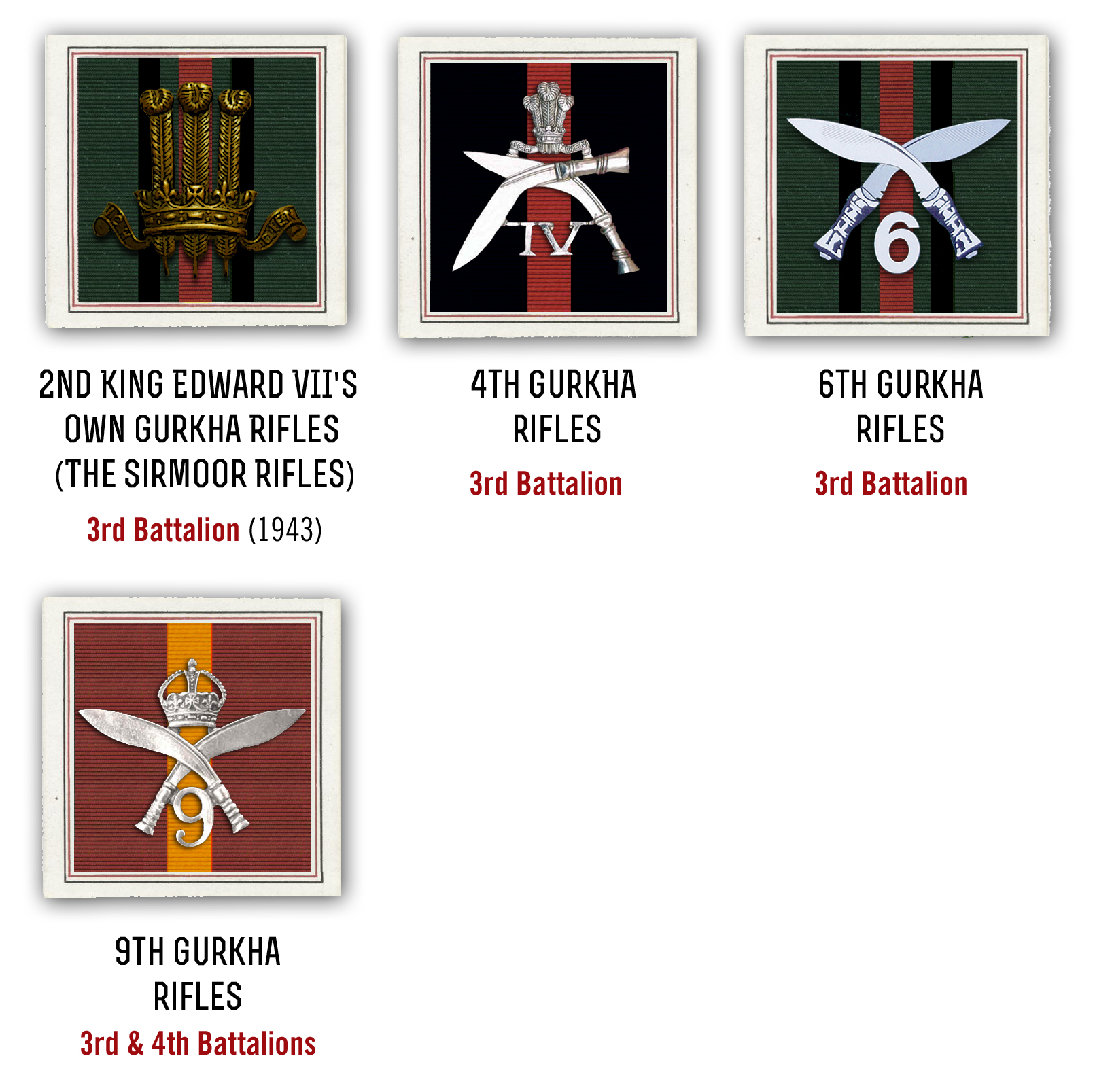
3rd Bn, 6th Gurkha Rifles (Lt-Col. H.A. ‘Boom’ Skone (evac), Lt-Col. Freddie Shaw) —- 36 Column (Initially both columns commanded by Skone) —- 63 Column (Maj. Freddie Shaw) 1st Bn, The King’s (Liverpool) Regt (Lt-Col W.P. ‘Scottie’ Scott) (To 111 Bde in May) —- 81 Column (Battalion CO) → Floater Column at ‘Broadway’ —- 82 Column (Maj. Gaitley) 1st Bn, Lancashire Fusiliers (Lt-Col. Hugh N.F. Christie) —- 20 Column (Maj. Shuttleworth, Maj. David Monteith, KIA 8/6) —- 50 Column (Battalion CO) 1st Bn, South Staffords Regiment (Lt-Col. G.P. Richards, MC (WIA 22/3, died in May), Lt-Col. Ron Degg) —- 38 Column (Battalion CO, Maj. W.A. Cole, MC) —- 80 Column (Maj. Degg) → Both columns combined in mid-May and evac in July 3rd Bn, 9th Gurkha Rifles (Lt-Col. George Noel → repl. by Lt-Col. Alec Harper) (To 111 Bde in May) —- 57 Column (Battalion CO) —- 93 Column (Maj. R.E.G. ‘Reggie’ Twelvetrees) 142nd Commando Coy, Hong Kong Volunteers Medical and Veterinary Detachments
111th “PROFOUND” Brigade (Brigadier William DA ‘Joe’ Lentaigne – after he was promoted up in March, the brigade was given to Brigadier J.R. ‘Jumbo’ Morris, who was unable to relinquish command of Morrisforce. Therefore, the brigade was commanded in the field by Major John Masters, appointed temporary brigadier, while Morris was its commander on paper) HQ Column – 48 Column (Brigade Major: Maj. John Masters → repl by Maj. ‘Baron’ Henfry) Rear HQ: 1st Bn, The Cameronians (Scottish Rifles) (Lt-Col. William M. ‘Bill’ Henning – to 15 Sept 144) —- 26 Column (Temp Maj. B.J. ‘Tim/Breezy’ Brennan) —- 90 Column (Battalion Commander) 2nd Bn, The King’s own Royal Regiment (Lt-Col. A.W. ‘Tommy’ Thompson) —- 41 Column (Battalion Commander) —- 46 Column (Maj. Heap) 3rd Bn, 4th Gurkha Rifles (Lt-Col. Ian Monteith) (Adjutant – Major Bill Towill) —- 30 Column (Maj. Maurice Deane) —- 40 Column → Moved to Morris Force (See below) Mixed Field Coy, RE/Royal Indian Engineers Medical and Veterinary Detachments
Morris Force (Morrisforce)(Brigadier J.R. ‘Jumbo’ Morris) 4th Bn, 9th Gurkha Rifles (Maj. Morris (transferred), Maj. Russell) —- 49 Column (Battalion CO) —- 94 Column (Maj. Peter G. Cane) → Garrison at ‘Broadway’ 3rd Bn, 4th Gurkha Rifles —- 40 Column (Lt-Col. Ian Monteith, KIA) † This force harassed Japanese forces in the mountain ridges skirting the Bhamo-Myitkyina Road.
DAH Force (Lt-Col. D.C. ‘Fish’ Herring) This force consisted on 74 men, including Herring, his second-in-command, Captain Lazum Tang and ten Kachins of the 2nd Burma Rifles, Major Kennedy of the Poona Horse, Captain Nimmo of the Argyll & Sutherland Highlanders, a 19-strong detachment from the Royal Corps of Signals under Captain Treckman, nine Chinese of the Hong Kong volunteers, a 27-strong defense platoon from the South Stafford Regiment under Captain Railton, a demolitions expert, Sgt Cockling, an American liaison officer, Captain Sherman P. Joost and lastly, Private Williams, a medic who looked after the sick and the wounded.
BLADETL (Blain’s Detachment) Major ‘Bob’ Blain Volunteer force of six officers and 60 men (primarily British and West Africans) used for diversion, sabotage and reconnaissance. The group landed in special gliders which were capable of being hoisted back into the air by C-47 Dakotas equipped with snatching gear. With its West Africans dressed in American uniforms (ostensibly to fool the Japanese), the unit conducted reconnaissance in the Indaw area, before and after Fergusson’s 16th Brigade arrived.
Gliderborne Commando Engineers
Other Units
Royal Artillery Supporting non-mobile units employed in defending the Chindit Jungle fortresses: R, S and U Troops, 160th Field Regiment, Royal Artillery (All with 25-Pdr cannons) W,X,Y, and Z Troops, 69th Light Anti Aircraft Regiment(40mm & 12.5mm Hispano cannons)
Divisional Troops
2d Bn, Burma Rifles – Lt-Col. P.C. Buchanan (One section assigned per column except for the 3rd West African Brigade) 219th Field Park Company, Royal Engineers Detachment 2nd Burma Rifles 145th Brigade Company, RASC 61st Air Supply Company, RASC 2nd Indian Air Supply Company, RIASC
The Regiments
Source: Almost all of these badges were adapted from vintage Gallagher’s Cigarette cards, printed in the early part of the 20th Century. Digital versions can be found at the New York Public Library’s Online Collection.
Supporting Units
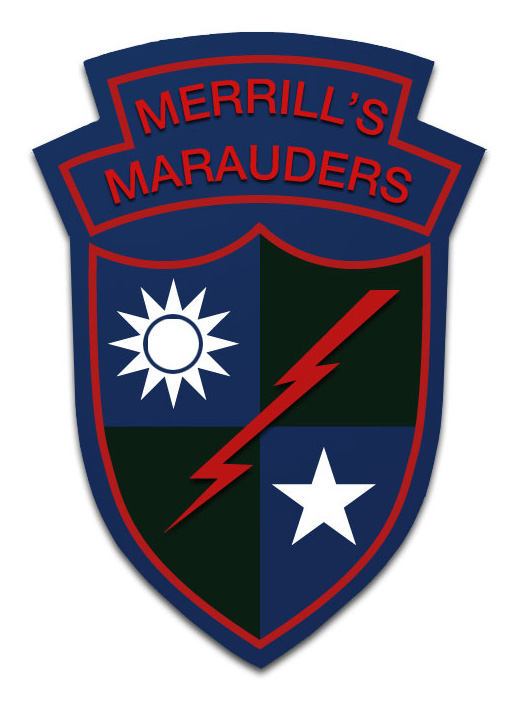
5307th Composite Unit (Provisional), US Army (“Merrill’s Marauders”)
CO — (1) Brigadier-General Frank D. Merrill – 1 Jan to 19 May 1944 (heart attack) ———(2) Col. John E. McCammon – 19-22 May (sacked) ———(3) Brig-Gen. Haydon L. Boatner – 22 May to June 1944 (relieved) ———(4) Col. Charles “Chuck” Hunter – June to 3 Aug 1944 (sent home) Deputy CO— (1) Col. Charles N. Hunter —————–(2) Col. John E. McCammon
To offset its unglamorous army designation, the unit was unofficially known as Merrill’s Marauders, and joined General Stilwell’s Northern Command after training with Wingate as Chindits from late 1943 to early 1944. It was called “Galahad” by Wingate and the British. The unit possessed a rich diversity of Americans, with men from cities and the country, ranging from Anglo-Saxons to Latins, from Hispanics to Native Americans. Japanese Nisei staffed the intelligence and reconnaissance platoons in good numbers, and the unit’s best sniper was a Sioux Indian.
Wiped out once in combat, 2,600 fresh, non-Chindit trained replacements were flown in from the United States on May 25 to form a new “Galahad.” Soon, these men too were fighting for their lives at the Burmese town of Myitkyina under General Stilwell’s unbending orders. The survivors were so irate that Stilwell was once lucky to return from the frontline alive. The historian C. Ogburn records one of the Marauders telling an officer: “I had him in my rifle sights. I coulda squeezed one off and no one woulda known it wasn’t a Jap that got the son of a bitch.”
The unit was disbanded on 10 August 1944, a week after the fall of Myitkyina. Only 130 men had avoided becoming casualties out of the original 2,997.
H Force (Col. Charles N. Hunter) ≡ 1st Battalion – Red & White Combat Teams (Lt-Col. William Osborne) ≡ 150th Chinese Regiment
M Force (Lt-Col. George McGee Jr.) ≡ 2nd Battalion – Blue & Green Combat Teams (Lt-Col. George McGee Jr)
K Force (Col. Henry L. Kinnison Jr. (Died)) ≡ 3rd Battalion – Khaki & Orange Combat Teams (Lt-Col. Charles Beach) ≡ 88th Chinese Regiment
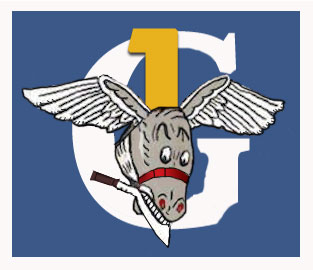
1st Air Commando Group, United States Army Air Force CO— (1) Col. Philip C. Cochran – Nov 1943 (officially from 29 Mar) to 20 May 1944 ———(2) Col. Clinton B. “Clint” Gaty – 20 May 1944 to 26 Feb 1945 (MIA) Deputy CO—Lt-Col. John R. Allison – November 1943 to 20 May 1944
Formed under orders from U.S. Army Air Force chief, General “Hap” Marshall, this unit first came into existence as the top-secret Project 9 in 1943, specifically formed to support British long-range sorties into Burma. Later it became known as the 5318th Provisional Group in December 1943 and under this title, took part in Operation “Thursday” airlifting and supporting Wingate’s troops in Burma from March 1944. Yet, before the month was out, another change of title had occurred and the unit officially became known as the 1st Air Commando. Its motto, “Anyplace, Anytime, Anywhere” was lifted from a message sent by Wingate endorsing his support for the group and its men. Carried over in the decades after the war, this is currently the motto of U.S. Special Operations Command.
The 1st Air Commandos largely left the Chindits on 20 May 1944 and were disbanded on 3 November 1945. It was later reformed in the US on 18 April 1962 as the 1st Special Operations Wing.
13 x C-47 Dakota, 12 x C-46 Commando Transports (CO – Maj. William T. Cherry) 12 x B-25H Mitchell medium bombers (CO – Lt-Col. Robert T. Smith) 30 x P-51A Mustang Fighter-bombers (CO – Lt-Col. Gratten “Grant” Mahony) 100 x L-1 and L-5 “Grasshopper” Light planes (CO – Maj. A. Paul Rebori (Sacked), Lt-Col Clinton B. Gaty) 10th Jungle Air Rescue Detachment: 6 x Sikorsky YR-4 Helicopters (top-secret, early machines, also under Gaty’s command)
Glider Group (Capt. William H. Taylor Jr.) – Originally with 225 Waco CG-4A Gliders
The First Air Commando was reorganized in September 1944. It had this form after:
Eastern Air Command (Royal Air Force) Supply Aircraft
900th Airborne Engineers Aviation Company, US Army
CO— (1) Captain Patrick Casey (KIA 5 March 1944) Deputy CO—Lt. Robert Brackett
The 900th Airborne Engineers, with a strength of only four officers and 124 enlisted men, would carry out five, separate glider landing missions during the course of Operation “Thursday,” apparently earning them the privilege of having made the most glider-borne landings of any glider-borne unit of World War II. The 900th participated in the landings at all the Chindit strongholds: Broadway, White City, Aberdeen, Chowringhee and Blackpool.
Events leading up to Operation “Thursday”
The first Chindit expedition, Operation “Longcloth” was considered an important breakthrough in strategic thinking. It proved that a war in the densely forested jungles of Burma could be fought and won – contrary to previous notions. In fact “Longcloth” proved so impressive that the Japanese who had long given up the idea of invading India, believing that the jungles beyond the Chindwin River were impassible, began to review to plan their own invasion of India. through those same jungles.
By the end of 1943, armies on both sides of the Chindwin (a defacto border separating the Allies from the Japanese) were content to hold what they had. In contrast, American strategy had taken the offensive – and they wanted to divert as much enemy troops as possible from the Pacific and at the same time, keep China (and her airbases) free to strike at the Japanese homeland. US commanders, notably General Joseph “Vinegar Joe” attempted to achieve this by training and attempting to organize the notoriously corrupt Chinese army for offensive operations. Meantime, they hoped for a campaign from the British who they believed held a large, untapped reserve of mainly Indian manpower.
At the “Quadrant”summit conference held in Quebec in August 1943, future allied military policy was the agenda. The British were under pressure to take offensive action in the Burma theatre. Churchill, with Wingate by his side, persuaded the allied chiefs to embark on a second, larger Chindit offensive. Wingate’s plans were ambitious. His proposal was to airlift several divisions behind Japanese lines. It was a bold plan but curtailed by political squabbles, reduced to include just a single division (albeit a highly-reinforced division) to take part in what would eventually become named as Operation “Thursday.”
At the core of Wingate’s plan was “to insert himself in the guts of the enemy” with the hopeful bonus that the Japanese would not know where they he had landed. This idea had two objectives:
A) Punch deep into enemy lines. B) Stay there until relieved.
Wingate decided to retain the heart of the British system – using morale and motivation to the fullest – the espirit de corps of the regiment as the building block of his new force. To this end, he used men mainly from General Symes’ British 70th Infantry division, known for its high levels of training and morale, with a core of units staffed by veterans from the original 77th Brigade. But this time, instead of marching into Burma and harassing the Japanese with guerrilla-type raids, the Chindits were to land by glider in jungle clearings and build fortress, complete with artillery support and forward airstrips to bring in supplies and take out the wounded. It was a dramatic new tactic that would have deep consequences.
For a detailed history of the second campaign, click here
Welded into a seven column fighting force totaling over 3,000 men with mules, oxen and elephants to carry heavy supplies, the Chindits (aka, the 77th Brigade), prepared to move into Burma.
THE MARCH IN
On 12 February 1943, at the threshold of battle, Wingate addressed the men under his command, saying, “Today we stand on the threshold of battle…It is a small minority that accepts with good hearts tasks like this that we have chosen to carry out. The time of preparation is over, and we are moving on the enemy to prove ourselves and our methods. We need not, as we go forward into the conflict, suspect opportunity of withdrawing and are here because we have chosen to bear the burden and the heat of the day.” With this “Operation Longcloth” began and the 3,250-strong Chindits headed into the jungles of eastern India.
Two nights later, as a diversionary attack by the 23rd Indian Division struck Kalewa, two Gurkha columns under Lt-Colonel Leigh Alexander (a first-class Cricketer before the war) slipped crossed the Chindwin 50 miles to the south. Their mission: to attack Japanese outposts, blow up bridges and sever the Mandalay-Mytikyina railway at the key Burmese town of Kyaikthin. At the same time, Wingate, with five columns led by Lt-Colonel S. Cooke, crossed the river a little to the north and went forward to sever the same railway between Wuntho and Indaw. (see map above)
Wingate’s main objectives were to:
1) Cut the main railway line between Mandalay and Myitkyina 2) Harass the enemy in the shwebo area 3) Cross the Irrawady river and cut the rail line between Mandalay and Lashio
The operation called for extraordinary ability and luck. The first objective was 150 miles to the east with the number one priority being to reach the target undetected.
In an effort to break the formal regimental structure of the British Army, the seven columns each had about 400-500 men, 100 pack-mules, horses or oxen and accompanied by RAF radio operators, under the overall command of Squadron Leader Robert Thompson. Each man in the lightly-armed columns (heaviest weapons were medium machine guns and mortars), had to lug a 70 lb (31 kgs) load, including a pack, rifle, bayonet, ammunition and grenades, water bottle, four pairs of socks, spare shirt, climbing rope, utility knife and a five day ration pack consisting of biscuits, cheese, chocolate, meat, nuts, raisins, dates, tea, powdered milk and sugar. All together a daily ration weighed less than 1 kg (2 lbs) – although these meager rations were sometimes augmented by local bananas, rice and other fruits provided by friendly villagers.
Chindits march into Burma. (IWM IND2290)
As men marched, others struggled to get their mules over steep and plunging ridges. Burma was the land of extremes, rich with ancient cultural architecture and a treasure of natural resources amid lush rain forests and hills. Yet northern and central Burma was no tropical paradise. Mountain ranges thick with seemingly impenetrable jungles covered the borders. The rain forests were trackless, steep regions, filled with vines and rotting vegetation. This, alternating with sharp elephant grass as tall as a man or with thick bamboo thickets could obscure visibility to only a few meters. The steep hills and ridges provided narrow paths. The British depended on RAF (Royal Air Force) reconnaissance and Burmese guides to get them through. Summer humidity reached up to 46º Centigrade (115º F) in the central plains, and during the monsoon, which lasted half a year, pack animals became the only reliable form of transport in the narrow jungle trails and through the mud. In this pitiless environment the Japanese became only one of the Chindits’ many enemies.
There was the torrential rain, for one, which produced a sea of glutinous mud and permanently sodden clothes, and the dense thickets of brush and foliage which slashed at men and animals. “Sometimes the going was frightful, occasionally it was just bad,” said one man, Sergeant Tony Aubrey. Like many Chindits, Aubrey was astounded by the scale of the Burmese jungle, the constant dew and rains which wet uniforms and equipment, the oozing black mud, belligerent red ants and huge black spiders with their painful stings and thickets of impenetrable bamboo whose stalks and leaves “cut both clothes and flesh to ribbons.”
Clothing, boots and skin rotted from prolonged exposure to the humid atmosphere, and the first casualties from tropical and parasitic diseases were reported. To this were added swarms of leeches, clouds of mosquitoes which appeared regardless of the time, poisonous snakes, flukes, ticks and flies. Open wounds were to be quickly covered up or risk viral infections. Many of the Chindits quickly learned that wearing beards (like Wingate), mitigated the need for a shaving kit, formed the best natural camouflage for the face, and more importantly – kept out mosquitoes and ticks.
Progress was painfully slow but Wingate tried to hasten the advance by paying surprise visits to subordinates and issuing radio orders embedded with Biblical quotations. By the beginning of March, Cooke’s group was positioned at attack the railway. Meanwhile, in the south, Alexander’s two columns were advancing without incident. Every day, British C-47 Dakotas from 31 Squadron and the Lockheed Hudsons from 194 Squadron appeared over pre-arranged drop zones identified by accompanying RAF signalers, dropping supplies. On March 2, the No. 5 Column led by Major Bernard Fergusson brushed aside a Japanese patrol and blew the bridges at Bongyaung, the cracks of the explosions ringing through the hills. The attack had taken the Japanese completely by surprise, but they recovered and two divisions were dispatched to deal with the intruders who were believed to be no more than a reconnaissance party. In the south meantime, Alexander’s columns had been heading down to the Irrawaddy River. Moving in force, Alexander hoped to create the impression that his columns were the vanguard of a larger British force. The Japanese called his bluff and attacked, badly mauling No. 2 Column.
By now convinced that an entire British commando division had crossed the Chindwin, the Japanese Army spent several tense days scrambling a counter-offensive. But misinformation and speculation plagued their understanding of the situation. Most Japanese commanders were even baffled at how this “commando division” was being supplied. They simply could not or would not believe that the British would be so brazen as to resupply their forces in full daylight with slow and vulnerable transport aircraft – especially in an area heavily patrolled by Japanese fighters.
An RAF wireless operator attached to a Chindit column sits by his equipment. (IND2292)
In the north meantime, things were going better. Of Cooke’s five columns, three moved north with the intent of drawing Japanese forces away from other two columns heading to hit the railways. The diversionary force soon met the enemy at the Irrawaddy. One column (Major Bromhead’s No. 4 Column) was badly mauled and scattered, forced to withdraw back to the Chindwin. Yet, 4 Column’s sacrifice had not been in vain. Two other two columns – Fergusson’s No. 5 Column and Michael Calvert’s No. 3 Column – were able to use the confusion of the melee to move unobserved to the railway line and adjacent bases. They reached their positions in early March; to sabotage the line in 72 places, destroy bridges and cut roads.
As Japanese awoke to the threat, the Chindits set up ambush parties and waited for the Japanese as they rushed to respond. Hundreds of Japanese were wiped out and pinned down by the ambush parties even as Fergusson’s and Calvert’s RAF signalers called in RAF air support to complete the massacre. Elated at these early successes, Calvert pushed on to destroy the Gokteik Gorge viaduct, an important structure which carried the Lashio road about 100 km (60 miles) north of Mandalay. But now the columns had to cross a triangular area between the Irrawaddy and the Shweli rivers – an area that was open, waterless country, criss-crossed by roads and frequently patrolled by enemy armored cars. It was hopeless for guerrilla operations.
THE RETURN
As the unfavorable terrain and Japanese commitment escalated, the expedition began to unravel.
The hardships multiplied when supply drops became difficult, not only because of Japanese fighter patrols, but also because by now the Chindit columns had become so dispersed that air supply had become all but impossible. This in turn increased the demand for food and water. Many columns struggled, if only for a few hours to keep ahead of pursuing Japanese forces while hurriedly collecting supplies from airdrops. Others fought for the supply zones and villages where the Japanese stationed troops knowing full well that the Chindits would seek them out for food. Finally in desperation, men ate many of their mules and made a soup of their horses.
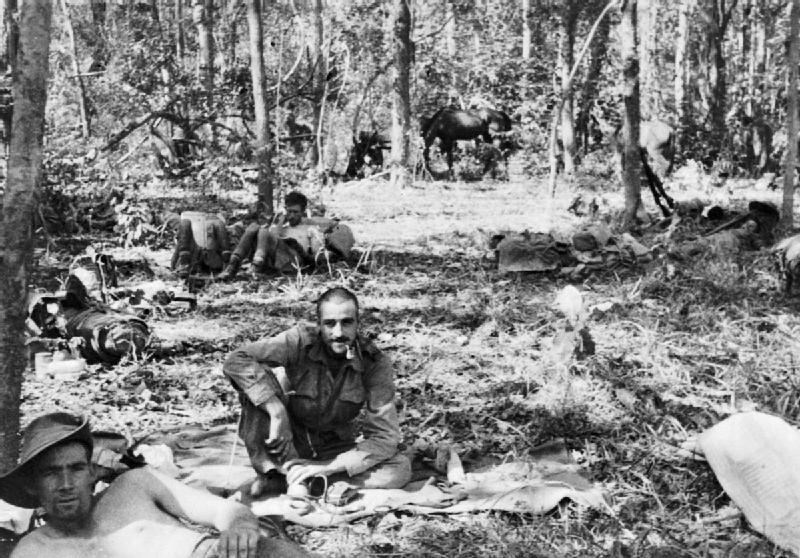
Weary Chindits rest for a moment in the jungle. (IWM IND2292)
Informed of the situation, Lt-General Geoffrey Scones of the British IV Corps, ordered Wingate to withdraw. Wingate in turn instructed his columns to disperse in small, independent parties on March 24th. Lt-Colonel Alexander’s group shifted to the east, hoping to reach the safety of China while Cooke’s group fell back to the Irrawaddy. The men were now exhausted and riddled with disease. Sadly, many of the wounded were left behind. Lieutenant Ian MacHorton of No. 2 Column was one of those abandoned. “At the moment when I gave up straining my ears for any last faint sound of my vanished comrades, my utter loneliness engulfed me,” he later wrote.
One by one, small groups of Chindits struggled through the jungle and managed to cross the Chindwin. Wingate returned to India on April 29. Fergusson and Calvert also made it, but some 883 were lost, killed, wounded or captured – many as they crossed the Chindwin, where Japanese patrols were waiting. Of the 2,182 that did return, only 600 would ever fight again. They had spent almost nine weeks in the jungle and had marched over a thousand miles, and Wingate regarded the entire operation as a bitter failure.
One of the survivors, Sgt. Hutchins. (IWM JAR 2190)
But how key had their efforts been? In February, before “Longcloth” was launched, Wingate had told reporters that, “If this operation succeeds, it will save thousands of lives. Should we fail, most of us will never be heard from again. If we succeed, we shall have demonstrated a new style of warfare to the world, bested the Jap at his own game, and brought nearer the day when the Japanese will be thrown bag and baggage out of Burma.” Disregarding the little material damage inflicted, in which some railways were cut, bridges blown or Japanese killed, “Longcloth” had accomplished ten times its weight in psychological terms. In one blow, the Chindits had destroyed the myth of Japanese invulnerability, and showed that a lightly-armed, well-trained force could take on the Japanese, beat them at their own game, in their own backyard and return to talk about it. At a time when heroes were badly needed and when the Allies faced their darkest hour, Wingate and his Chindits were indeed heroes.
The tales of their endeavors ran like a hurricane through the dispirited armies in India. Newspaper articles carrying photographs of a gaunt, bearded Wingate in an Australian slouch hat and his battered Chindits only strove to increase the legend. A copy of Wingate’s after-action report reached the Churchill, perhaps the final judge of success. Depressed by the long string of defeats and disappointments in the Far East, Churchill was jubilant to hear of Wingate’s success.
In July he wrote, “I consider Wingate should command the army against Burma. He is a man of genius and audacity, and has rightly been discerned by all eyes as a figure quite above the ordinary level… There is no doubt that in the welter of inefficiency and lassitude which has characterized our operations on the Indian front, this man, his force and his achievements, stand out, and no mere question of seniority must obstruct the advance of real personalities to their proper stations in war.” So impressed was Churchill that he wanted to Wingate promoted up four ranks, over the heads of other senior men. The proposal was met with shock, and then resistance from senior army commanders.
In the end Churchill had to settle for promoting Wingate up one rank, to Major-General. But tellingly, he insisted on taking him to Quebec for the Allied Quadrant Conference that August. Here, Wingate won approval for an expanded Chindit force and a more ambitious expedition that following year in cooperation with U.S. Lt-General Joseph “Vinegar Joe” Stilwell and his Chinese Army. Many Allied officers seethed at these concessions, not least of all “Vinegar Joe,” who having waited long and hard for U.S. troops became enraged when told that the 3,000-strong American Regiment, nicknamed Merrill’s Marauders, was being diverted to Wingate’s command.
“After a long struggle we get a handful of U.S. troops and by God they tell us that they are going to operate under Wingate,” Stilwell said. “We don’t know how to handle them but that exhibitionist does! He has done nothing but make an abortive jaunt to Katha, cutting some railroad that our people had already cut, get caught east of the Irrawaddy and come out with a loss of forty percent. Now he’s an expert. That’s enough to discourage Christ.”
Yet, barring his critics, great things were expected of Wingate — now that he had been reinforced, and as 1944 came, his legend and that of his beloved Chindits multiplied as they went into the task of completing all that was asked of them and more.
The 77th Indian Infantry Brigade
Commander – Brigadier Charles Orde Wingate, DSO (Ex-Royal Artillery) Brigade Major – Maj. R.B.G. Bromhead → Repl. by Maj. Gilmour M. “Gim” Anderson (Highland LI) Staff Captain – Captain H.J. Lord (Border Regt)
13th King’s Regiment (Liverpool) 3/2nd Gurkha Rifles 2nd Burma Rifles 142nd Commando Company Staff, The Bush Warfare School
Eight Royal Air Force Sections (to co-ordinate supply airdrops) Brigade Signal Section (Royal Corps of Signals) Mule Transport Company
This brigade (which used the designation of “Indian infantry” purely for deceptive purposes) deployed the field in the form of the following groups:
No 1 (Southern) Group CO – Lt-Col. Leigh Alexander (3/2 Gurkha Rifles) – KIA 28 Apr 1943 (by sniper). Adjutant – Captain Birtwhistle (3/2 Gurkha Rifles)
No 1 Column – Major G. Dunlop, MC (Royal Scots) 2-i-C: Captain V Weatherall (3/2d Gurkhas) Guerrilla Platoon (142d Company): Lt. J Watson (Black Watch) → Repl. by Lt Nealon (KOSB) Burma Rifles (Recce Platoon): Captain M Freshnie Medical Officer: Captain N Stocks (RAMC) RAF Liaison Officer: Flight Lt. J Redman
No 2 Column – Major A. Emmett (3/2nd Gurkha Rifles)→ Repl. by Major Burnett
No 2 (Northern) Group CO – Lt-Col. S.A. Cooke (Lincs Regt, attached to King’s Regt) Adjutant – Captain D. Hastings (King’s Regt)
No 3 Column – Major J. Michael Calvert (R.E.) 2-i-C: Captain G Silcock (3/2d Gurkhas) Commando Platoon, 142d Company: Lt. Jeffrey Lockett Burma Rifles (Recce Platoon):Captain Taffy Griffiths Medical Officer:Captain Rao (RIAMC) RAF Liaison Officer: Flight Lt. Robert Thompson
No 4 Column – Major R.A. Conron (3/2d Gurkha Rifles) → Repl. by Maj. Bromhead (Royal Berkshire Regt)
No 5 Column – Major Bernard E. Fergusson (Black Watch) 2-i-C: Captain J.C. Fraser Adjutant: Lt. D.C. Menzies (Black Watch) Commando Platoon: Lt. J.B. Harman (Gloucestershire Regt) Burma Rifles (Detachment): Captain J.C. Fraser Medical Officer: Captain W.S. Aird (RAMC) RAF Liaison Officer: Flight Lt. D.J.T. Sharp No. 7 Platoon: Lt. P.G. Stibbe (Royal Sussex) No. 8 Platoon: Lt. J.M. Kerr (Welch Regt) No. 9 Platoon: Lt. G. Roberts (Welch Regt)
No 7 Column – Major Ken D. Gilkes (King’s Regt)
No 8 Column – Major Walter P. “Scotty” Scott (King’s Regt) Commando Platoon: Lt. T. Sprague Burma Rifles (Detachment): Captain Whitehead Medical Officer: Captain J.D.S. Heathcote (RAMC)
HQ Group (2nd Burma Rifles →This group was primarily a recce element) CO – Lt-Col. L.G. Wheeler (Burma Rifles) – KIA 4 Apr 1943 (by sniper). Adjutant – Captain P.C. Buchanan (Burma Rifles)
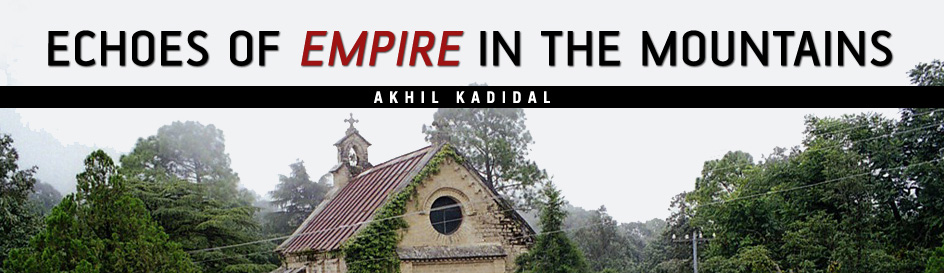
In the long, often tortuous journey to the Himalayas, along the eastern range, a lucky traveler comes upon the small hill town of Lansdowne, straddling a series of sharp peaks blunted by Englishmen and Indian labor over a hundred years ago.
The long two hour ride on a rickety, antiquated bus which has seen better days moves scenery which is serene in places and jarring at others. I sat on the thinly cushioned seat, frayed and worn by years of misuse. The bus is sparsely populated. Not many people try to go up to Lansdowne these days. Besides it was too early in the season for the summer revelers who took up residence in the chilly hill towns to escape the oppressive heat of the plains.
An Indian peasant in the front seat turns back and stares, his aqueous blue eyes glimmering with inscrutable wonder, sizing up my pithy yet unreachable education, my western gear and clothing. The eyes are a brilliant tint of Prussian blue, in stark contrast to his handsomely tanned face and I wonder if he knows where he has come from – the eventual progeny of the Mughal Empire or perhaps an Englishman and a native woman a hundred year ago, when the British sahibs were the masters of India and when the India was the jewel of the English crown. But maybe it was the other way around. Maybe the foreigner had been an Englishwoman who in a moment of incredible passion fell into unavoidable coitus with a native man and then gave up the child to hide the shame of it all.
The Far East is full of stories like this even though the Mughals and the English are now long gone, their legacy left by a smattering of institutions, blue-eyed descendents and places like Lansdowne, towering 4,500 feet above the green, serrated plains of lowland East India.
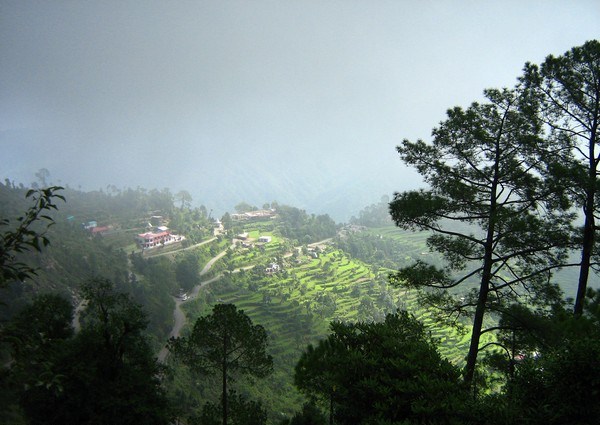
A view from the road of those plains.
En-route the bus occasionally stopped to let people off and to allow a solitary car or a rickshaw coming down from the other end to pass along the narrow road. At every unannounced stop, minutes stretched out into hours on that miserable bus. When a minivan appeared, coming down the mountain, the bus once again paused and to my irritation waited by a rocky curve blasted into the mountain wall to accommodate the bend of the road.
Instead of edging past us the other vehicle imperiously stood still in the middle of the road, taking its time, disgorging a handful of passengers who milled around with callous nonchalance. I fought my impatience. An hour’s ride on the wafer-thin cushion of a seat had reached the last barriers of my resolve. This, coupled with the fact that bus manufacturers had overlooked the important invention of vehicle shocks began to aggravate my traveler’s fatigue. I focused my attention at the far horizon, to the shadow impressions of other peaks on the far horizon. From here the Himalayas were not far. The Kingdom of Nepal which had all the best peaks, was only about 130 miles away. You could just catch glimpse of the snow-capped mountains from where the bus had stopped, rising far beyond on the foggy horizon, towards all that was mysterious, epic and near attainable. Shangri-la for the mountaineer.
As the congress on the road continued I thought back to the original Shangiri-La, of Hilton’s Lost Horizon, another place trapped in antiquity. In the west, the passage of time can be measured by technological and social landmarks. In America, the sixties were nothing like the seventies, and the eighties were unlike anything at all. But in parts of India, time stands still. The terrain might have seen some man-made improvements such as new roads, but the sum of the greater parts seem to belong to another, ageless era.
On the road, a pretty girl appeared from the van. She had the enviably features of Greco-Western beauty that can measured in gaps within the massive Indian population (after all, if there is one international listing which India frequently tops, it is for its uncontrolled population growth). She laughed at something the driver said, stroked back her brown hair and said something in return. I wondered if the two had a romantic tryst. It might have explained the driver’s reluctance to get going. Finally he decided to push on and as his ugly van coasted down the winding road, our bus started up again. The girl had disappeared down one of the trails leading along the side of the mountain presumably to some local hamlet cut into the slopes. I found myself watching the terrain again. The open slopes turned into great pine-treed heights that a Yeti would be proud to call home.
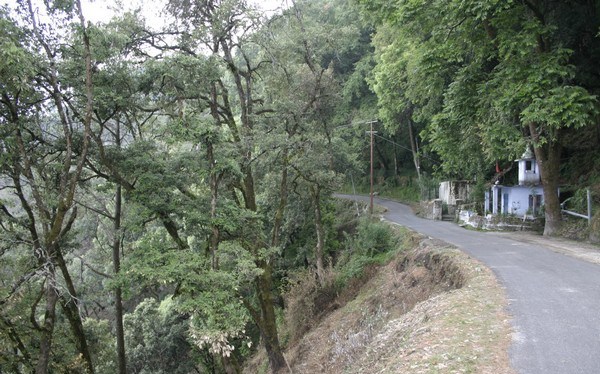
The road wound perilously close to the edge at times.
A gang of road-builders was hard at work, led by a fair-skinned overseer who calmly stood on a nearby boulder, watching the road being expanded. After another long wait, the bus started again and we moved deeper into the trees. At another bend, a company of fully-armed soldiers, in camouflage gear filtering slowly through the trees. I watched them with jarred fascination. I don’t know why I should’ve been surprised. Lansdowne, although a sleepy hill town, was home to an Indian army regimental training center. From where we were, India has its own range of Himalayas less than a hundred miles to the north beyond which lies China and the forbidden valleys of Tibet. This entire part of the frontier is disputed territory. The two countries had a fought a ferocious war in 1962 over the stretch with China sending waves of infantry against a badly outnumbered Indian force until an armistice was declared. But the border dispute was not the only issue for tensions between the two regional superpowers. After the Chinese invasion of Tibet in 1950, India had granted asylum to the Tibetan Spiritual leader, the Dalai Lama and his followers, infuriating Beijing.
An hour later, the largely-empty bus pulled into a large open culvert near a marker proclaiming “Lansdowne,” although I didn’t see the town anywhere. The other passengers shuffled off. The blue-eyed peasant had long since dismounted. I stepped out of the bus and stared. A sheer drop was on my right, its hazards cordoned off by a low-cut concrete wall. Ahead, unfolded the entire hill range. Around me, the unbroken green canopy stretched for miles while the white Himalayan caps poked up beyond them. Presumably, the town was located across a range of hilltops further west. A well paved road led sinuously in that direction past a white troop post set beside a gate. The biggest game in town was the army, in particular the Royal Garhwal Rifles with their hitherto-mentioned regimental center.
The regiment is another institution left by the English. First formed in 1887 under the command of a British colonel with local men, the regiment had seen heady action during World War I, winning its first Victoria Crosses in France – the British Empire’s highest award for battlefield heroics. During the Second World War, two entire battalions had been captured at Singapore by the Japanese but the rest of the regiment had seen victorious action in North Africa, Italy and Malaya. In the 1950’s, it had gone to war in Korea as part of the United Nations.
The Garhwal Rifles in France, 1915 (Photo: National Army Museum)
Gathering my pack, I walked down the road. The rest of the bus passengers had melted away. In fact, the sight of an empty road in population-heavy India was discerning, and despite this being some sort of de-facto army place, I hardly saw any soldiers. Tensions had been high on the northwestern frontier with Pakistan and Islamic terrorists, and I wondered if the entire garrison of trainees had been shipped off there. A large rectangular parade ground appeared on the bottom of a shallow lower terrace by the side of the road. It was deserted. Beyond that, a tall, stone building resembling a Victorian Church appeared. I knew instinctively that this was the Regimental Museum. Although I had an official notice granting entry into this hallowed bit of army territory, off limits to the town folk and other civilians, I ignored it for now and pushed on down the empty road. The tree line once again appeared to greet me as I gladly left the bald, sun-baked slopes.
Tall, awning oaks and pines flanked the road. I had little idea of where the town was and wondered if I had come down the wrong way. I had no map, only directions obtained at the great transport hub of Pauri, fifty miles away on the lowlands, a cesspool of flies and dust mingling with the smell of Indian spices in the lurid summer air. A fork appeared in the road. Across from it, on a stone wall sat a craggy-faced local wearing a faded old brown coat, his sandals off, biting on a honeysuckle. Despite its seemingly uniform demographics, India is land of ethnic diversity. Although human behavior largely remains the same, each state has its own language and customs. Here, in this alien place, my greatest handicap was that I did not speak the language, but somehow I managed to get across that I was looking for the town. He squinted lazily up at me.
“Oh,” he said in pigdin English, showing me his teeth and pointed down the road. “Just a hop and skip away.”
I looked uncertainly down at the road as it turned again and vanished into the trees. To these hardy mountain people, a hop and a skip might mean ten miles. I thanked him and walked on.
Soon enough the beginnings of a town ensconced by the trees came into view. Down the road, a stationary figure stood by a tall-wrought iron gate leading to a large bungalow at the top of small rise. It was a Garhwal trooper, wearing his regiment’s typical slouch hat, a chin-strap wound tight under his mouth, over the chin. In true British-Indian fashion, he stood immobile and defiantly stared out into space. I asked him where the Lansdowne hotel was, half expecting him to remain silent.
He pointed up the road without emotion. “Keep that way.”
I looked at the gate and handsome English-style bungalow on the crest.
“Whose house is that?” I asked.
He gave me a discerning look but I suppose he must have decided that I wasn’t a Chinese spy because he said: “It is the C.O.’s house.”
“C.O.?”
“Yes, yes, brother,” he said impatiently. “The Commanding Officer – the Regimental Colonel.”
I remembered the contact in the lowlands who had arranged an introduction with the colonel. As a Second World War buff, I had hoped to talk with the man about the regiment’s actions during the war. But it was getting late, and half-afraid that I would not find the hotel once it turned dark, I bade the trooper farewell, saying: “I hope your relief shows up soon.”
He didn’t say anything and I walked off.
Soon enough I spotted the “hotel” – a slightly run-down two-story cottage that looked as though it belonged in Surrey; built upon a mound. The proprietor, who used part of the house for his own family, showed me in.
“You are the only guest,” he explained proudly. But then again he had only two rooms, he added, showing me into a neatly-maintained, if spartan room with a large bed covered with white sheets, a dusty couch and a night stand.
Beyond the rise of the hotel was another large mound on which two large colonial-era houses stood. The one closest was painted royal blue. From where I stood, the road continued past the hotel, and dipped down a shallow decline before sweeping into an open town square which was just visible beyond the trees. As I stood in the clean, mountain air, and watched the sun set, I half expected a couple of old Citroens and 1936 Fords to come speeding up the road. Instead there was only a bright red Paradise-Flycatcher perched atop a nearby telephone pole. It looked about, its long, pale tail dangling like a great streamer below its feathered body. Then with a flurry of its wings it was gone.
Named after the 19th Century Viceroy to India, Lord Henry Lansdowne, the town looked as though it belonged in an Appenine setting, with its massive stone-paved square and its contours which adjusted to the roll of the hill, up and down, with quaint stone stairs leading down from each home. Part of the architecture had been decidedly influenced by Tibet, with white-washed monastic walls towering up, tapering as they neared their zenith. Other influences were something else, a native spirit of stone-walled buildings that perhaps embodied Garhwali culture. The town had come into existence in 1887 and by 1901, had a population of 3,943. By the time of my visit (early 2000s), its population was barely higher, at 7,000.
The whole place with its army peripherals, had a charming “Bridge on the River Kwai” kind of rugged quality. It was beautiful. It remains possibly the most beautiful place I have ever seen, occupying a rift in time. If I had to picture such a place from my subconscious it would, in the words of one writer, carry “all the strange beauty of my night time dreams.” But as I stood in the chill of the evening cold, a terrible and haunting loneliness came over me. If I had been shipwrecked on a Pacific Atoll I could not have felt more disconnected from the modern world despite its scattered presence all around me. By the doorway voices from the proprietor’s family filtered through the walls and hung like eternal whispers. As the sun vanished behind the mountains, the night lights of the town square came alive and filtered through the heavy covering of trees. Generations of soldiers had been stationed here over the century. Indians, Englishmen and Gurkhas. How had they dealt with this overwhelming sense of solitude in the mountains? I had to confess that I had no idea what they had felt. Theirs is a story that will never be told because there is no one to tell it.
The sounds of civilization drew me back. Somewhere nearby a muffled television replayed the sounds of the International Cricket World Cup, held once every four years. Old rivals, Australia and England were at it again. I left the bombast of the gamely crowd and made my way into the town. As the tarred road reached the town, it gave way to a sprawling, near-deserted cobbled main square. A café was open with a few patrons sitting outside by round tables. I walked into a narrow, general store to buy a cola. The owner, a small, bookish-sort of fellow, peered at me curiously out of his thick-framed glasses.
“Where from?” he asked genially. I was surprised by the language. It is one of the few instances of fluent English that I have heard in a while.
“The south,” I answered. “What’s beyond the square?”
“Just the forest. Oh, but you wouldn’t want to go up there at night. There is a leopard on the loose. It’s already mauled a child and tried to carry off another.”
I walked out with the soda, a look of disbelief on my face. Outside, the same café patrons stared at me. A girl sitting at one of the tables smiled. I gave her a terse hand gesture of acknowledgment and returned to the hotel.
Then dawn came and with it a new world. Stepping outside to watch the hills, the same debilitating loneliness as before struck me with imperceptible force, half forcing me into the ancient wormhole of the long-gone past. Sunlight burnished the rolling country, making its way into my soul, withering my solitude. I took the high road back to the regimental museum. A line of garden posts flanked the road, each adorned by a stylized balkenkreuz with a Yorkshire horn in the center – the emblem of the regiment.
At the museum, I was the only visitor. The building had more the feel of a private officer’s club than a repository of historical artifacts, with polished marble, stately white walls and a loyal cadre of army enlisted men on staff. The most visible item within the long hall of weapons was a Nazi flag hanging on the far side, captured in Italy during the Second World War. Once again I sensed the familiarity of Lansdowne, it’s presence now strangely awkward in the modern world, its place rightly necessary in the old-world cobble-stoned streets of the type found in Italy where the regiment had fought more than half a century ago. Scores of German small-arms and swords mounted on the walls reminded me of the regiment’s service for the British Empire during the World Wars. I paused to examine a German Mauser C96, the famous “Broomhandle” pistol and the same make of weapon used by Clint Eastwood in the movie Joe Kidd.
When I had my fill of history, I left the museum that late afternoon and ventured far beyond the town, taking great pains to remain on the uphill road after the leopard warning from the previous night. The man-eater in India too is something else that has remained constant in time. Every safari officer, conservationist and hunter in India knows that once a big cat has a taste of human flesh, it returns to no other game. I had no desire to be the latest item on the menu and armed myself with a hefty stick. At the time it seemed enough. After all I had nothing else, certainly no weapon. In retrospect, I don’t think I could have fended off even a particularly-determined monkey with that staff.
Half an hour of walking later brought me to a duo of benches set out by the side of the road, looking out onto the valley far below. As I sat down and took in the tremendous view, a car full of tourists pulled up, their voices loud and boorish, shattering the pastoral solitude that I had become accustomed to. I gave them an impatient glare, half hoping that the leopard would get some good eating out of them. Eventually I returned to town. As the red lips of the dying sun gave way to moonlit darkness, I walked down to the square. The same locals who had eyed me the night before sat at their usual places. I am certain that if I were to return that following night or even years later, I would find them where I had left them, caught in a perpetual schism of time, endlessly sipping tea and eating masala, a mixture of nuts and spices.
When morning came, I considered staying on for a few more days. After that day’s run, the bus was not scheduled to return again for a couple of days. I had not yet met the colonel and thought that I should see him before I left. But my decision to hang around was upset by some of the local cuisine. Nauseous and in some pain, I decide to pack it in. Besides, as a colloquialist would say: I had other fish to fry. Buying some medicine at the local dispensary, I hurried to the square to look for anyone going down the mountain to the rail-head at Kotdwara. I was in luck. A man was driving down in his jeep. I piled my bag in the back seat and clambered into the passenger side.
As we drove out, we passed the hotel and the blue English house beside it. I had the vaguest sensation that I would never see them again. Soon we were on the winding road back to the ordinary. But as we headed down all I could see was the picture of the Paradise-Flycatcher swooping in and out of the mountains. Then through a break in the trees, I saw the far peaked horizon. Somewhere on that distant Himalayan horizon lay the great pyramid-like promontory of Mount Saipal. At 23,000 ft. The stuff of dreams.
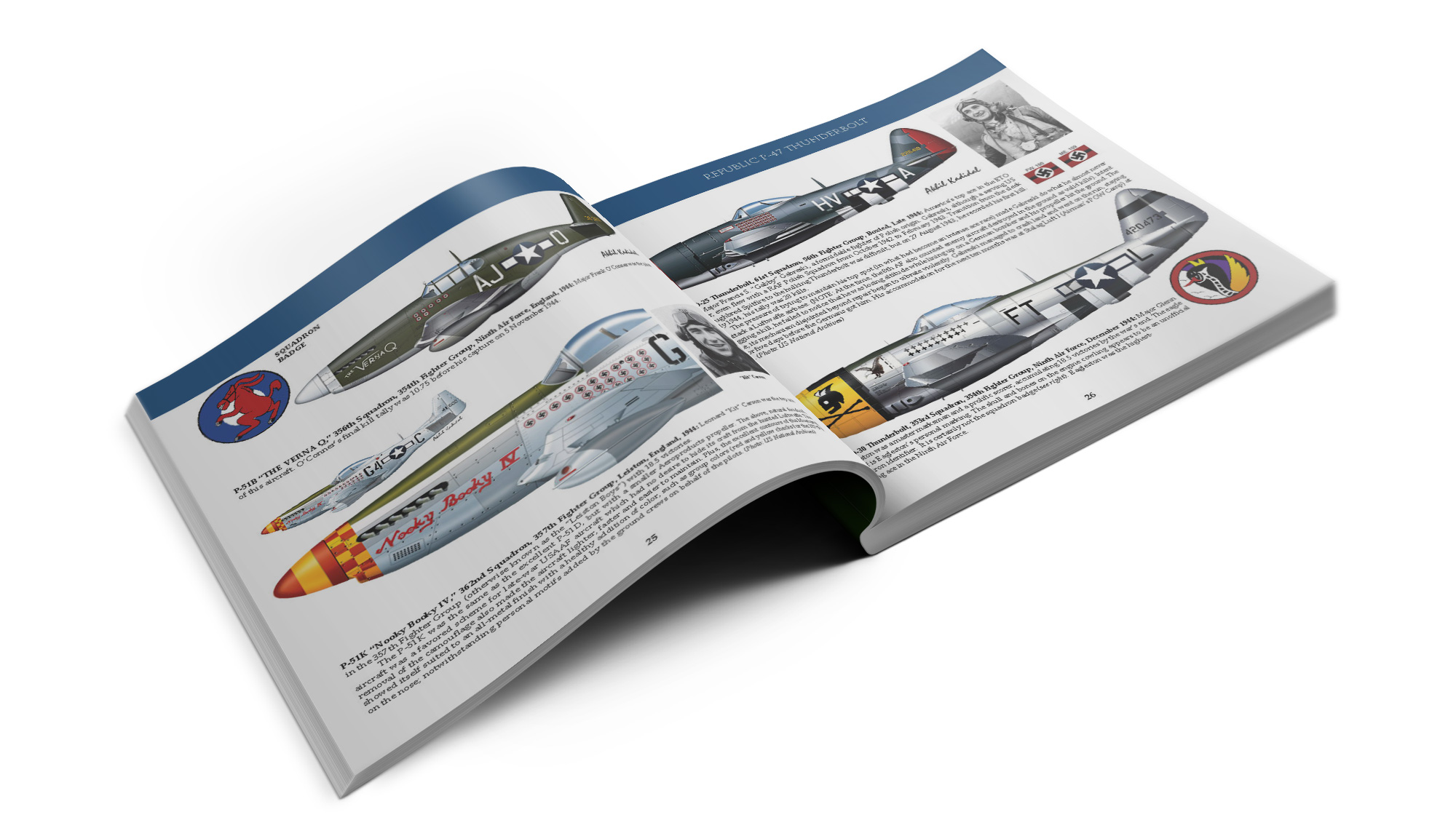
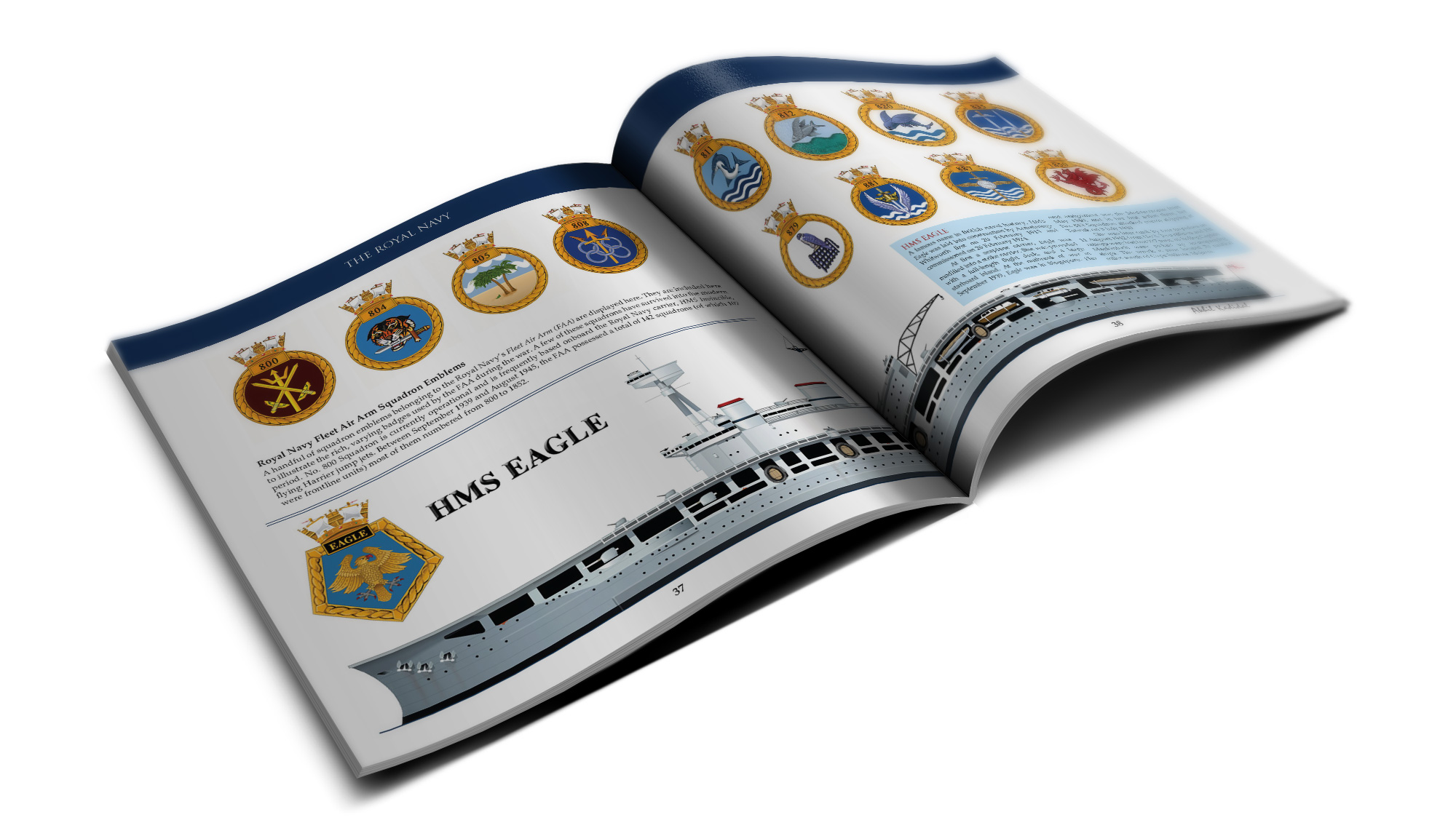
Aircraft Profiles from World War II | PDF | 47 Pages | 8 Megabytes
A collection of aircraft and naval digital artwork that I have done over the years, mostly to see whether I could, but a few are for as-of-yet incomplete books. Each piece is accompanied by a short history detailing the exploits of the pilot or the aircraft itself.












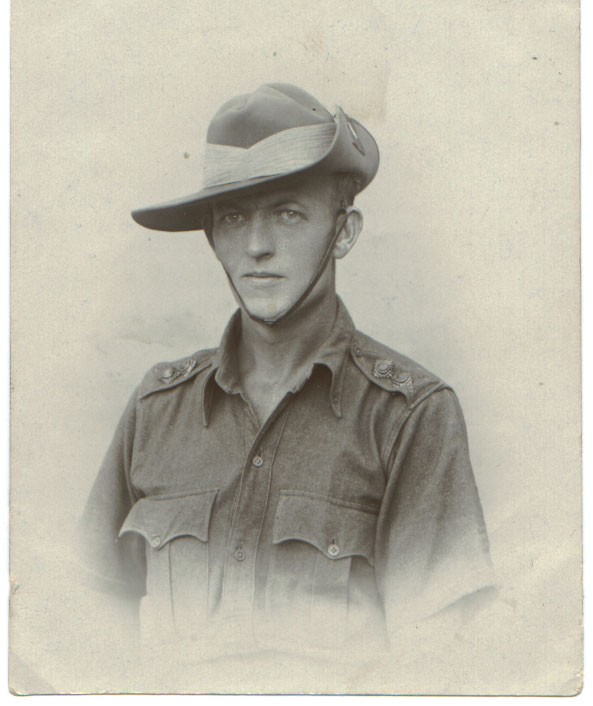 Captain Tommy C. Roberts of 5 Column as he appeared in 1943, in the incarnation of a Lieutenant (note the two pips on his epaulets). Roberts, a member of the 13th King’s (Liverpool) Regiment, commanded 5 Column’s Support Group. Captured in Burma as the first expedition wound down, Roberts spent the rest of the war at the notorious Changi POW camp in Singapore, having been designated as a “special case” by the Japanese Secret Police. Happily, Roberts survived captivity and returned to Liverpool in October 1945, despite difficult conditions at Changi and despite being emaciated by Beriberi. (Photo courtesy of Robert’s daughter, Patricia Ireland)



 Sergeant Tom Stephens as he appeared at the end of 1943. A member of Lt-Colonel Walter Scott’s 81 Column (1st King’s (Liverpool) Regiment), Stephens survived the campaign. After the war, he returned to Liverpool where he lived for the rest of his life.












 Achilles the Heel