
-Click to see higher resolution –
This illustration was created using Google’s SketchUp 8 and Adobe’s Illustrator and Photoshop. I have always been fascinated by the techniques used by the larger newspaper organizations to create some of their art. Matthew Erickson did the original Blackhawk down graphic for the Philadelphia Inquirer to accompany Mark Bowden’s news reports. These days he is the deputy graphics director at The New York Times. His blog can be found at: http://www.ericson.net/content/ – But expect no revelation of secrets, apps used or an explanation of how the NY Times does its art. But he does have a small collection of interesting graphics.
A note on the software:
I discovered SketchUp yesterday and although it is ground breaking for its ability to generate 3D objects, I think it is really clumsy. Simple things that most people take for granted in illustrator (such as holding down the space bar to allow the mouse to move objects), are not easily accessible. I almost gave up in frustration this afternoon trying to build the base image for this picture. Still, SketchUp’s 3D quick rendering beats the painful drawing of multi-sided objects in Adobe Illustrator. I don’t know how Google does it. It’s large staff of engineers obviously have no clue how to make a user-friendly product but they certainly know their stuff.

Photographs
I decided to include this section for those seeking a little more information on the fiasco that was Somalia.

Parade at UNOSOM HQ at Mogadishu. The Americans, from the 10th Mountain Division, are led by a Pakistani Sergeant of Arms from PAKBAT (Pakistan Battalion).


To the Somalis, American troops might as well have been an army from another planet with their technological superiority. But the Somalis were also quick to realize that this dependence on technology left US Forces open to attack. Consequently, Warlord Mohammed Farrah Aidid ordered his militia to concentrate future attacks against the Blackhawks — accurately perceived as the weakest links in the opposition’s formidable array of military power. Here, a Marine LCAC-22 hovercraft unloads its cargo in Somalia.
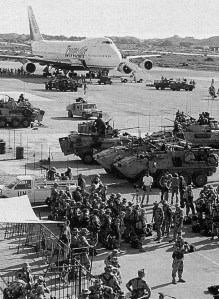
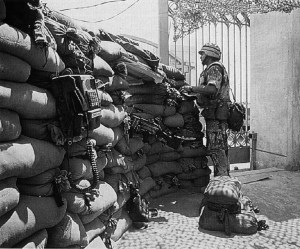
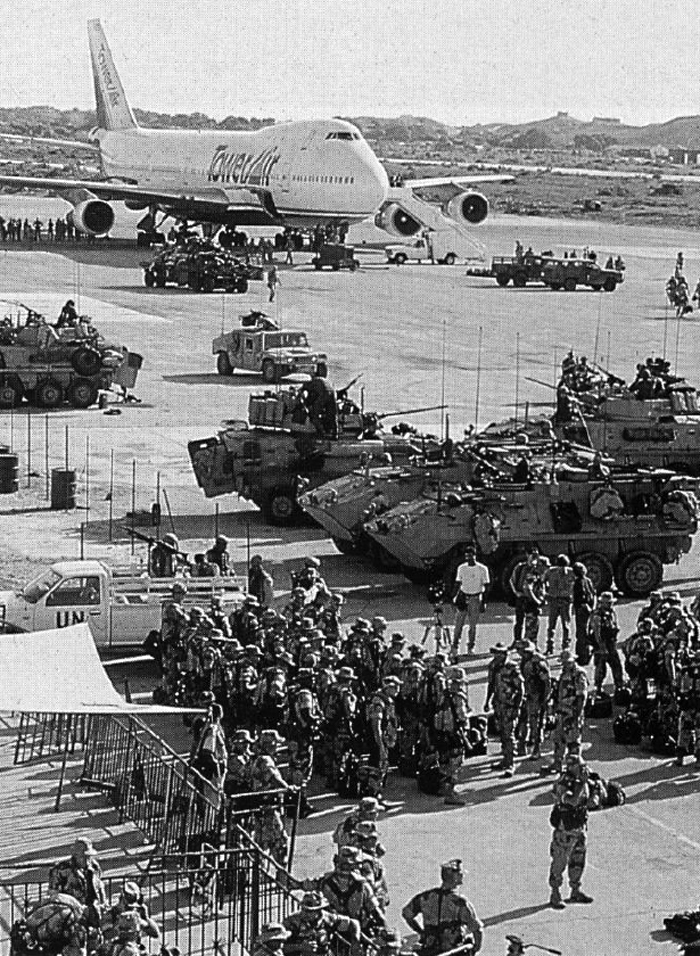
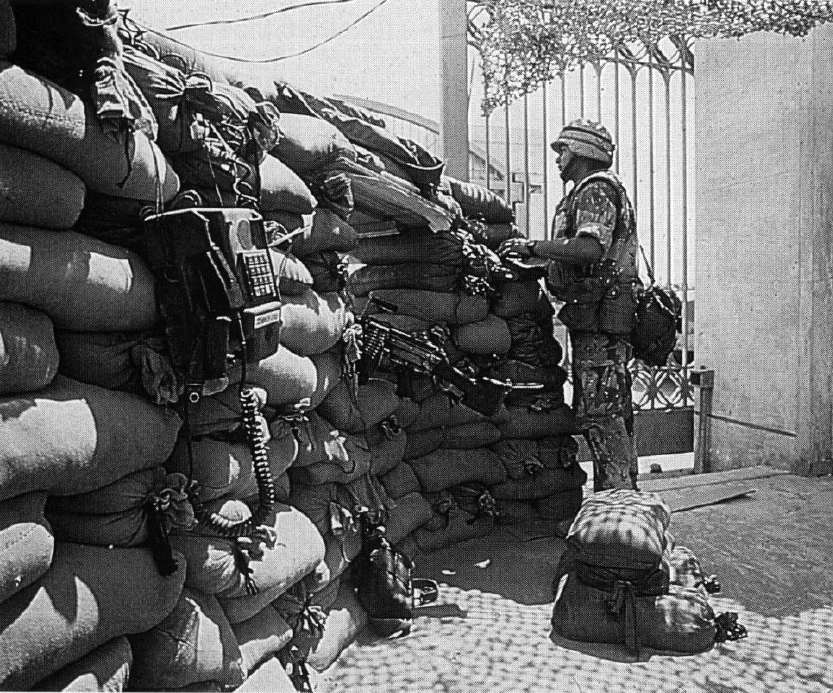
(LEFT) US Marines gather at the airport for protection duties. The armored vehicles in the background are LAV-25s, license-produced from Steyr-Diamler-Puch of Austria. (RIGHT) USMC PFC Anthony Mehia of New Orleans stands guard behind a barricade of sandbags at the US Embassy in Mogadishu. Note the field radio and the fully-loaded M249 5.56mm SAW light machine-gun — a weapon designed and originally made in Belgium.
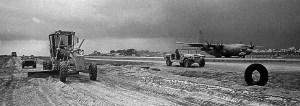
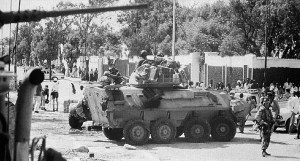
(LEFT) Reminiscent of activities in the South Pacific during World War II, US Navy Seabeas work at the derelict Mogadishu airport. Here, a motor grader from the Naval Mobile Construction Battalion 40 (based out of Hueneme, CA) works on improving an access road beside the runway. (RIGHT) When a few Somali Technicals mounting 12.7mm Russian DShk heavy machine guns were spotted cruising the streets, locals called in the Marines who promptly arrived with a couple of LAV-25s, one armed with a TOW rocket launcher, to restore law and order. (Photo: USMC)

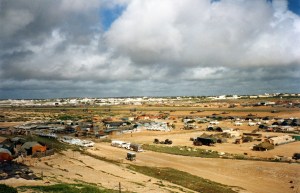
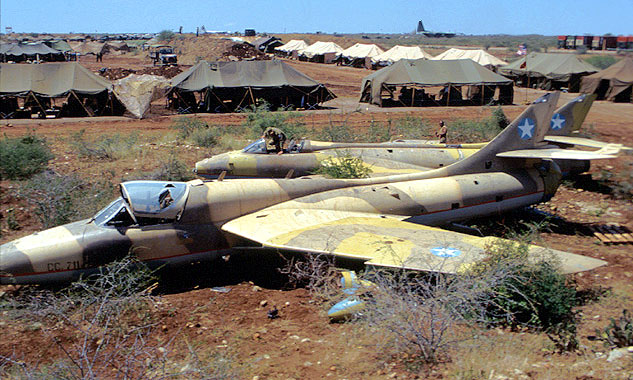
(LEFT) By 1993, the Somali air force looked like this – it’s entire compliment of aircraft reduced to rusting jets, beyond salvage. This photo is of a duo of Hawker Hunter T.77’s at Baidoa in January 1993. (United Nations) (RIGHT) The Mogadishu airport, busy once again, after it became a center of operations for the UN and Task Force Ranger. (Department of Defense)
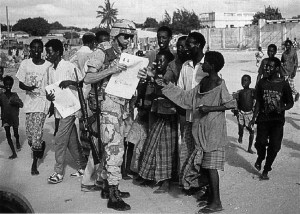
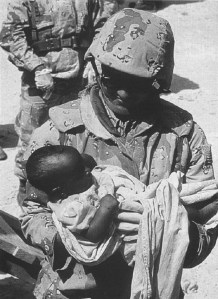
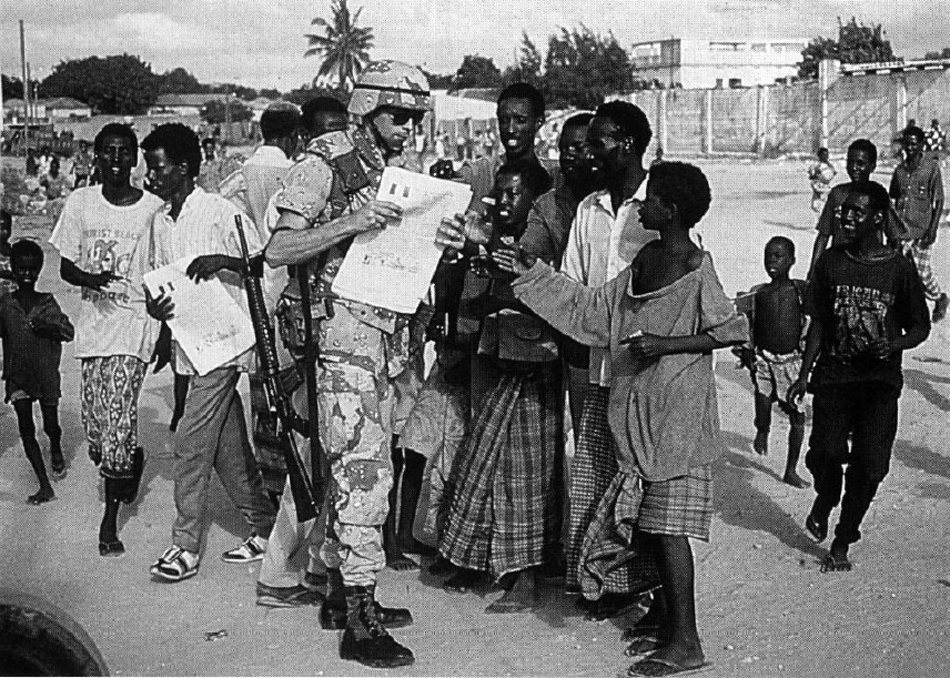
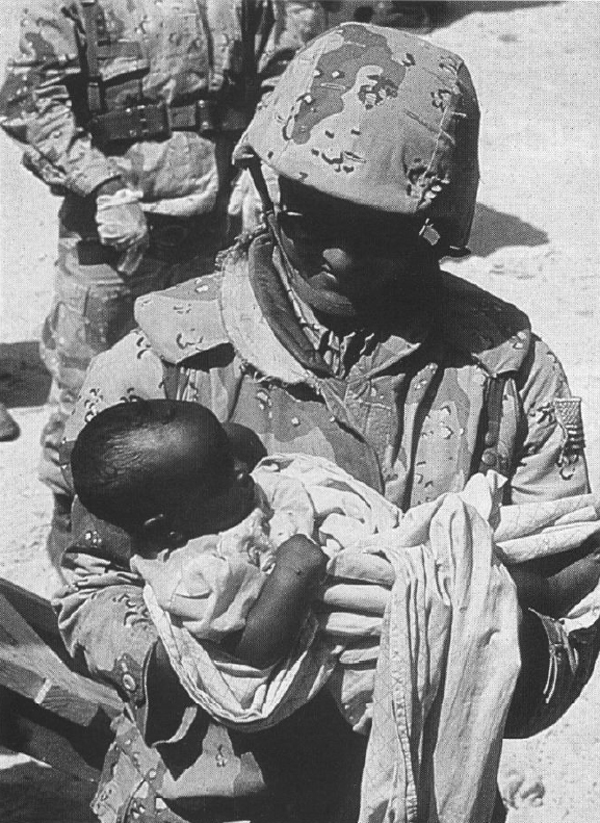
Hearts and Minds. (LEFT) A Marine PR officer hands out leaflets to local Somalis. (RIGHT) A Marine holding a Somali baby waits in turn for US Naval doctors to examine the child.

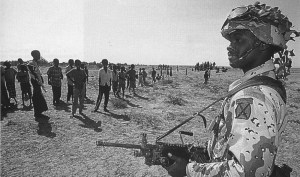
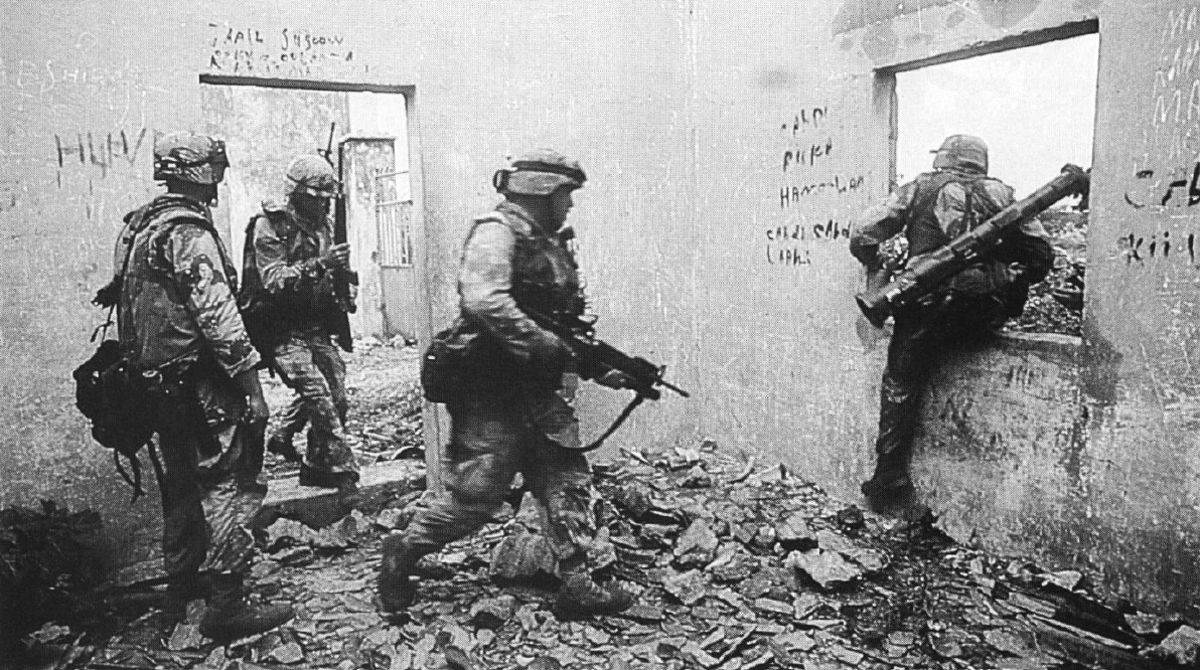
(LEFT) US Marines move from house to house in search of illegal weapons. The man climbing through the window is armed with some heavy ordnance in the form of an 84mm M136 AT4 anti-tank bazooka — a weapon first designed and manufactured in Sweden. Although the Marines spent their fair share of time in Somalia, attempting to restore peace and thwarting the warring clans, their activities were overshadowed by the operations of Delta Force and the Rangers who arrived much later. Incidentally, one of the US Marines who took part in these early operations was Warlord Mohammed Farrah Aidid’s own US-educated son, Hussein Farrah, who in 1996, took over leadership of the Habr Gadr clan after the death of his father.
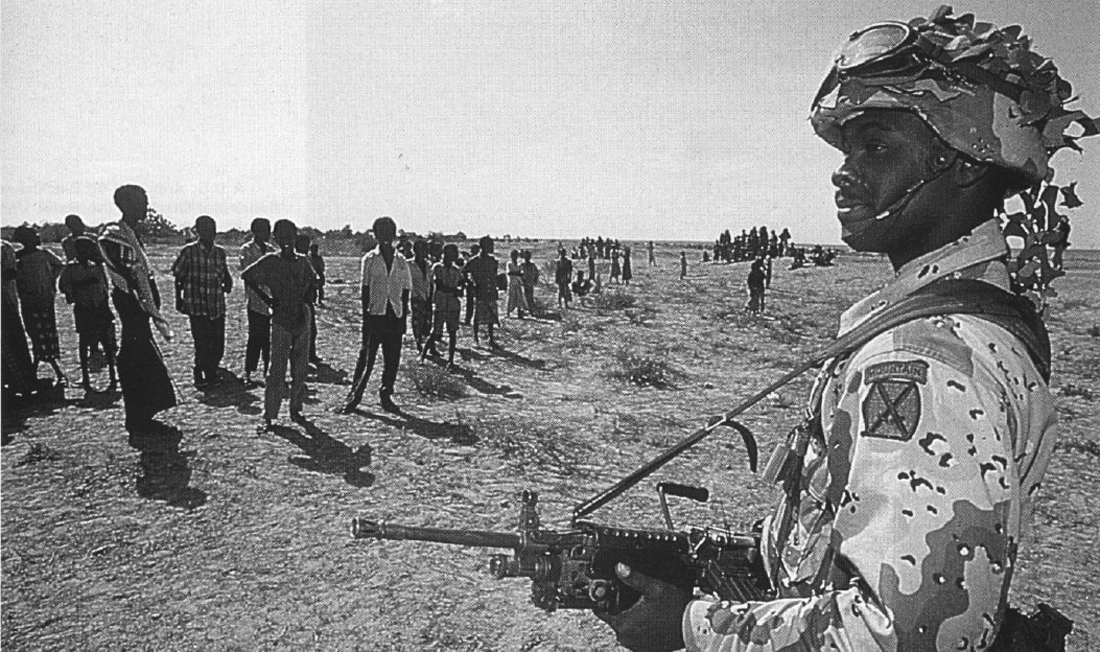
(RIGHT) PFC Chris Boone of the 2nd Brigade, 10th Mountain stands guard at the Somali village of Belet Uen. (US Army)
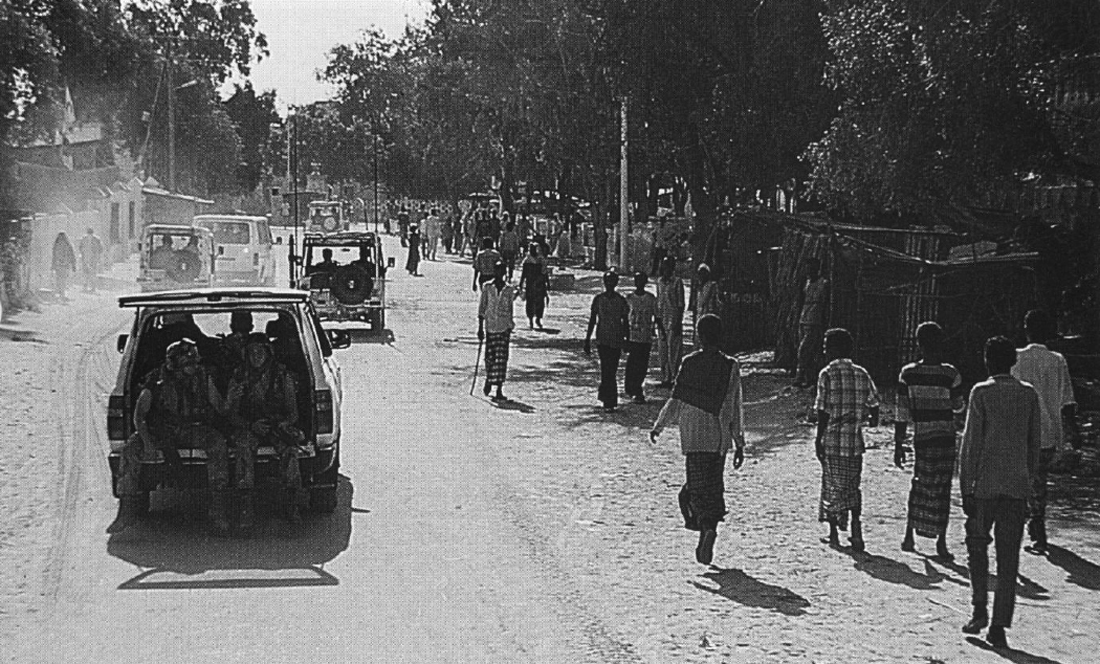
Men from the 10th Mountain ride Somali-style through the streets of Kismayu, as part of a convoy composed of Americans and Belgians.
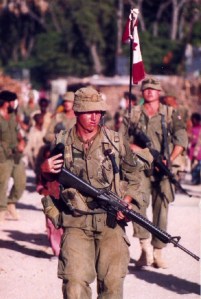
(LEFT) Canadians from No. 3 Commando, Canadian Parachute Regiment walk a patrol at Belet Uen. In the fore is a radioman. His weapon is an American-made M16A2. Faced with repeated thieving at their supply base, a group of irate Canadian paratroopers caught the suspected thief — a Somali, whom they subsequently beat and killed in custody. As news of the death spread, a horrified Canadian government resorted to the radical step of disbanding the entire regiment — a unit which had been in existence since World War II.
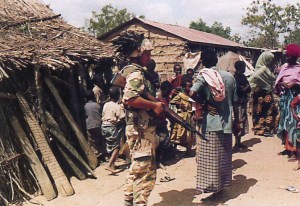
(RIGHT) An Italian Bersaglieri infantryman from the elite San Marco Brigade interacts with Somalis at a local feeding station outside Mogadishu. As members of the former colonial power, Italian troops often overlooked or did little to halt acts of Somali crime, which infuriated other members of the UN mission. The trooper is armed with a BM59 7.62mm assault rifle, an Italian modification of the venerable American Garand rifle of WWII.
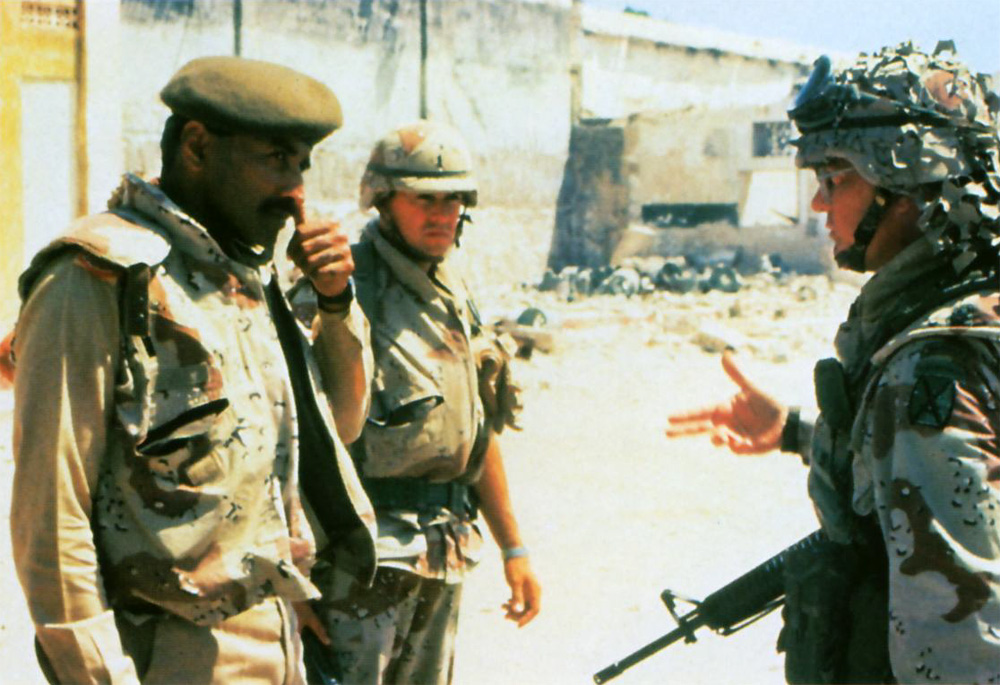

(LEFT) Members of the 10th Mountain confer with a Pakistani Captain whose troops have suffered an ambush. (US Army) (RIGHT) 10th Mountain troops have an impromptu meeting with Belgian paratroopers (wearing maroon berets). Many in the 10th Mountain were also qualified airborne troops, so they had something in common with the Paras. Here they discuss tactics with the Belgians who had been in-country longer. (US Army)
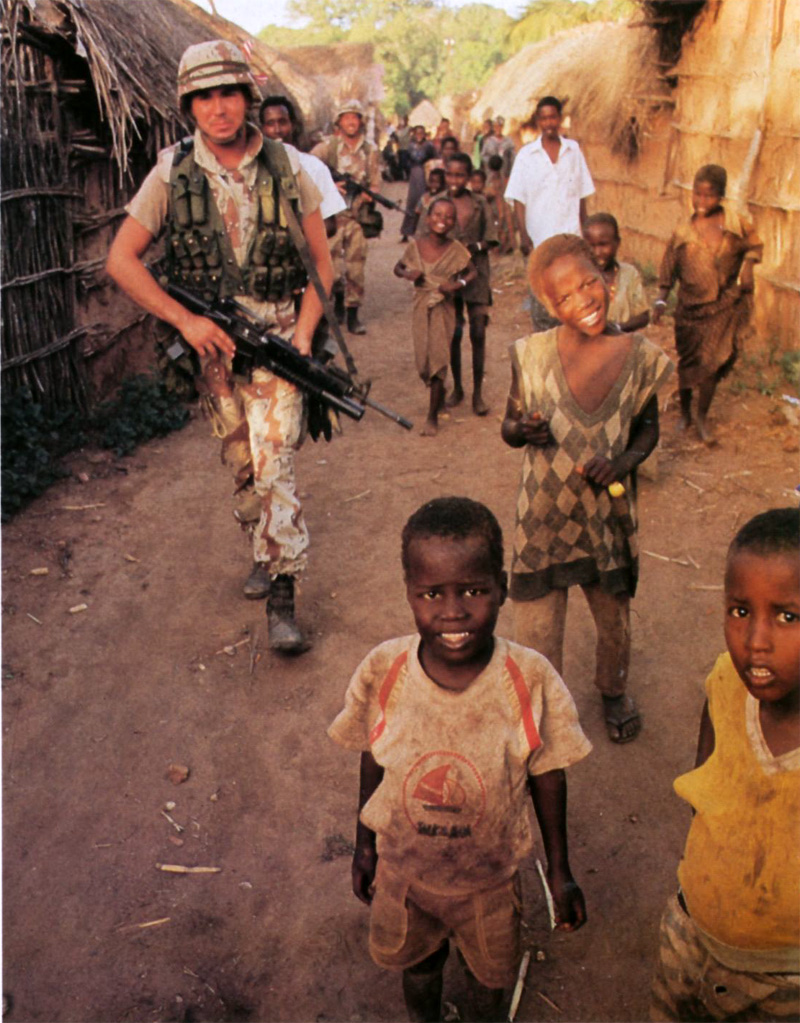
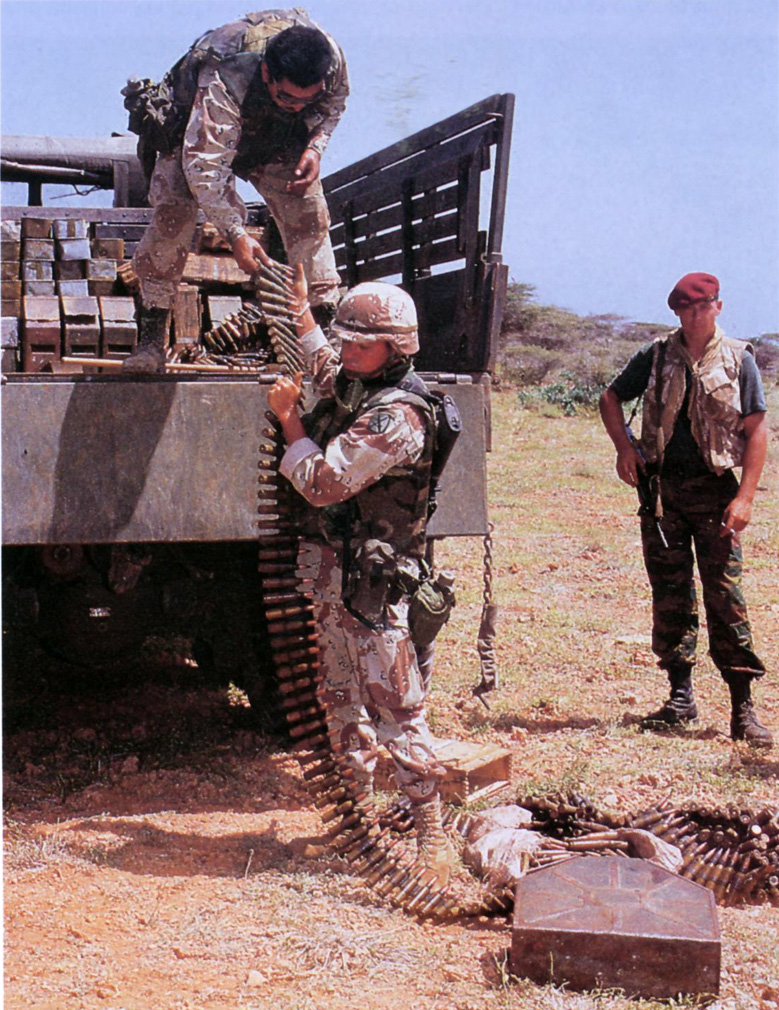
(LEFT) A 10th Mountain trooper, armed with an M16A2 and M203 grenade launcher attachment patrols a Somali village. (RIGHT) 10th Mountain soldiers unload heavy ammunition at their advanced base at Baidoa while a Belgian Para looks on.
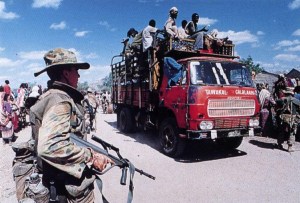
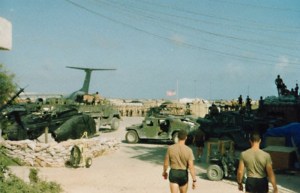
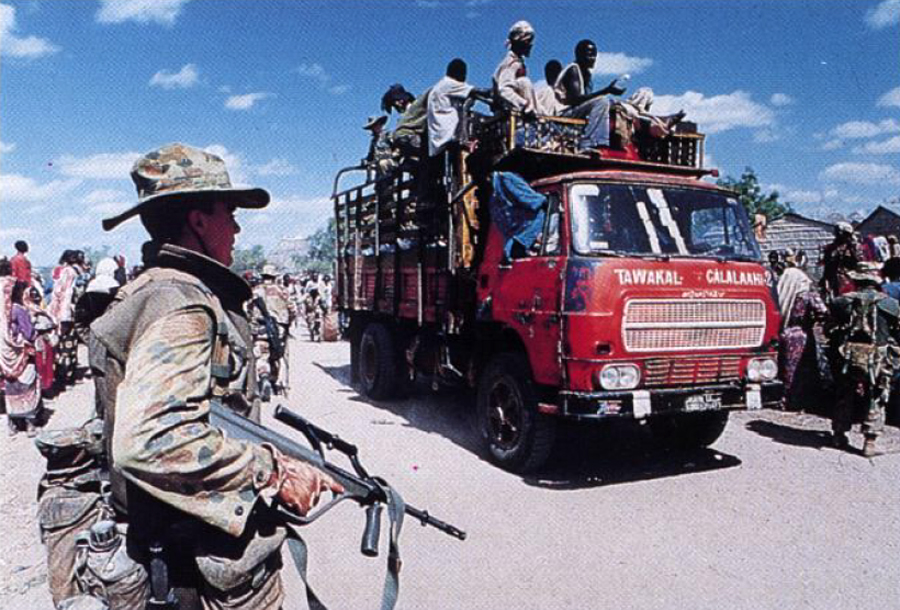
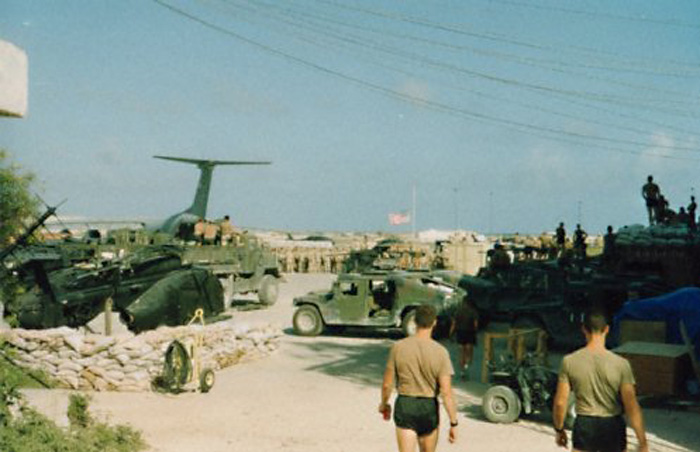
(LEFT) An Australian infantryman watches as a food truck arrives at a feeding station. The trooper is armed with a distinctive, plastic-cased 5.56mm Steyr Aug assault rifle (another import from Austria). (Right) A view from the Ranger-occupied section of the airfield, looking out at the dispersal.
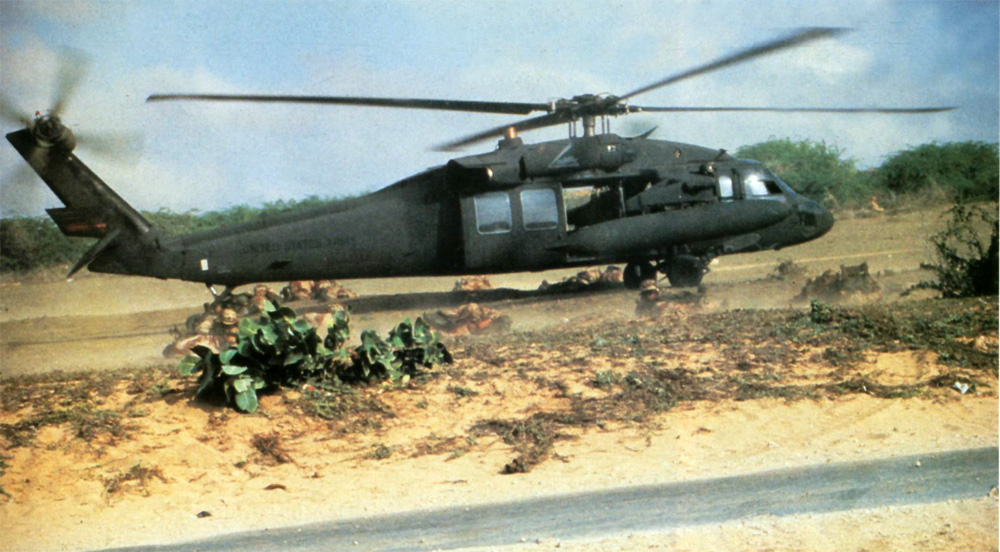
A Blackhawk prepares to dust-off. Most in-country Blackhawks were equipped with the External Stores Support System (ESSS), allowing them to carry extra fuel (as in this case) or rockets. (US Army)

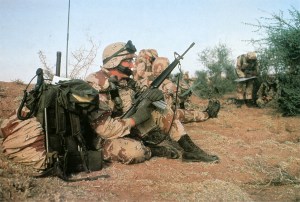
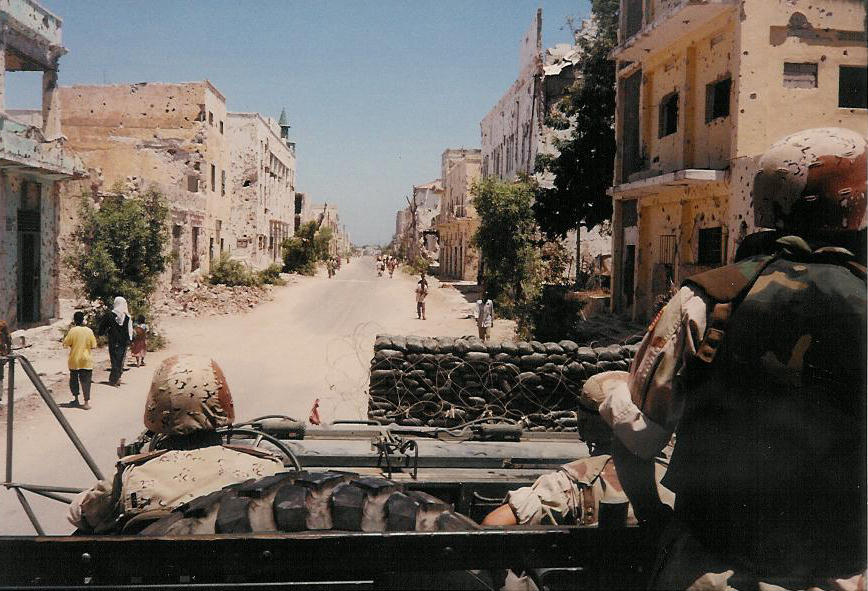
(LEFT) A US Marine Patrol travels through the bullet-scarred streets of Mogadishu. (RIGHT) A 10th Mountain security patrol takes a breather in the Somali bush. The radio operator carries his equipment in an olive-drab Alice Pack, whose uncomfortable original strapping which must have played havoc with his patience. (US Army)
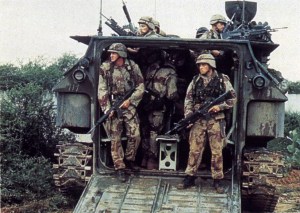

(LEFT) Marines wait by the rear entrance of their AAV “Amtrack,” anxious at the noise of gunfire crackling in a nearby neighborhood. (RIGHT) Ranger Keni Thomas flashes a broad smile for the camera. Keni, one of the combatants in the Battle of Mogadishu (or the “Day of the Rangers” as it is known in Somalia) later made prominent appearances in PBS Frontline and History Channel documentaries on the battle.
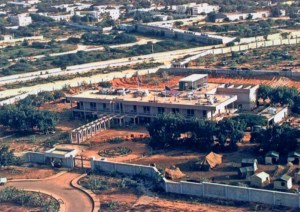
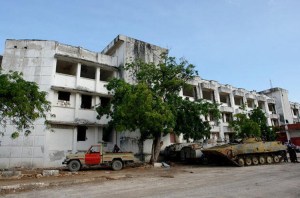
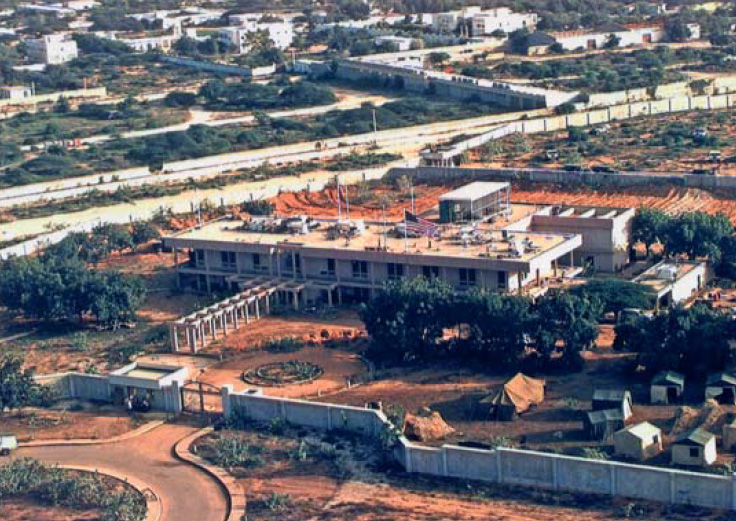
(LEFT) The US Embassy at Mogadishu, abandoned during the Somali Civil War that toppled the Somali Dictator, Siad Barre, but later reclaimed by the American contingent of the United Nations. Here, tents of the Quick Reaction Force (QRF), primarily comprising the 2nd Bn, 14th Infantry of the 10th Mountain Division, appear within the embassy compound. Although the building itself was badly gutted, the compound and the area beyond the embassy formed the core of QRF headquarters. (Department of Defense)
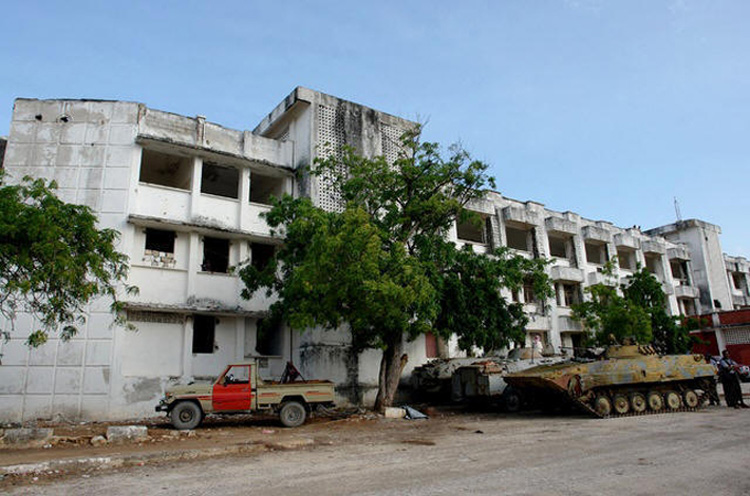
(RIGHT) The scarred, hollowed-out remains of the Villa Somalia, home to Somali dictator, Siyad Barre, during his regime. When Barre was driven out of Mogadishu in January 1991, rebel troops ransacked the hilltop villa, discovering extensive surveillance footage and miles of magnetic tape recordings of telephone conversations. (Department of Defense)

Members of Bravo Company, 3rd Battalion, 75th Rangers pose for the camera in Somalia. (Department of Defense)
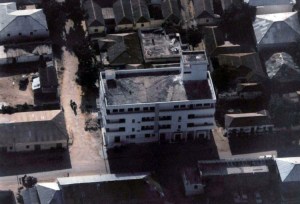
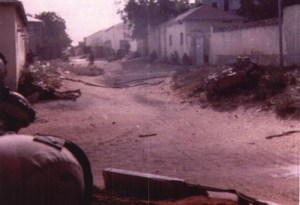
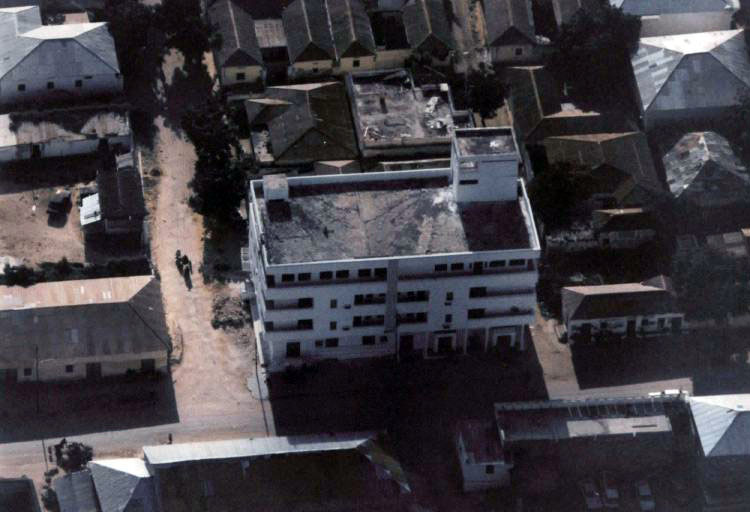
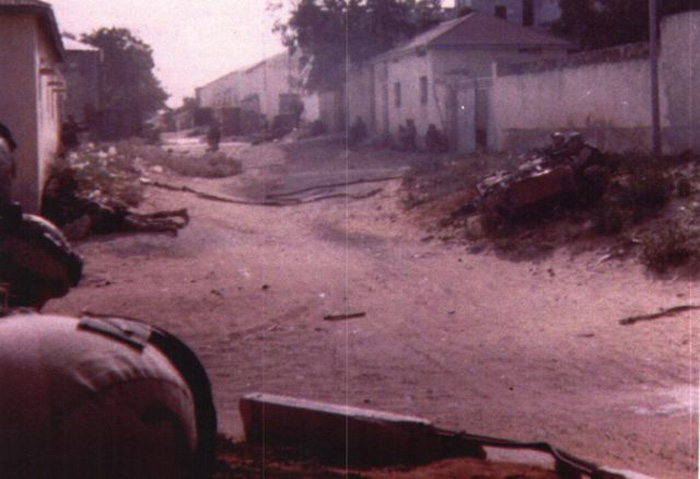
(LEFT) The Olympic Hotel, across the street from the target building. (Department of Defense) (RIGHT) The only picture snapped during the October 3rd battle was this image, showing Captain Steele’s column under attack. (US Army)
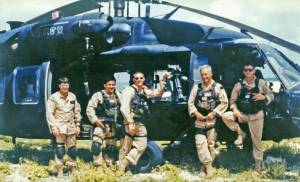

Michael Durant’s Super 6-4. (LEFT) Durant (far right) with his crew. (RIGHT) The wreck of Super 6-4. (Both photos: Department of Defense)


(LEFT) A freed Michael Durant is carried by stretcher to an aircraft destined for Landstuhl, Germany. The two men gripping the far side of the stretcher are Delta Force operators. Malnourished and desperate for familiar food, Durant promptly ordered a large Pepperoni pizza with extra cheese while still en-route. The pizza appeared after he landed, hand delivered by US Air Force crewmen who also picked up the tab — unfortunately the doctors forbade Durant from tasting a single slice, owing to his liquid diet.
At the hospital, Durant was reunited with his family and treated for his injuries (including a fractured right cheek, a broken thigh, a shrapnel wound to his arm and a compression fracture of the lower vertebrae). (Department of Defense)
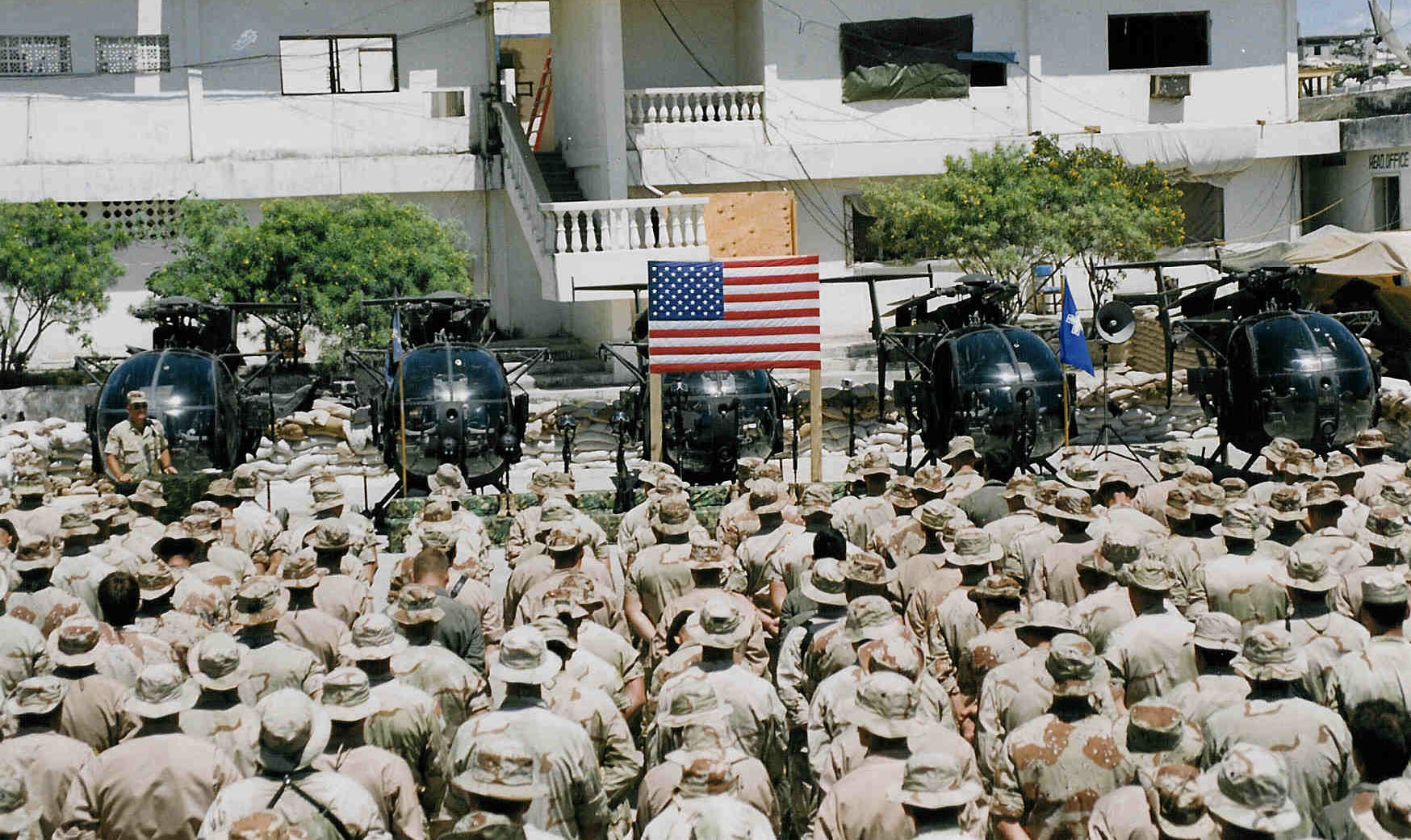
(RIGHT) Ranger survivors of the Battle for Mogadishu gather in memory of their lost comrades on October 5th. (Department of Defense)


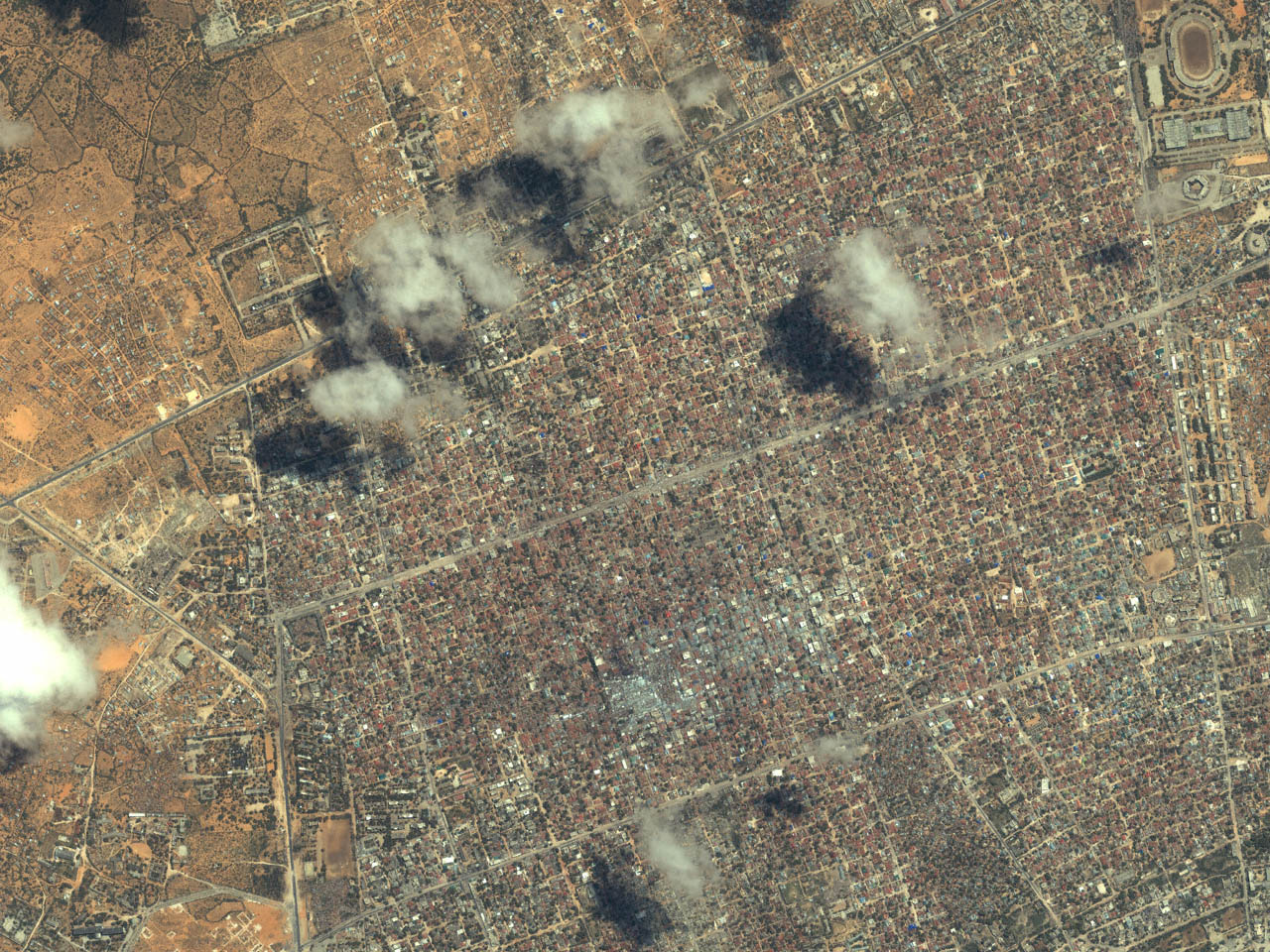
(LEFT) Aerial reconnaissance photograph of Mogadishu, on the day of the raid, 3 October 1993. (Department of Defense) (RIGHT) A United Nations Refugee Agency (UNHCR) map of Mogadishu. Although this map is from 2007, it shows the location of the Olympic Hotel and other important landmarks. (Note — File size is 3.8 mbs) (UNHCR)













 Achilles the Heel