Paris 1944, 1. Uprising

Like prodigals returning home, a column of soldiers from a Free French armored division entered the Nazi-occupied city of Paris. It was the night of 24 August 1944.

They were the first Allied combat forces in the capital in four years but their numbers were paltry only 172 men and three tanks. The column’s mission was paramount: to set up an advanced combat perimeter in the city.

This was intended to boost the morale of the population which had become ensnared in a popular revolt against the Germans for five days. But the column commander, a thick-set, amiable French captain named Raymond Dronne, knew that the mission had more at stake. The detachment was expected to link up with the French resistance and help the rest of their division (the Free French Deuxième Division Blindée or 2nd Armored Division), to prevent what many feared would be Germany’s total destruction of Paris.

The fear was not unfounded. The German dictator, Adolf Hitler, had ordered the German commander of the city, General Dietrich von Choltitz, to leave the capital a sea of ruins. The order was not unprecedented. The Germans had systematically obliterated other cities in Russia and in Europe. At that moment, at the other end of Europe, German forces were obliterating the Polish capital of Warsaw of its resistants, block by block, building by building.

It was 8.45 pm when Captain Dronne’s troops entered Paris through the undefended Porte d’Italie, one of the ancient gateways of the nearly 2,000-year-old city. Seeing the unfamiliar tanks and the strangely garbed men, the locals ran and hid. Then they saw the French tricolor on the sides of the vehicles and erupted into wild celebration. Pushing past the jubilant crowds, the detachment headed towards the city hall, the ornately decorated Hôtel de Ville. The building was, for Dronne, a “symbol of Paris’ freedoms.”
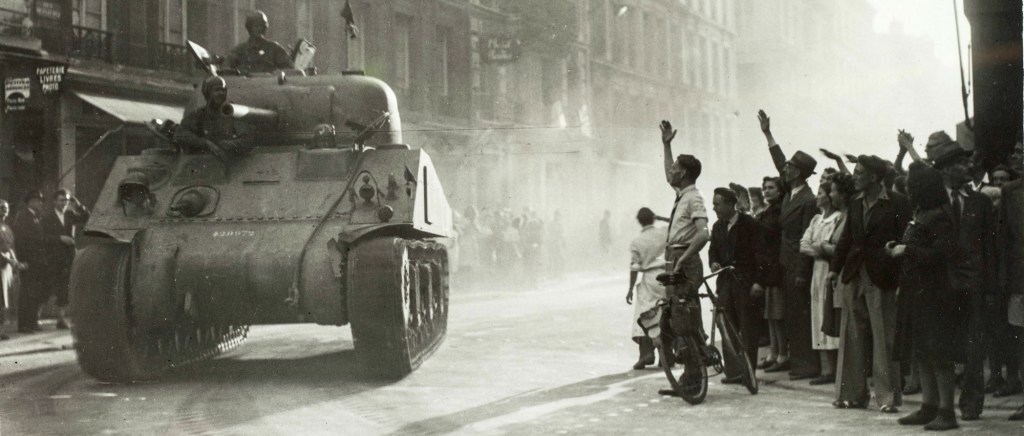
News of the unit’s arrival at the Hôtel de Ville spread like wildfire throughout Paris — triggering a storm of emotions among the people. Church bells began to ring. But the new liberators remained vigil.

All around them were nearly 20,000 German troops, with their leader in Berlin determined to destroy a city which he had likened to the beating heart of France.


Continue reading “Paris 1944, 1. Uprising”

Paris 1944, 3. Liberation

SEIZING THE MAJESTIC

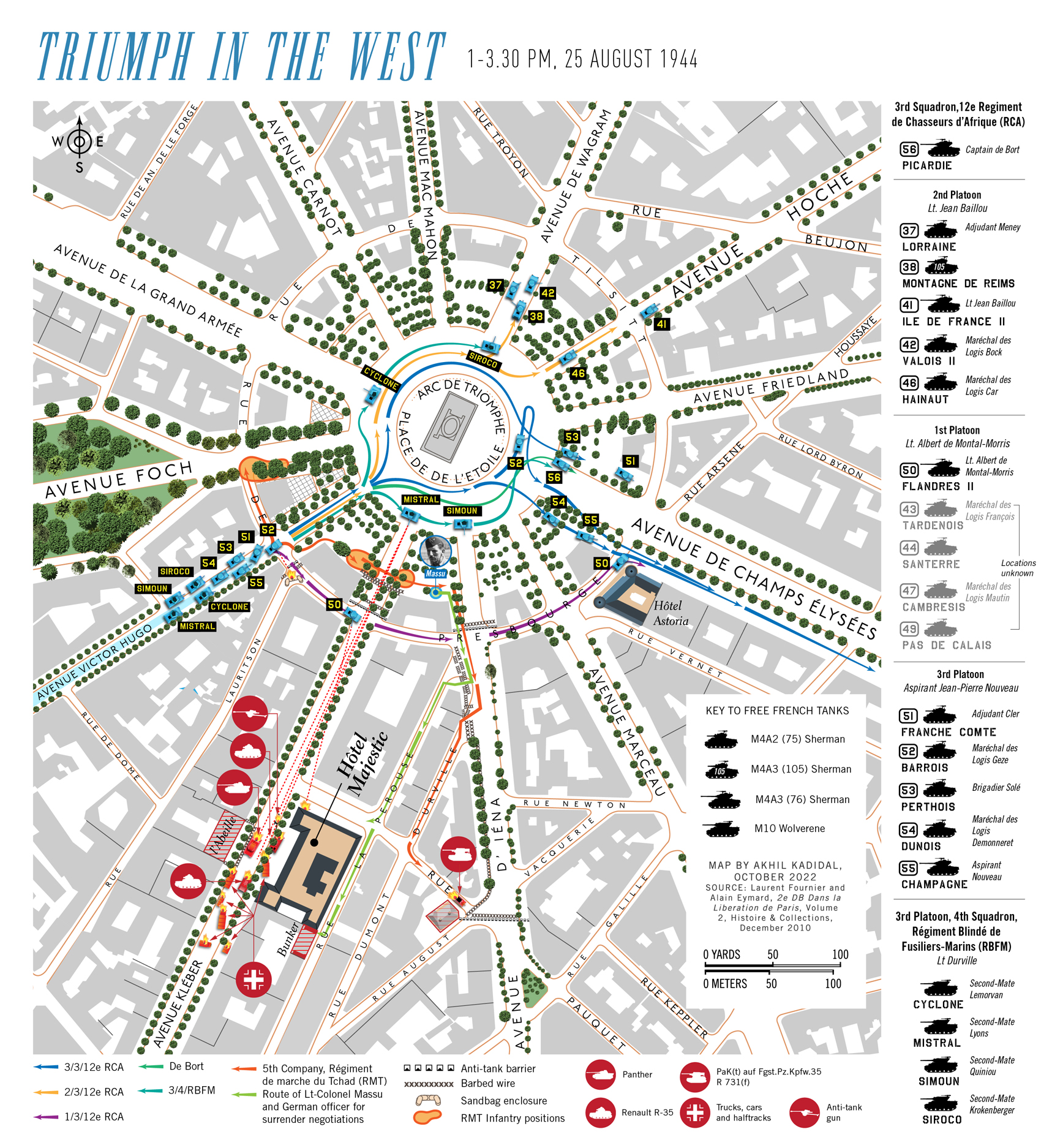
De Langlade had arrived at the Arc de Triomphe to find Massu had deployed his tanks facing down each of the major roads and avenues which radiated outwards from the monument like spokes on a wheel. 

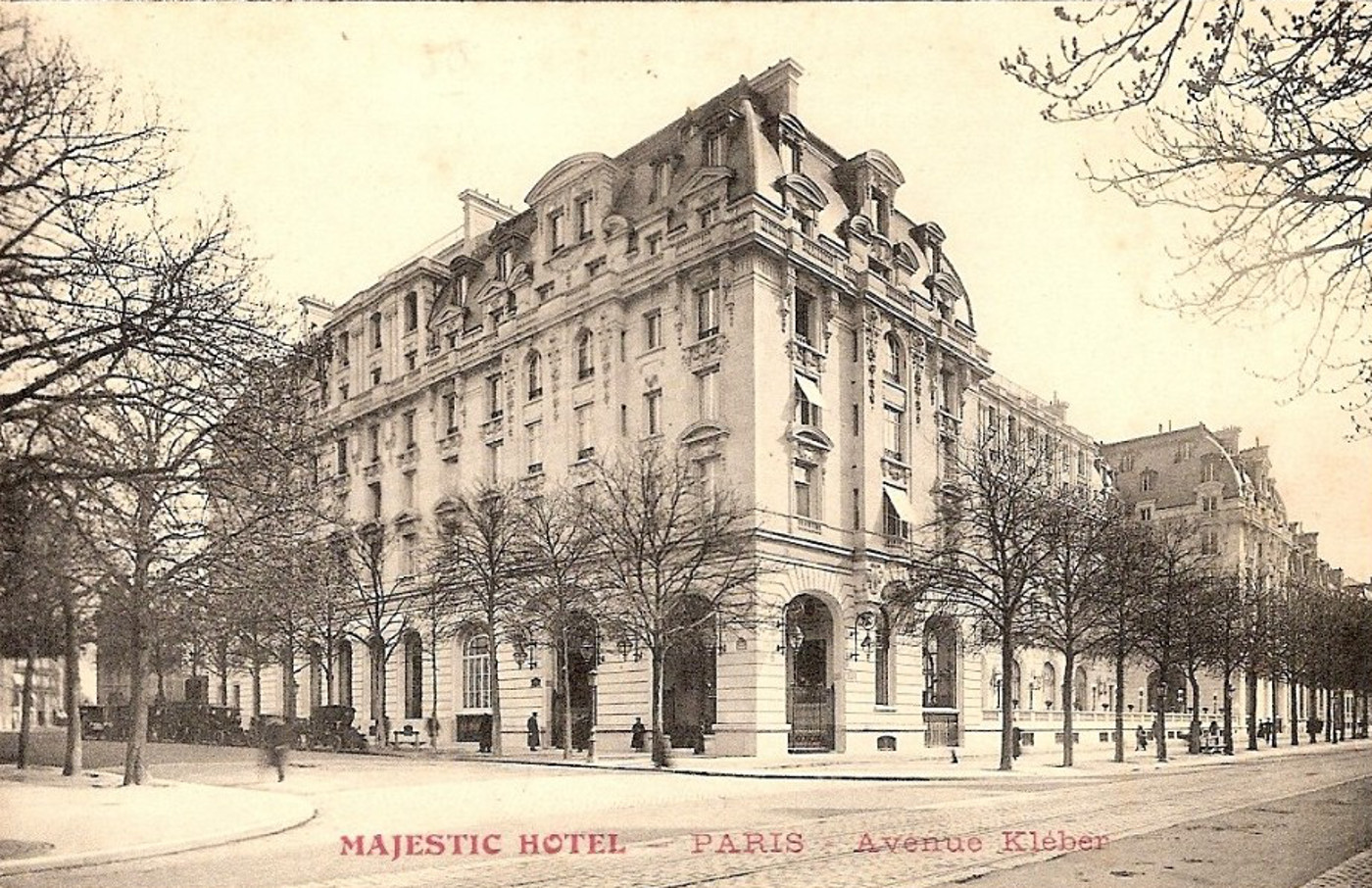
As de Langlade set his forward headquarters next to the monument, his attention focused on the Avenue Kléber where stood the Hôtel Majestic – the headquarters of the Militärbefehlshaber-i-Frankreich (German military high command in France).

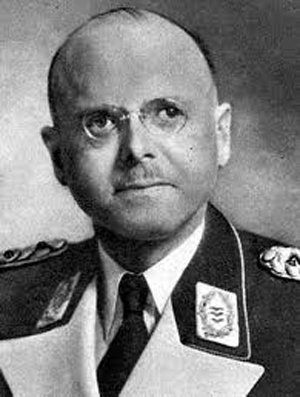
Luftwaffe General Karl Kitzinger (Bundesarchiv)

Officially in command was Luftwaffe General Karl Kitzinger who had replaced Stülpnagel from 17 August. Arrested and tried for treason for his role in the bomb plot against Hitler, Stülpnagel was to be sentenced to death by the Volksgerichtshof on 30 August 1944. He was to be hanged the same day at the Berlin-Plötzensee prison.

The many services of the German administration had been installed at the Hôtel Majestic during the occupation. The building had a large assembly of German staff officers, administrative members and even civilians. (http://museedelaresistanceenligne.org/ media4505-Officiers-allemands-du-Majestic) However, Kitzinger was not present. Like so many other senior commanders, such as General Karl Oberg, head of the SS in the city and Pierre Laval (the Vichy prime minister), he had fled the city.

Battlegroup Langlade occupied the Arc de Triomphe area in force – and found itself in battle with Germans in the Hôtel Majestic. This map is based on another published in the seminal book, “2e DB dans la Libération de Paris,” Vol. 2 by Laurent Fournier and Alain Eymard. (Akhil Kadidal)
The Majestic was a stately structure that opened in 1908. A possession of the French government from 1936, it was sold in 2007 to the Qatar government.

Massu sent the 5th Company (RMT) under Lt. Lucien Berne to seize the hotel. Two of Massu’s tanks (Sherman No 50, Flandres II) and an M10, the Mistral, fired volley after volley down the avenue, exploding three German tanks and several vehicles positioned outside the hotel. A Free French infantry bazooka unit ambushed and wiped out a Panzerjäger tank by the Avenue d’Iéna.

FFI forces tipped-off the Free French about German dispositions around the hotel. The Germans had built a massive bunker on the Rue de la Perouse. (https://liberation-de-paris.gilles-primout.fr/la-reddition-de-lhotel-majestic) As the men of the 5th RMT approached the eastern side of the hotel, the troops in the German bunker opened fire.

A thick smoke filled the sky. A bareheaded, balding German officer appeared, waving a white flag. The German officer told de Langlade that the units around the Majestic would surrender under certain conditions.

Free French infantry from the 5th Company (2nd Battalion, RMT) and several resistance fighters, shoot at the Hôtel Majestic. The troops are armed with a mix of US-supplied M1 Garand rifles, M1 carbines and two Browning .30-cal machine guns. (Paris Musées)

Langlade replied that the Germans either surrender within 30 minutes or face annihilation. The officer returned to the Majestic, accompanied by Colonel Massu, a number of soldiers and even a film crew. As the group crossed the rue de la Perouse, a shot rang out. A German sniper had killed Sergeant-Chief Rene Dannic, 38.

Despite this, the Massu and the Free French contingent proceed into the Hôtel Majestic, only to come face-to face with several armed Germans in the east foyer.

“Heraus!” (Get out of here!), Massu yelled.

Continue reading “Paris 1944, 3. Liberation”