
Aftermath
“Arnhem took a bit of everything – the bombs, then the occupation, and finally the Airborne.” – Audrey Hepburn
On the quiet morning of 26 September, the detritus of war clogged the streets of Arnhem and Oosterbeek.
The local population, already distressed by the defeat of the British, were stunned when the Germans ordered all civilians out of the area – ostensibly on the claim that the British would launch a counterattack into the area.
The populace saw through this messaging, and recognized that it was mostly retaliatory for the Dutch having helped the airborne. Nevertheless, 90,000 to 170,000 civilians were forced to leave the Arnhem and Oosterbeek areas within 72 hours. (Kuiper, pg. 1) The mass of humanity snaked past Velp, towards Apeldoorn.
Hepburn watched them go. “I still feel sick when I remember the scenes,” she said later. “It was human misery at its starkest—masses of refugees on the move, some carrying their dead, babies born on the roadside, hundreds collapsing of hunger…. 80-90,000 people looking for a place to live.” (Paris, Ch. 1, 8%)
The van Heemstras took in 40 people but “there was nothing to eat,” Hepburn said. (Ibid.)
After the towns were emptied of people, the Germans proceeded to loot the homes and stores within. Brigadier “Shan” Hackett, commander of the 4th Parachute Brigade (who had been wounded on 24 September and left behind), was being transported to St. Elisabeth Hospital in a British jeep by a captive British medico. They came upon a group of SS troops engaged in looting.
Hackett was appalled to see the SS jovial and roaring with mirth.
They were big, blond and “enormously unpleasant”, Hackett said, adding that everything about the SS men repelled him, their noses, their mouths, their tunics, their manners, the way they laughed. “I felt a deep and personal hatred for every one of them,” he said. (John Hackett, I Was A Stranger (Random House, 1999), Ch 1., loc. 247, 7%)
In unison with the forced evacuation, the Germans blocked food and coal supplies to the western Netherlands. A man-made famine erupted, snaring 4.5 million people out of the country’s total population of 9.1 million. The timing of the famine, occurring in the winter of 1944, which was the coldest winter in at least three years34, also had egregious consequences.
At least 18,000 people are thought to have died during the “Hunger Winter.” (Buckingham, pg. 227) Millions of others were on the verge of starvation, among them Hepburn, who was afflicted with jaundice in the last six months of the war.
“My mother and aunt and I ate very little,” she said later. “We ate a few turnips, we made flour from tulip bulbs, which is actually very fine flour. In the winter there was nothing; in the spring we picked anything we could in the countryside….” (Richmond News Leader, 24 May 1991) The effects of the famine had lifelong ramifications for Hepburn. She developed “acute anemia, respiratory problems and edema,” she said later. (http://ahepburn.com/article6.html)
This wartime experience of starvation would later inform Hepburn’s humanitarian work with United Nations Children’s Fund (UNICEF), in places such as Bangladesh, Ethiopia, Central and South Americas (Ecuador, El Salvador, Honduras, and Guatemala), Somalia, Sudan, Thailand, Turkey, and Vietnam.

As the winter wore on, the Germans also began seizing goods from Dutch homes and stores in areas where the Dutch civilian population had not been forced out – bicycles, clothes, food, household items, even skates. (Hackett, Ch. 16, loc. 2181, 58%)
The dire situation of the Dutch would prompt a concerted Allied air supply operation in spring of 1945, codenamed Operation Manna. But that is another story.

Lessons from a Historic Failure
Market-Garden was a litany of British-enforced errors which caused the deaths of thousands of men and misery for the Dutch. Many of the surviving British airborne were embittered and they had every right to be. The airborne reserved particular rancor for XXX Corps.35
Montgomery blamed the failure on the bad weather which delayed the arrival and deployment of the Polish Parachute Brigade, the lackadaisical air power, and the inability of XXX Corps to reach Arnhem on time. (Montgomery, pgs. 148-149) These were fair things to criticize, but Monty also ignored (officially at least) the more fundamental flaws which had led to disaster.
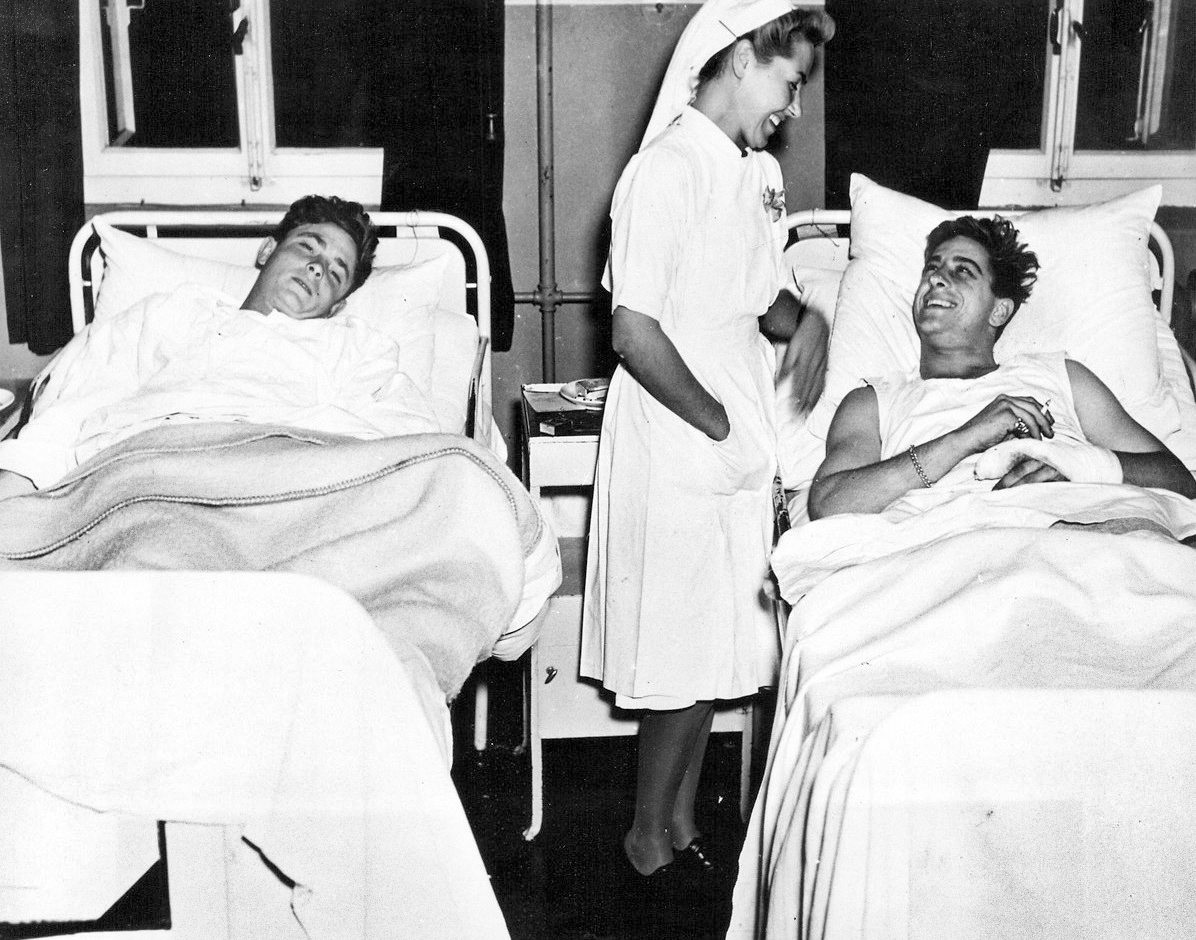
Market-Garden generated lessons which are applicable now for warfare as they are for business. The operation revealed how poor leadership, cronyism, flippant planning, and overconfidence could usher defeat from the grips of victory.
The operation showed that Browning, who perhaps had a gift for administration, lacked the dexterity for corps-level, frontline command.
Although a member of the Guards in World War I, Browning did not accumulate major combat experience until the penultimate year of the conflict, 1917. He was appointed 1st Airborne Division commander in 1941 and was key in the division’s formation, but never led it into combat. In 1944, he was handed command of the British I Airborne Corps on account of his seniority. His close relationship with Montgomery played a role in his appointment to command Market, with the more experienced Ridgeway sidelined.
So close was Browning to Montgomery that one of his daughters, Tessa, married Montgomery’s only son, David in 1970.
This is not the only suggestion of favoritism in Montgomery’s choice of commanders, which arguably was also a product of the clannish, tribal-like mindset that could be found in the corridors of senior leadership in the Imperial-era British Army. Horrocks, for one, was an acolyte of Montgomery’s from the early days of war. However, Horrocks was also a man of merit, an able, flamboyant leader.
Urquhart, a non-entity in airborne operations, also replaced the capable (if abrasive) Ernest “Eric” Downs as commander of the 1st Airborne Division in January 1944.36 Urquhart was one of Montgomery’s proteges. (Buckingham, pg. 120)
The elevation of mediocrity through the ranks does not elevate standards. Instead, it weakens the unit. Browning and Urquhart should not have held apex leadership roles in the operation. When cronyism replaces merit, it also creates leaders who are unable or unwilling to accept reality as it unfolds. Narratives replace truth.
The root cause of the failure of Market was the inability of Browning and many 1st Airborne senior leaders to anticipate or accurately perceive the challenges they would face, which compounded their later inability to control their circumstances.
Another flaw was a hesitancy to listen to external viewpoints, especially if they happen to be critical. For his abrasiveness and outspokenness, Sosabowski was shanghaied.
Granted, Montgomery found the Polish commanders “difficult to manage owing to the inter-war politics of the Polish Officer Corps.” (Evan McGilvray, Black Devils’ March – A Doomed Odyssey (Helion, 2010), pg. 30). Sosabowski’s single-minded determination to preserve his brigade for the liberation of Poland was also folly. The thought that the Allies would be able to transport the brigade over Nazi Germany, to Poland was absurd.
However, these were an aside to Sosabowski’s valid observations and criticisms during Market.
Guilt and Betrayal
On 1 December 1944, Sosabowski discovered that Browning had written to General Sir Ronald Weeks, Deputy Chief of the Imperial General Staff (CIGS), recommending Sosabowki’s removal from command of the Polish Parachute Brigade. The charge was that Sosabowski was “difficult to work with.” (Sosabowski, pg. 279)
The letter was remarkable, because Browning by this time, was on his way out as leader of the British I Airborne Corps. He had been replaced by General Richard Gale, the former commander of the British 6th Airborne Division.
Despite Browning’s role in the Allied defeat, Montgomery continued to speak highly of him. The tribal mindset again. Monty went so far as to write to CIGS asking to have Browning appointed as commander of another corps if a vacancy arose.37
Gavin, however, cut right through the chaff.
Browning “lost three-quarters of his command and a battle. He returned home a hero and was personally decorated by the King,“ Gavin said. “There is no doubt that in our [US] system he would have been summarily relieved and sent home in disgrace.” (Gavin, pg. 232)
In the meantime, Browning’s letter ensured that Sosabowski’s war was over. He never commanded another frontline unit again. After the war, circumstances led him to a job as an ordinary factory worker in West London. To the end of his days, Sosabowski could never understand why Browning had done what he had.
So, the reputation of Sosabowski and his brigade, while redeemed by historians through the decades, has languished officially in no-man’s land. The Dutch, however, have tried to rehabilitate the brigade’s reputation.
On 31 May 2006, the Dutch government conferred the brigade with the country’s highest military award for valor (the Military Order of William). Sosabowski (who had died in 1969) was posthumously awarded the second highest award for bravery (the Bronze Lion). This act was supported by several surviving 1st British Airborne veterans and officers.38
Meanwhile, back in late 1944, Browning was posted to a job at South-East Asia Command (SEAC), in Ceylon (now Sri Lanka). “I’ve got a pretty awful job,” Browning wrote in a letter to his wife. (Richard Mead, Ch 22, Ref 28.17, 57%) He would not officially wear the beret of the “Red Devils” again.39
Over the years, Horrocks’ conscience reminded him of XXX Corps’ lethargic progress. He also realized, with retrospect that it had been folly to “fight an entire Corps off one road” (Highway 69). (See Brian Horrocks, A Full Life)
The ambitious plan that was Market-Garden had all the ingredients of success: three divisions with battle-ready paratroopers, an independent Polish airborne brigade replete with highly motivated anti-Nazis, and massive (albeit improperly wielded) air support. But like an intricate Goldberg’s machine, the operation required constant precision to succeed, which explains why it did not.
Arnhem became an “Alamo” of sorts for Great Britain, and this reflects our peculiar human trait to take our defeats and try to elevate them into stories of triumph. Reams of paper have been written about military failures. Reels of film have portrayed the words in those pages: the 1959 US film, Pork Chop Hill, about devastating losses suffered by US troops on a hill in Korea; the 2021 Chinese film, The Battle at Lake Changjin which glosses over the inability of five Chinese divisions to destroy a single US Marine Corps division (again in Korea), and even 1998’s Black Hawk Down (a battle that can be defined as a failure as it did not succeed in its objectives and led to the premature US exit from Somalia).
Why do we seek to re-examine our defeats? To find something redemptive in the exercise, and to define the resilience of the human spirit even in failure.

 Achilles the Heel
Hi thereYou write so brilliantly. Such clarity, such mastery of the language.Thanks for sharing.I had a friend, a Dutch – Indonesian woman, whose father took the family to Holland
Hi. I really appreciate your kind words. And thank you – for sharing about your friend!
Actually, my original message got truncated. So here is the remainder
My friend was about 10 when the War began and she spent the duration in Arnhem. She witnessed many horrible things, including people being shot in the street. And some of the fighting. The family suffered greatly from food shortages too.
The War left a lasting impression as you can well imagine, I am sure.
Best wishes
Steve (I’m the guy who sent you the books on WW2 in Burma)
Hi Steve, good to hear from you! I still have the books on my shelf.
I can only imagine the trauma she must have experienced. Did she record any of her experiences?
No, and she passef away years back. Her father was an engineer on the Dutch East Indies Railway in Java. Went to Europe with the family around the time of Chamberlain proclaiming “Peace in our time”
Bad mistake. At war’s close they returned to Java, but like a lot of Dutch and Indo-Dutch, fled to Irian when Indonesia won the war of Independence in 1949.
Lived in Irian until the “Act of Free Choice” in 1963, from memory. What a joke that was.
Then migrated to Australia to build a new life. Lovely woman who married a lovely Australian guy.
Cheers
Steve
That is so interesting. Thanks for sharing this information, Steve. Mighty grateful.
The civilian experience at Arnhem is understudied in English-language history. Documents indicate that 453 civilians died during the Arnhem battle. I can only imagine the plight of the civilian populace caught up in the battle.
She spent the War living in Arnhem. She was a young woman. She witnessed many horrors. It was an experience that coloured the rest of her life.
Wow Akhil!!! Need some time to digest this :). Great stuff I’m sure!!Marco Cillessen
Looking forward to hearing your thoughts, Marco.
For anyone interested, there is an episode from Thames Television Tv series U.K called “This is your life” filmed in the seventies (i think).One episode featured Major General John Frost CB DSO &Bar MC DL.Towards the end of the show a group of men who were with him came on as a suprise.This episode on YouTube.Also on there, is a tour of the bridge and a first hand account of the fighting in around it by Steve Morgan of 2 Para at the time, a lovely man.
Dear Akhil ,
First my compliments on a verry good website.
But the foto`s of the railway bridge in Oosterbeek are both not from the battle.
The first one is from after the war and the second on is from may 1940 and shows the damage done by the Dutch Army on the 10th of may when all the bridges in the surrounding of Arnhem and Nijmegen where Blown.
The book: The lost Company, by Marcel Anker (2017) will show howe the bridge looked before and after the battle
Kind Regards
Hans Wabeke
Thanks for this valuable information. I will delete the images.
The Horsa Glider could take the 6 pounder AT gun but NOT the 17 pounder AT these where flown in by the Hamilcar gliders.
You are absolutely right. Thanks for pointing this out.
The pictures of the railway bridge are NOT from the batlle in 1944, the first on is from after the war and the second shows the bridge in may 1940. Alle the bridges around Arnhem and Nijmegen where destroyed by the Dutch Army in the early morning of the 10th of may 1940.
Yes, this has been pointed out to me. There was brief imagery of the broken bridge from “Theirs is the Glory”. I need to see if I can find that footage.
The book “the lost company” by Marcel Anker (2017) contains pictures from the bridge before and after the battle
The book seems to be out of print, sadly. Let me check if I can source it somehow.
Try ‘Meijer&Siegers”Bookstore in Oosterbeek
Thanks.
“bolt-action .303-inch (7.7 mm) Lee-Enfield rifles (sheesh!)” Why “sheesh”? The standard firearm of the German army was also a bolt-action rifle; both rifles in the hands of a trained soldier are deadly. This piece comes across as very condescending towards the British, from the Generals right down to the firearms.
Hi,
Thank you for your comment. It is appreciated. What is your name, by the way?
In my view, the issuance of the bolt-action Lee-Enfield No. 4 to the airborne forces gave the paras/glider troops a weapon that was not only heavy but also cumbersome in close-quartered fighting, not to mention that it could not give airborne forces an adequate volume of fire to match that of the Germans. Sure, the Germans also had the Kar98K, but their airborne forces also had the automatic FJ42, the semi-automatic Gewehr G43, the StG44, not to mention the venerable MP40 and the MG42 which could produce a heavy volume of fire. By the way, I make mention later on in the monograph that some Paras at Arnhem demonstrated their adroitness with the Lee-Enfield through sheer shooting accuracy.
Also, in Urquhart’s book, a few negative things are said about the Sten Mk V and how it was a “temperamental weapon at best” – a comment I found dismaying. I also have some data in my files somewhere about how the US M1 Carbine found some favored use in the 1st Airborne Div.
Anyway, I reject the charge of condescension. Have you read my other pieces on this website? They are replete with tellings of British heroics and achievements, whether they be on Malta, in Burma with the Chindits, in Normandy (even during the stalled Epsom offensive) or in North Africa.
My name is Martin, I’m not sure where the “furry” so and so came from, the Chindits is an excellent piece indeed, as is most of your stuff, especially the liberation of Paris, sorry I shouldn’t moan, you do an excellent job, and I see where you are coming from, it took the British army far too long to get a semi automatic rifle into service, saving ammo on the generals minds no doubt, now I’m doing it lol.
Thank you, Martin. I am grateful for your candor! At the end of the day, I am happy to discuss/debate any queries about my research – and WWII in general- time permitting.
Thank you Akhil
“armed with the new Sten Mk V variant (a version that incorporated a wooden stock and foregrip, representing a major enhancement of an ugly wartime weapon made out of stamped sheet metal).”
The Sten Ugly? Remember, beauty is in the eye of the beholder. Now, I give you that the MKV might be improved, but it was a hell of an ugly improvement, to my eye anyway. 😀 Still, for me, the MKII Sten is the most beautiful submachine gun of WW2. Still, I am partial to brutalism, and the Sten cost tuppence ha’penny at a time when Britain needed a sub machine gun quickly and the Lanchester, while a lovely weapon, was too time-consuming and expensive.
Just a few thoughts, currently reading your Stalingrad, it is excellent, if I could just add here that I think one of the reasons the Germans liked the PPSH so much was it’s 50 round drum magazine.
The Sten Mk II is the iconic variant of the weapon and gave Britain a high-value frontline weapon at a fraction of the cost, I agree. But the Mk II is also hard on the eyes! The Sten Mk V is a more elegant-looking weapon (IMHO), and with its wooden stock, pistol grip, and foregrip, had improved handling.
The Stalingrad piece is old now; written years ago. Sadly, I lack the time to do a refresh.
I feel that the PPSh-41 was a formidable weapon. However, as you may know, most of these SMGs were hobbled by limited range (as per Ian Hogg, the effective range of the Thompson SMG was 50 m, that of the Sten Mk II was 40 m; the PPSh-41 and the German MP40 had better effectives ranges of 100 m). Stopping power is a separate matter. In any case, these SMGs were effective only as close-quartered weapons. Going back to Arnhem, it is arguable whether the 1st Airborne would have befitted from having more automatic weapons such as the Sten Mk V, Thompson or M1 Carbine (effective range: 180 m), when considering factors such as volume of fire versus ammunition availability.
Also, if I may add to my previous comment about the Lee-Enfield No 4 rifle: According to Lt. Col. H F Joslen’s, Orders of Battle, Second World War, 1939 -1945, the standard basic allowance for a British Airborne Division in 1944 included: 7,171 Lee-Enfield No 4s, 6,504 Sten Mk Vs, and 966 Bren LMGs (to mention a few weapon types). The actual number of weapons issued to the 1st Airborne would have varied slightly, but it is likely that the Lee-Enfield was the predominant small arm in the division in September 1944. The employment of the M1 Carbine during the Arnhem battle appears to have been limited to troops within the 1st AB HQ and the Glider Regiment. During my research, I didn’t pay much attention to the number of M1 carbines or other small arms issued, so I don’t have a number on how many M1s were used in the Arnhem sector. Perhaps a visitor to this site has the answer.
Pingback: Colors of the Caribbean