De Langlade had arrived at the Arc de Triomphe to find Massu had deployed his tanks facing down each of the major roads and avenues which radiated outwards from the monument like spokes on a wheel.
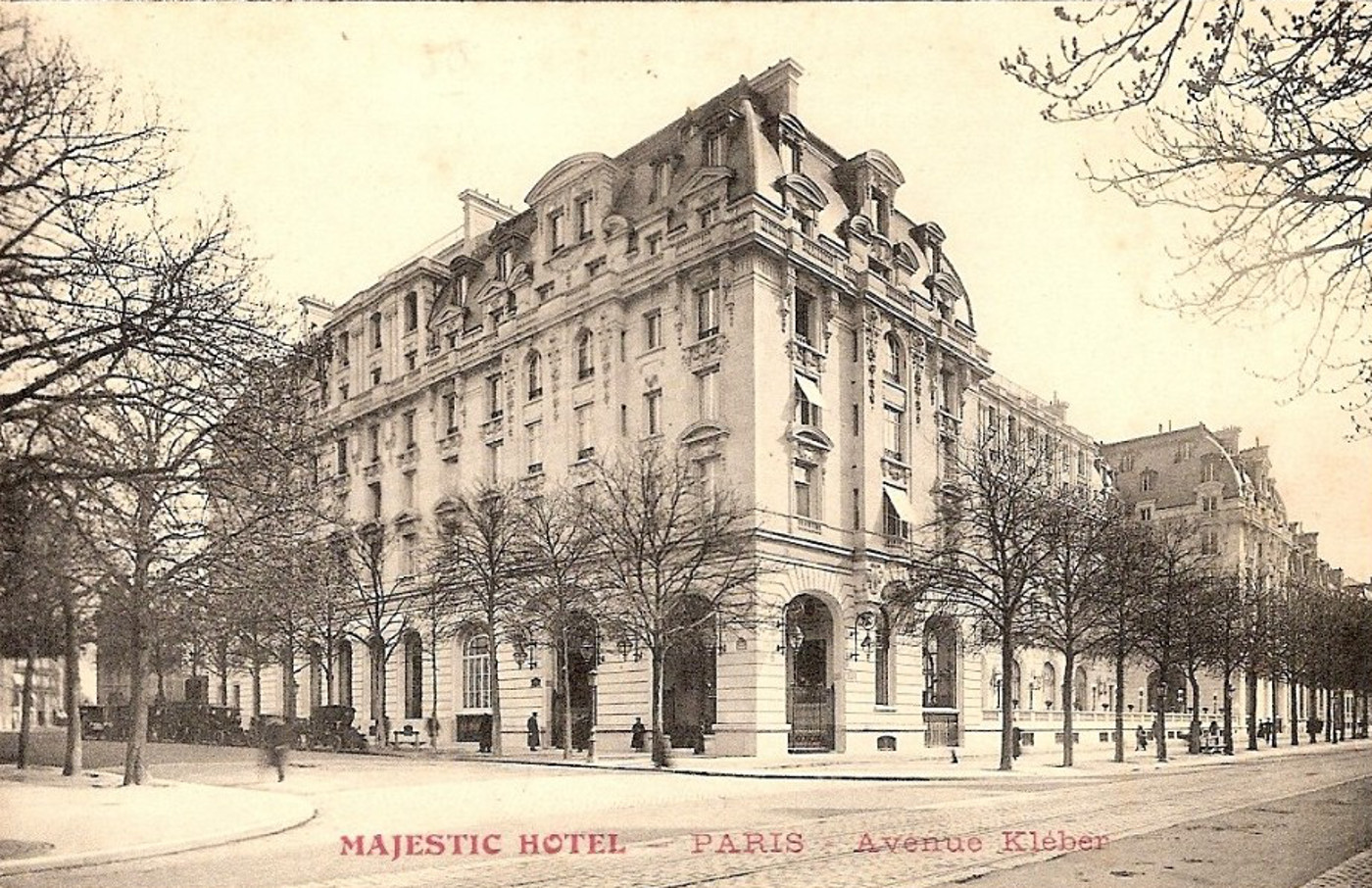
As de Langlade set his forward headquarters next to the monument, his attention focused on the Avenue Kléber where stood the Hôtel Majestic – the headquarters of the Militärbefehlshaber-i-Frankreich (German military high command in France).
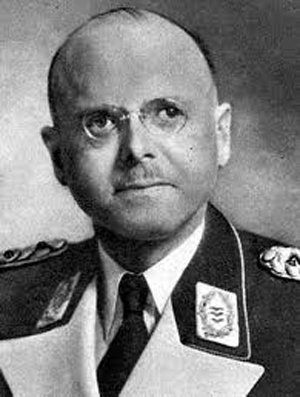
Luftwaffe General Karl Kitzinger (Bundesarchiv)
Officially in command was Luftwaffe General Karl Kitzinger who had replaced Stülpnagel from 17 August. Arrested and tried for treason for his role in the bomb plot against Hitler, Stülpnagel was to be sentenced to death by the Volksgerichtshof on 30 August 1944. He was to be hanged the same day at the Berlin-Plötzensee prison.
The many services of the German administration had been installed at the Hôtel Majestic during the occupation. The building had a large assembly of German staff officers, administrative members and even civilians. (http://museedelaresistanceenligne.org/ media4505-Officiers-allemands-du-Majestic) However, Kitzinger was not present. Like so many other senior commanders, such as General Karl Oberg, head of the SS in the city and Pierre Laval (the Vichy prime minister), he had fled the city.
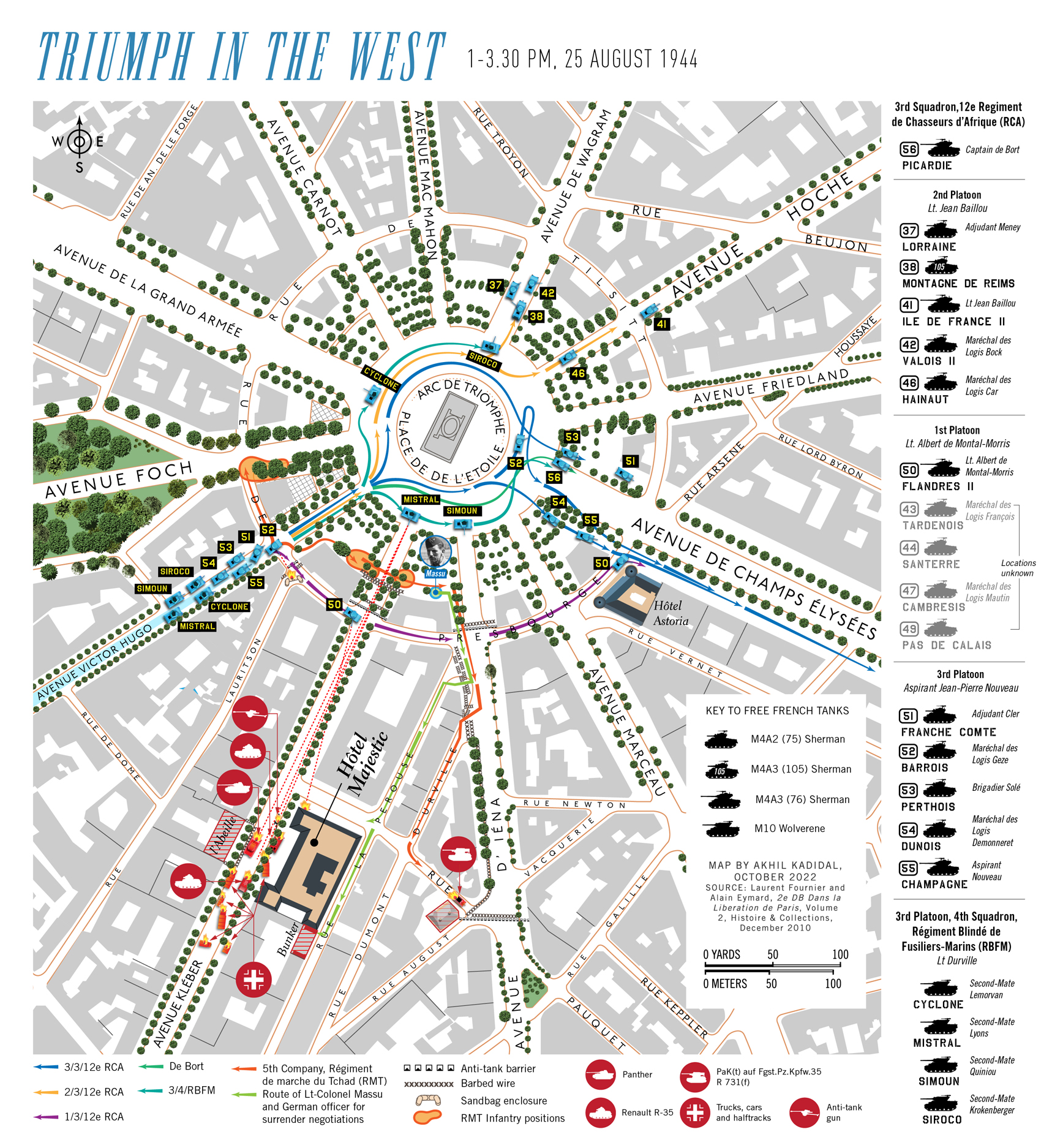
Battlegroup Langlade occupied the Arc de Triomphe area in force – and found itself in battle with Germans in the Hôtel Majestic. This map is based on another published in the seminal book, “2e DB dans la Libération de Paris,” Vol. 2 by Laurent Fournier and Alain Eymard. (Akhil Kadidal)
The Majestic was a stately structure that opened in 1908. A possession of the French government from 1936, it was sold in 2007 to the Qatar government.
Massu sent the 5th Company (RMT) under Lt. Lucien Berne to seize the hotel. Two of Massu’s tanks (Sherman No 50, Flandres II) and an M10, the Mistral, fired volley after volley down the avenue, exploding three German tanks and several vehicles positioned outside the hotel. A Free French infantry bazooka unit ambushed and wiped out a Panzerjäger tank by the Avenue d’Iéna.
FFI forces tipped-off the Free French about German dispositions around the hotel. The Germans had built a massive bunker on the Rue de la Perouse. (https://liberation-de-paris.gilles-primout.fr/la-reddition-de-lhotel-majestic) As the men of the 5th RMT approached the eastern side of the hotel, the troops in the German bunker opened fire.
A thick smoke filled the sky. A bareheaded, balding German officer appeared, waving a white flag. The German officer told de Langlade that the units around the Majestic would surrender under certain conditions.
Free French infantry from the 5th Company (2nd Battalion, RMT) and several resistance fighters, shoot at the Hôtel Majestic. The troops are armed with a mix of US-supplied M1 Garand rifles, M1 carbines and two Browning .30-cal machine guns. (Paris Musées)
Langlade replied that the Germans either surrender within 30 minutes or face annihilation. The officer returned to the Majestic, accompanied by Colonel Massu, a number of soldiers and even a film crew. As the group crossed the rue de la Perouse, a shot rang out. A German sniper had killed Sergeant-Chief Rene Dannic, 38.
Despite this, the Massu and the Free French contingent proceed into the Hôtel Majestic, only to come face-to face with several armed Germans in the east foyer.
I do not consider myself an expert on the “Battle of the Bulge.” The battle is dense and eventful. But I thought I knew enough about the Ardennes offensive to elevate me above the rank of battle hound. Then I read Alex Kershaw’s “The Longest Winter” and discovered the actions of the Intelligence & Reconnaissance Platoon of the 394th Infantry. As with some of my work, this post is centered around a map of the engagement. During the course of the research, I discovered that two of the GIs (PFC Bill James of White Plains (NY) and PFC Risto Milosevich of Los Angeles (CA) were students of my alma mater, Tarleton State (Texas A&M).
Lanzerath, 16 December 1944. The initial situation
A shortage of manpower in the US military at the twilight of World War II forced the army to transfer some of its best and brightest college-educated draftees who were training to become technical experts and officers to frontline units in 1944 as enlisted personnel.
As members of the US Army Specialized Training Program (ASTP), the draftees were to be employed as high-grade technicians and specialists. However, on 1 April 1944, many were reassigned to infantry, airborne, or armored units. Eighteen such men found themselves in a so-called Intelligence and Reconnaissance (I&R) Platoon of the US 394th Infantry Regiment in the European Theater of Operations, in the winter of 1944.
Isolated, in a forward position in eastern Belgium, amid snowy, near sub-zero conditions , the platoon found itself snarled in a maelstrom of combat during the opening blows of what would become known as the “Battle of the Bulge.”
Isolated Location
The 394th Infantry Regiment’s I&R Platoon had been posted to an unremarkable hilltop overlooking the Ardennes village of Lanzerath, a few thousand yards from the German frontier on 10 December 1944. Like in the rest of the Ardennes Forest, the platoon’s deployment was regarded as being in a “quiet sector” with scant presence of the hostile German military.
The core role of I&R Platoons in the US Army was to gather detailed information about enemy forces and the terrain in locations that US Arm rifle companies and battalions could not easily access. But in being posted to Lanzerath, the 394th’s I&R Platoon was also expected to fulfill another, more critical role: plugging a gap in the US lines.
The platoon’s parent unit, the US 99th Infantry Division, was a rookie to the wilds of the western European campaign. Known later as the “Battle Babies”, the division arrived on the continent on 6 November 1944, having missed the Normandy campaign and the subsequent Allied breakout across France. Posted to the Ardennes, the division’s inexperience was exacerbated by the fact that it was forced to string its three infantry regiments (393rd, 394th and 395th) out across a 25-mile front, along forest-covered hills.
US army doctrine stipulated that a infantry battalion could cover 800 yards of a frontline. But the 99th’s nine infantry battalions were each covering between 830-1,000 yards. This made it near impossible for US patrols to cover the gaps.
By 14 November, all of the 99th’s battalions and companies were on the frontline barring the 3d Battalion of the 394th Infantry, which was held in a divisional reserve near the boundary with US V and VIII Corps, near the so-called “Losheim gap”, a particularly thinly held part of the frontline.
With only two battalions under his command, Colonel Don Riley of the 394th Infantry Regiment, tried to plug potential holes in his perimeter with small units. One worry was the village of Lanzerath which commanded a road leading westwards, deeper into American lines. The village was the responsibility of the neighboring US Army units such as VIII Corps and the US 14th Cavalry Group.
However, the 394th Infantry lacked combat troops to occupy the village in force and so Riley employed the I&R platoon to provide advanced warning of a German advance or attack in the area. In command of the 394th’s I&R Platoon was First Lieutenant Lyle Bouck Jr, just 20 years old but not an ASTPer. Instead, he was a pre-war army volunteer who had risen through the ranks to become an officer.
“Our I&R Platoon was ‘temporarily’ moved into the resulting gap with orders to investigate and report any observed enemy activity,” a former platoon member, Private G Vernon Leopold, told US Congress in 1981.
The platoon’s location at Lanzerath occupied a veritable no-man’s land between two US Army Corps.
Lanzerath itself was unremarkable, having fewer than ten houses with wooden framework construction that could not withstand enemy fire. However, the village was situated about 300 yards south of a key road junction that connected Buchholz Station to the town of Losheimergraben. Northwest of Losheimergraben lay a major road network which would become a primary route of advance for the German Sixth Panzer Armee (Tank Army) during Operation “Wacht am Rhein” (The Watch on the Rhine) which would go down in the annals of history as the “Battle of the Bulge.”
The Sixth Panzer Armee was under an old veteran, SS Oberst-Gruppenfuhrer (General) Josef ” Sepp” Dietrich who intended to use the road network to reach the Belgian city of Liége.
As night fell on western Europe on 15 December, neither Lt. Bouck nor his men suspected that they had an engagement with history in the morning.
One of the 105,000 ASTP trainees to be reassigned to combat divisions was the postwar giant of postmodernism, Kurt Vonnegut, who was assigned to the doomed 106th Infantry Division. Like the men of the I&R Platoon in the 394th Regiment, Vonnegut was also an I&R member, of the 423rd Regiment.
Mapping the Ardennes offensive proved much arduous than my earlier work on Normandy and D-Day.
Admittedly, I knew little about the Ardennes, cloaked as it was, under a tangle of oak, willow, conifers, poplar and beech. What I did know about this great campaign came from scattered readings and for having seen the great 1965 turkey The Battle of Bulge, the significantly better Battleground (1949), and the two-odd episodes of Band of Brothers which portrayed US airborne at the besieged market town of Bastogne.
Part of the challenges is that the landscape of the Ardennes is a difficult place to wrap the mind around, populated as it is with places with impossible names like Houffalize, Foy, Soy, Wiltz, Champs, Saint-Vith, La Gleize, the vaguely wookie-sounding Neiderwampach, Sibret, Butgenbach and a rather pleasant-sounding village named Bra.
The battles here were monstrous; the brainchild of a despot grasping at straws for a last victory which he believed would reverse the course of the war. However, the finer details of the battle contain an almost supernatural quality: of phantom, snowsuit-clad Germans passing in an out of US lines, of American paratroopers holding frozen ground against titanic German tanks appearing of the mist, of foxlike English-speaking Germans sowing discord behind the lines, of diehard SS commandos wielding captured US Army equipment and uniforms to punch through Allied lines and a fog which hung like a pall for the first nine days of the battle.
Yet, the alien, hard edges of the Battle of the Bulge are softened somewhat by the pop-culture icons who found themselves in the midst of this struggle — men like the late, affable actor Charles Durning, who possibly survived an SS war crime outside the town of Malmedy, and the author, Kurt Vonnegut of Indianapolis, who, as a member of the green US 106th Infantry Division, fell into the German bag after his regiment was overrun by swarms of Teutonic armor and infantry.
This, I suspect comes to down to our human need to identify something familiar out of the monochromatic visions which emerge from literature and photography. Arguably, cartography is one way to cut through this hermetic barrier. Words may have the ability to evoke powerful scenes, but maps have the power to crystallize text onto a landscape we can visualize in our mind’s eye.
—————
The initial set of three maps took over 30 days to create. Several contemporary books were consulted to figure out how events transpired, including Antony Beevor’s Ardennes 1944, which proved to be singularly useless. In the end, I went back to the original sources: US Army historical documents, manuscripts, dispatches and books including Hugh Cole’s excellent The Ardennes: Battle of the Bulge (US Army, 1965).
The Front Explodes
A group of US soldiers huddle in a frigid wind in this wartime drawing by Sergeant Howard Brodie, an artist for “Yank” magazine.
Allied optimism that the war would be over by the Christmas of 1945 was nearly quashed as Christmas approached and the war in Europe looked as though it had no immediate end in sight. The US First Army settled to rest and regroup in the Ardennes Forest in Belgium, an area considered as being a relatively quiet sector of the front. Many of its units were in strung-out shape after enduring relentless combat since the Normandy campaign. But in what was probably the greatest intelligence lapse by the Allies in the war, the Germans were able to assemble, in secret, three entire armies (or over 275,000 men) along the 60-mile long Ardennes front.
Six soldiers from the US 7th Armored Division patrolling St. Vith during the Battle of the Bulge. (Photo by Galerie Bilderwelt/Getty Images)
The Life and Death of Kampfgruppe Peiper
Events of the 1965 film The Battle of the Bulge largely depicted the movement west of the 1st SS Panzer Division, which had orders to reach to the Meuse River. In real life, the SS was badly delayed by the inability of other units to clear the way – a problem compounded by poor roads which were in no state to support an armored advance. On several occasions, commanders reported mud coming up the decking of tanks.
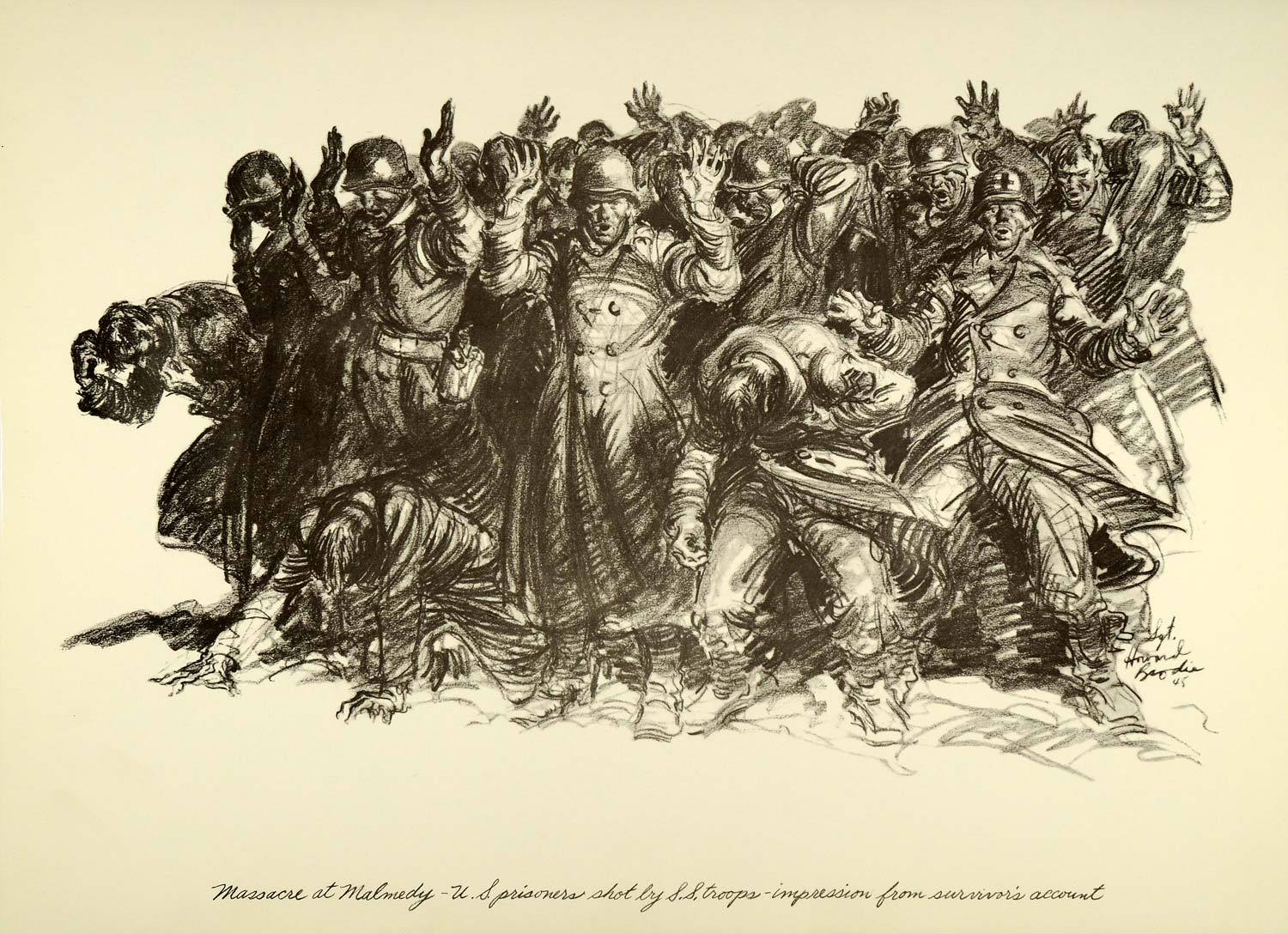
As the pressure mounted, the SS began to act on an order supposedly handed down from high command, instructing units not to take prisoners, lest they slow down the momentum of the advance. A series of atrocities by SS troops ensued, particularly by Kampfgruppe Peiper, led by an ambitious young veteran of the Russian front, 29-year-old Joachim Peiper.
Among the evocative photographs to come out of the Battle of the Bulge were these two images. Here, two paratroopers of the US 82nd Airborne Division bring a young SS captive in at the point of a Tommy gun. These pictures were taken at Bra, Belgium on December 24, 1944. (Both photographs taken by the Associated Press)
Sgt. Howard Brodie’s depiction of how the “Malmedy Massacre” went down.
The Bastion
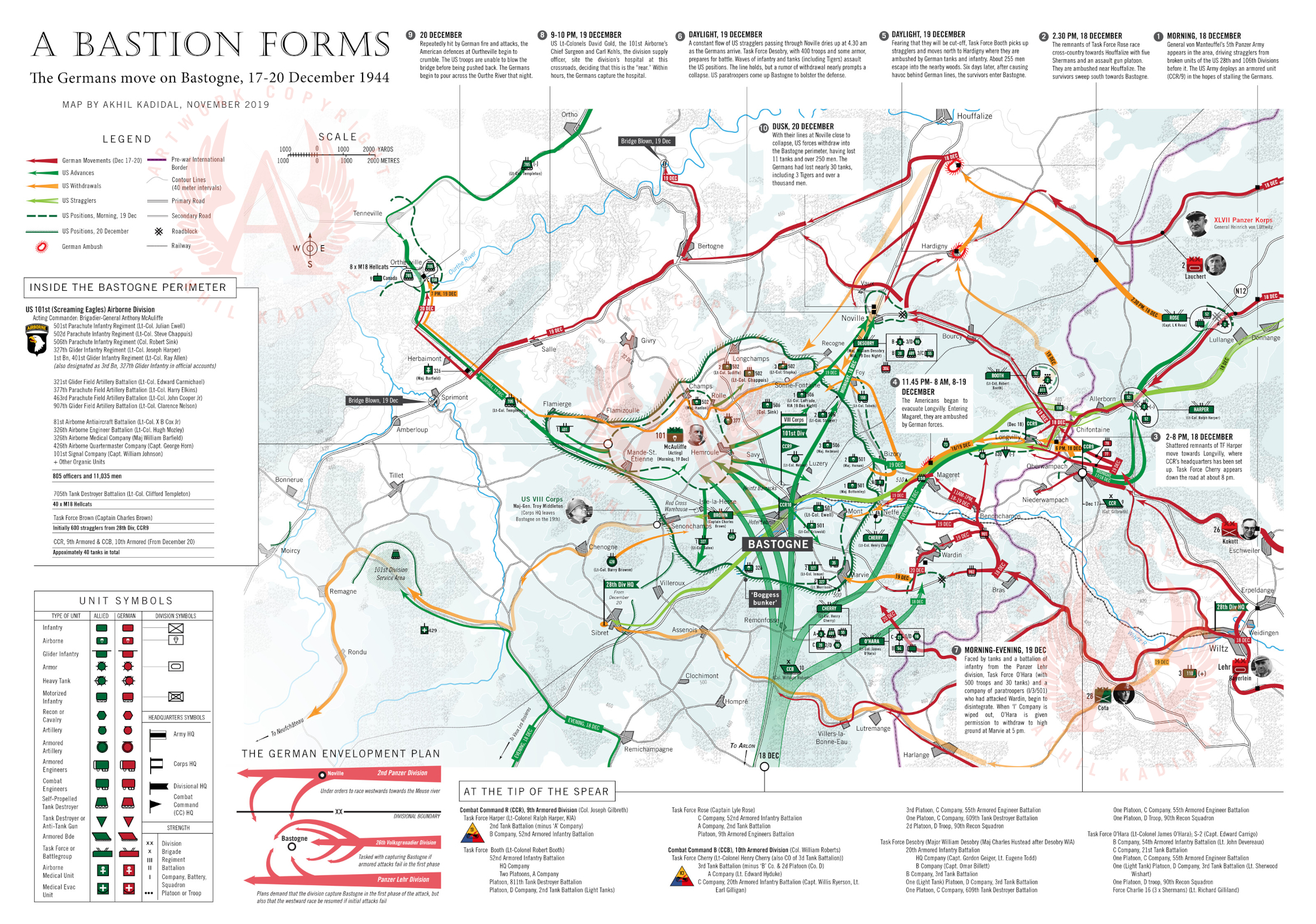
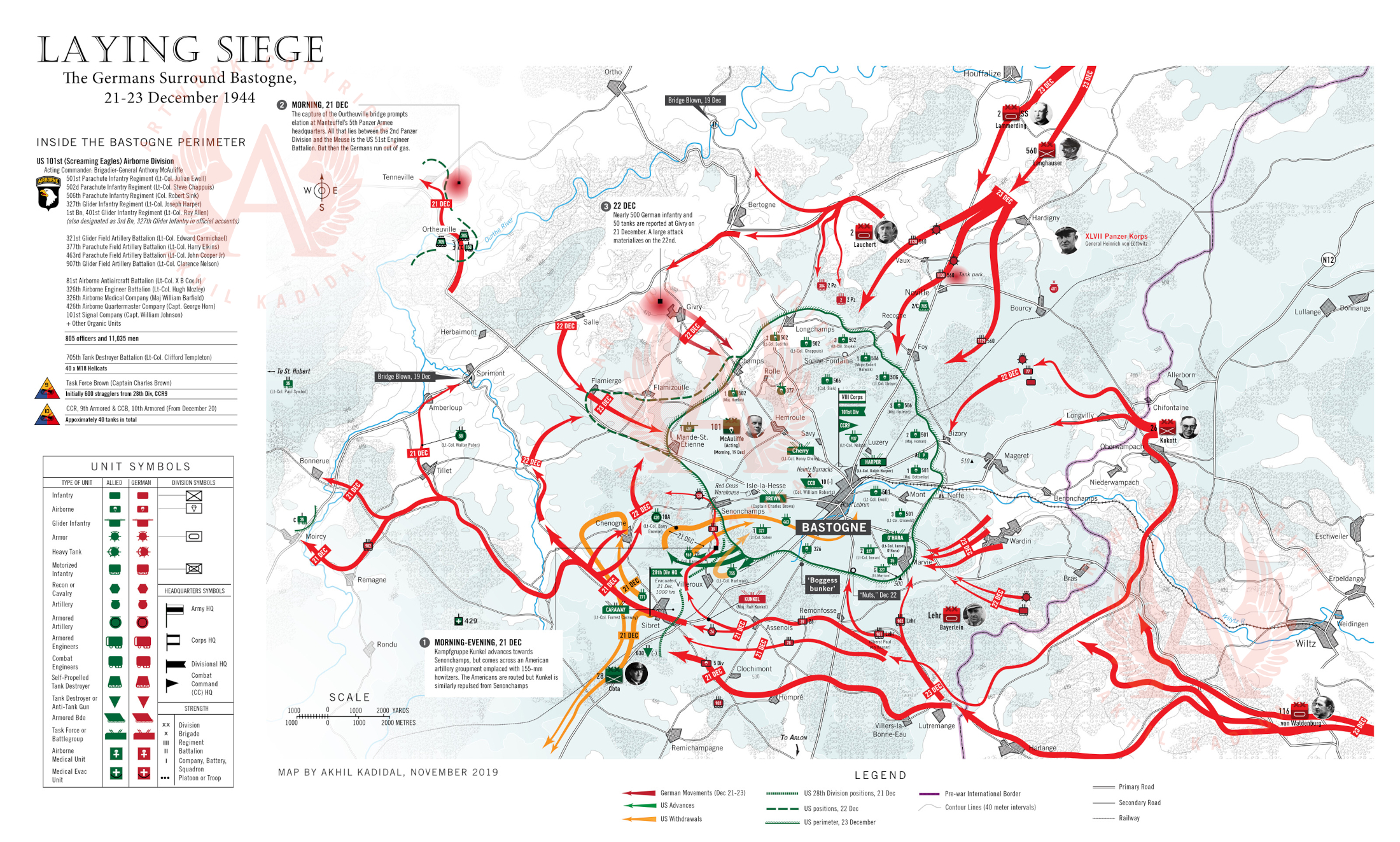
As the Germans swept deeper into the Ardennes, the Belgian town of Bastogne, occupying a key position on the rail and network in the region, came under threat. Bastogne was nearly undefended until the 48th hour of the German offensive. In desperation, the Americans rushed a tank unit (Combat Command R from the 9th Armored Division) to stall the incoming Germans until reinforcements could be pushed into Bastogne. The only other units available were paratrooper divisions recovering from an abortive campaign in Holland that September. The US 101st Airborne Division was alerted to advance into the sector, but being a parachute division, it had no attached armor and a grave shortage of bazookas.
A second tank force (this time from the 10th Armored Division) also raced to defend Bastogne. By dusk on the 19th, the area around Bastogne was embroiled in combat. By December 22, American troops within the Bastogne perimeter realized that they were surrounded. Meantime, the Germans, torn between their desire to stay on course towards the Meuse River and their inclination to nullify Bastogne, mounted a series of penny packet attacks against the perimeter which achieved little and wasted valuable time.
A group of paratroopers from the 101st Airborne Division get some hot chow near the frontline. The discovery of a large Red Cross warehouse within the Bastogne perimeter early in the siege, allowed the besieged paratroopers the luxury of hot pancakes on most mornings. (Corbis)
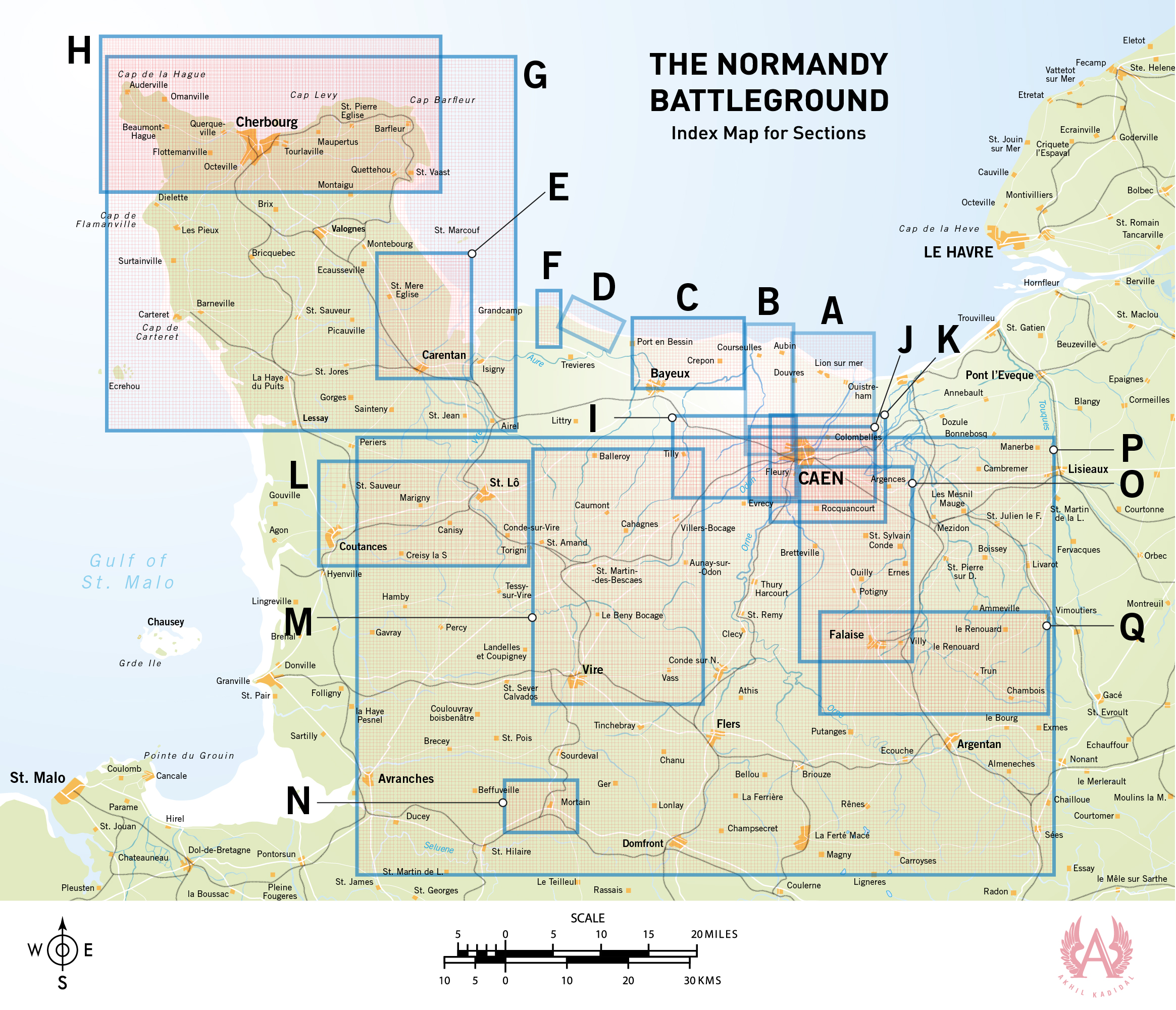
This page provides a brief history of the Normandy campaign through 19 maps. A viewing of the old film The Longest Day at the age of 12 or 13 first stoked my interest in the campaign. The battle for Normandy, in my febrile mind, represented a classic struggle of good versus evil, broadly speaking anyway. But if I grew up suitably enlivened to contribute something to the collective body of work on the campaign, it was tempered by the realization that most of what can be said has already been written or depicted.
Where the historical treatment of Normandy has lagged, however, is in maps. It is difficult to build a sense of location and understand the physical implications of strategic maneuvers without compelling maps. The history of Normandy is replete with insufficient maps. I wanted to try to address that.
The maps below were created in 2018, over the course of six or seven months. They represent my first serious effort at complex mapmaking. The project was also, to a degree, about self-education.
An Overall look at Operation Neptune
The prospect of returning militarily to France aroused feelings of anxiety within British Prime Minister Winston Churchill, haunted as he was by the specter of another Allied defeat in France followed by a Dunkirk-like evacuation of the survivors. For years, he had postponed a cross-channel invasion of western France by cajoling and manipulating his American allies into military expeditions in the Mediterranean. He had assured Washington DC that a strike through the soft underbelly of Italy could pierce Nazi Germany. By 1943, however, the United States was convinced that the Third Reich could only be defeated through a direct assault on Hitler’s “Atlantic Wall”, an incomplete line of coastal fortifications which threaded from southwestern France to Norway.
Allied planners, however, knew that coastal defenses, no matter how dense, offered little impediment to an amphibious assault. An Allied plan began to coalesce. Twelve Allied divisions (roughly 156,000 men) were nominated to pummel their way into German-occupied Normandy and hew an iron beachhead from which Allied troops could range deeper into Nazi-occupied Europe.
The invasion, D-Day, was launched on 6 June 1944.
Churchill spent much of 5/6 June in a state of angst, fearing that the invasion, codenamed Operation Neptune would fail, dealing the western alliance a critical setback that force them to marshal manpower for another invasion in late 1945 or 1946 — by which time Hitler could have used his western reserves to smash the Soviets on the eastern front.
Yet, the bulk of Germany’s forces along the Norman coast were tired, rear-echelon units with substandard equipment. The most combat-effective division in the area was the 12,734-strong German 352nd Infantry Division, which had almost no combat experience (50% of its officers were green while the rank and file was largely made up of teenagers from the Hannover area). Only the presence of a hardened cadre of veterans from the Eastern Front peaked the division’s fighting prowess to acceptable levels. Many of the infantry and static divisions in the area were inferior, with the exception of the 709th Infantry Division under the experienced Lt. General Karl-Wilhelm von Schlieben, also a veteran of the Russian front.
Von Schlieben’s command, however, was less than stellar, being largely composed of men regarded as unsuitable for frontline service. The average age of a soldier in the 709th was 36 and their training had been minimal. Russian defectors padded out the infantry even though their combat effectiveness was questionable. The unit’s left flank, however, was bolstered by the German 91st Airlanding Division. Although green, the 91st Division was motivated and willing to fight.
The Allied armada, which left England on June 5, would take 17 hours to cross the English Channel while Allied paratroopers flew out after dusk to secure the flanks of the invasion zone, west of the Norman capital Caen and on the Cotentin peninsula, in order to stem the flow of German reinforcements into the beachhead assault zone.
At midnight, 13,348 Allied paratroopers began to descend onto Normandy, confusing German high command and infusing chaos among scattered German garrisons. Just after dawn, at 6 am, the Allied invasion fleet hove into sight off the Norman coast.
I was an anglophile in my childhood and the actions of the British Army in the 20th century were an endless source of fascination. Great Britain and her military were exotic, replete with alluring organizational structures, practices, decorum, and traditions.
It was therefore predictable that my early interest in the Battle of Normandy hinged on the actions of the British Army, especially in the “Sword Beach” sector.
A crucially important sector, troops hitting “Sword Beach” were meant to roll up into the Norman capital, Caen (population 54,000 in 1944), whose great road hub would have facilitated an easy advance deep into Nazi-occupied France and to Paris, 149 miles away.
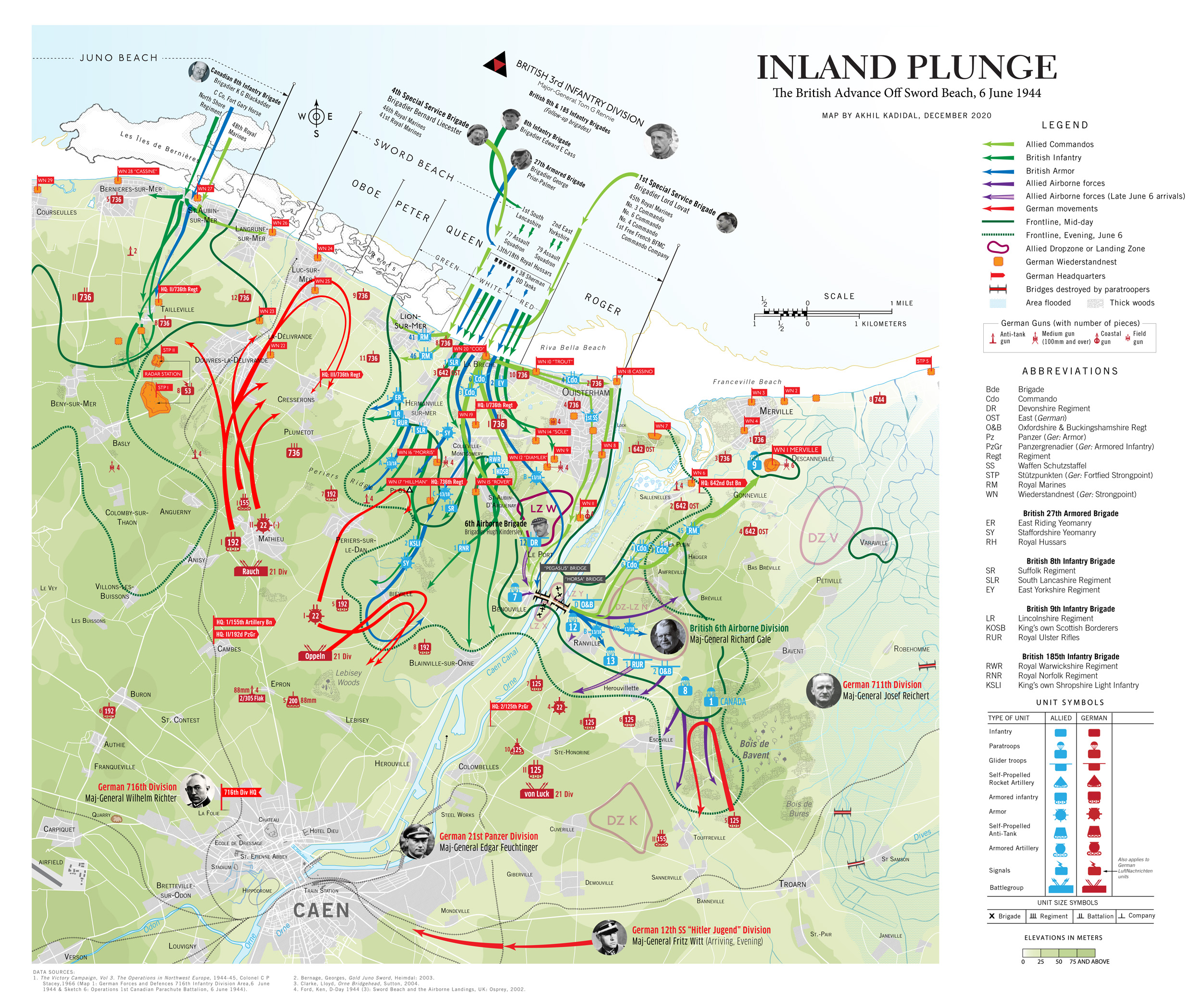
The unit handed the task was the British 3rd Infantry Division, the oldest command unit in the British Army with exploits ranging back to the Battle of Waterloo in the 19th Century. Bolstered by 4,000 commandos, plus an independent armored brigade with 212 tanks and the paratroopers of the 6th Airborne Division on their right flank, the 3rd Infantry Division pushed towards Caen on the morning of June 6, sweeping aside German resistance. Then, at midday, the sole German armored division in the area, the 21st Panzer, placed itself between the British and the city.
The 21st Panzer, once a fabled stalwart of the North African war two years ago was now a toothless tiger, replete with misfits and recruits — although 2,000 original members, having been hospitalized for wounds in North Africa, had returned to strengthen its ranks. Evidence of the 21st Panzer’s diminished standing was manifest by the fact that it had, until recently, been equipped with old, obsolete French tanks captured in 1940. By D-Day, it had been outfitted with the Panzer IV, a medium battle tank that was an even match for the Allied Sherman.
The German divisional commander, Major General Edgar Feuchtinger, behaved as though the running of his division was something of a chore, if not punishment. He spent more time lavishing attention on his mistress in Paris, than on working to get his division to full operational status.
In fact, Feuchtinger was once again philandering in Paris when the Allied invasion materialized, enraging his superior, Lt. General Hans Speidel, the Chief of Staff of Army Group B. As a chastened Feuchtinger raced back to Normandy on the afternoon of the 6th, the division activated itself and sent out patrols.
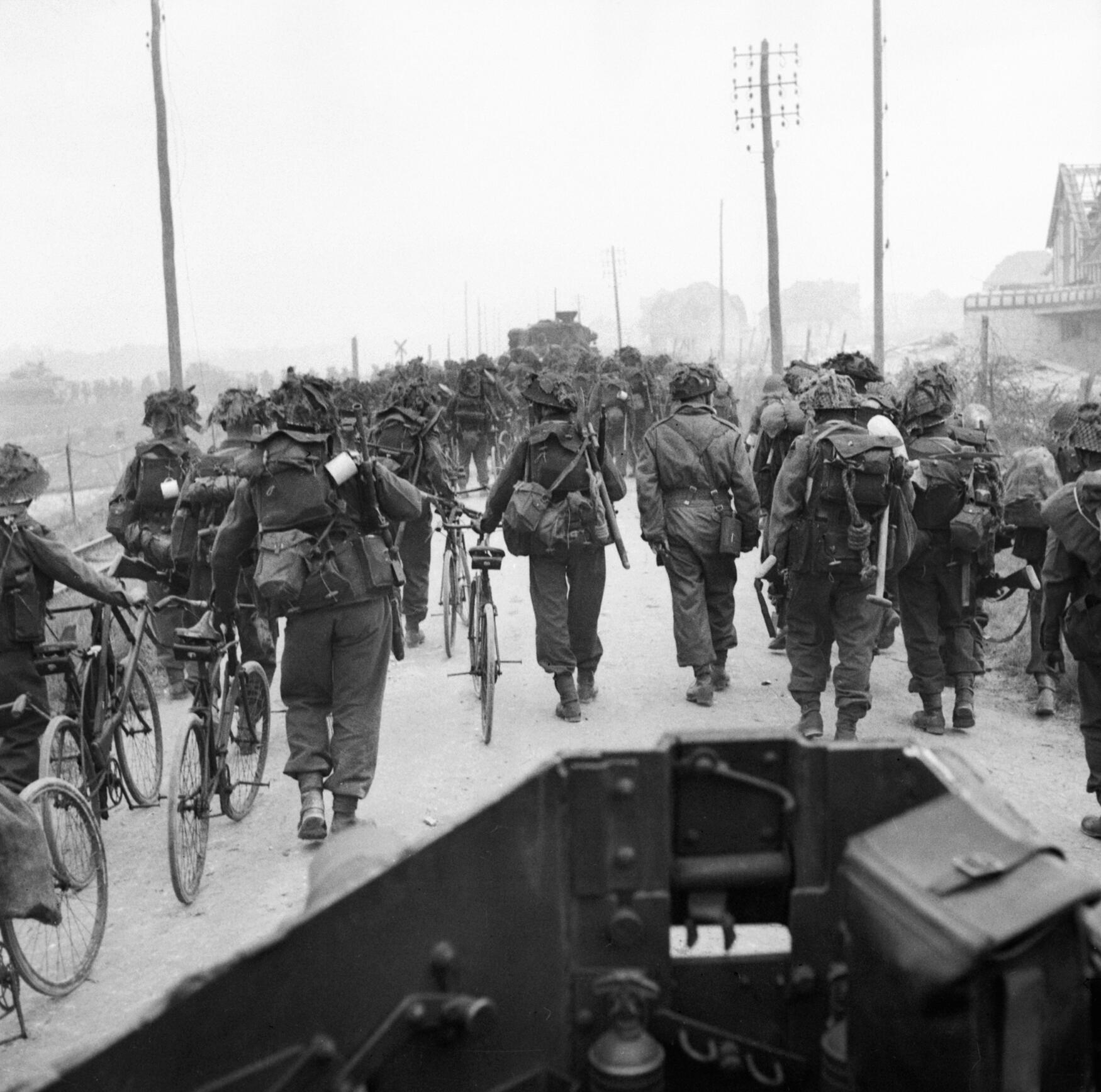
British tanks and Infantry streaming towards Caen began taking heavy fire as they reached the Periers Ridge, a stretch of high ground before the villages of Periers-sur-le-Dan and Bieville. Instead of smashing through, the infantry of the British 1st South Lancashire Regiment and the Shermans of the 13/18th Royal Hussars dug in. Aside from a smattering of German infantry and strung-out screens of antitank guns, there was virtually nothing between them and the city. They could have well been in Caen by mid-afternoon. But the commander of the British 8th Infantry Brigade, Brigadier Edward Cass, preferring to wait for reinforcements. It would prove a fateful decision.
Troops from the British 3rd Infantry Division press on towards Caen on D-Day. (IWM)
Meantime, senior German officers were scrambling to deploy their armored reserves scattered around central and southern France.
At 9 am, nearly two hours after the beach landings, Field Marshal Gerd von Rundstedt, the head of OberKommando West, attempted to rush the 12th SS (Hitler-Jugend) Panzer Division and the elite Panzer Lehr Division into the invasion zone. He was stalled by Field Marshal Alfred Jodl, the German Chief of Operations Staff in Berlin, who argued that only Hitler had the authority to move these units. But Hitler, a habitual late riser, was still asleep and would not awake before noon. When he did, he flew into a rage at the news of the Allied invasion. By when the armored units finally began to move, it was 4 pm.
By this time, British thrusts towards Caen and Lion sur-Mer had stalled, prompting them to give up on their plan to link up with Canadian troops fighting in the neighboring “Juno Beach” sector. Rushing through this gap, tanks and infantry of the 21st Panzer reached the coast intact.
“The future of Germany may very well rest on your shoulders,” a senior officer had told their commander, Colonel von Oppeln-Bronikowski. “If you don’t push the British back, we’ve lost the war.”
But the 21st Panzer would find it difficult, if not impossible, to prevail. At 6 pm, von Oppeln-Bronikowski’s men were horrified to see a swarm of Allied transport aircraft tugging gliders headed in their direction at 6 pm. Afraid that his unit would be cut-off by gliders landing all around them, Oppeln-Bronikowski called a retreat. Caen, however, would remain in German hands for the next five weeks, becoming a thorn in the Allied side and costing the lives of thousands of troops.
The above map was arduous to make, in that it took nearly 10 hours to produce. Instead of separating the various component actions of June 6 into three entities — the airborne landings, the main beach assault and the push inland and the German counterattack — I sought to encompass every aspect of the eastern British sector into a single map. However, in comparison to my map of “Utah” Beach which can be found further below, this map was also frustrating to create because of a paucity of information.
For example, I did not have the luxury of detailed information about the drop patterns of British airborne units from official British sources — unlike the US military which liberally proffers information about the activities of the 82d and 101st Airborne Divisions on Normandy’s Cotentin Peninsula.
Movements of land forces were established through careful research and by consulting several books on Normandy, specifically Georges Bernage’s Gold Juno Sword (2007).
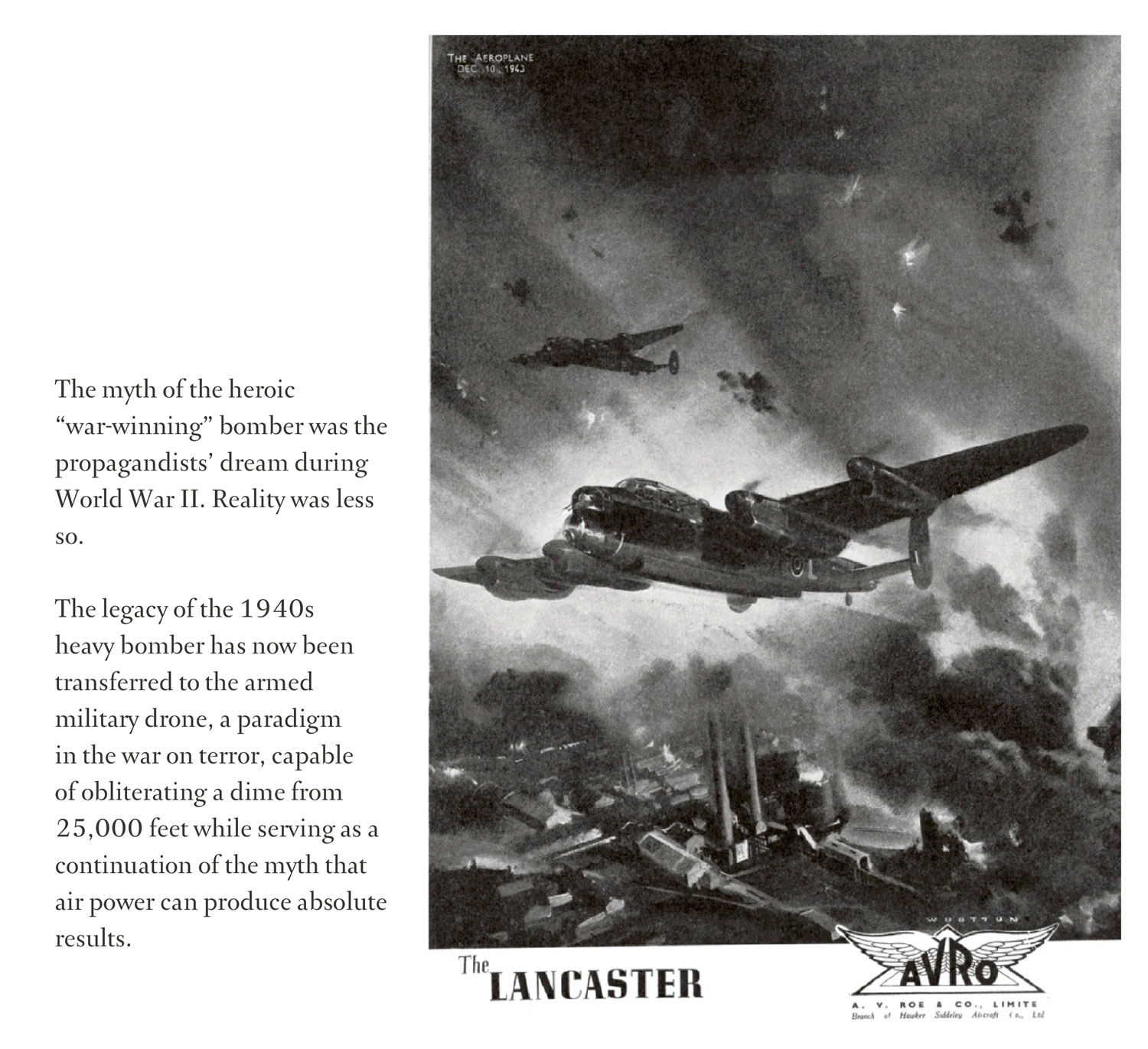
Unable to mount a cross-channel invasion of France early in the Second World War, the Anglo-American alliance believed that their bombers could open a veritable “second front” against the Third Reich which the Soviet Union had been clamoring for since 1942. The British believed that their bombers could win the war single-handedly. American enthusiasm was more tempered in that they believed that their daylight strikes would shorten the war. Both sides had bitter lessons to learn.
Once touted as a technology masterwork capable of bringing wars to an end with a minimal cost in lives, the heavy bombers of the Second World War occupied a hallowed position in wartime societies which saw them as an essential tool.
The great quest of the human race in the years of austerity from the 1920s to the 1940s was not to cure poverty, hunger or disease, but how to push aloft multi-engined behemoths with a bomb-load and how to dump that deadly cargo onto an enemy state with the utmost of accuracy and a minimal of effort. Such an achievement, it was thought, would save lives — through the obviation of another static, land slog such as World War I.
The Americans favored the use of rugged, heavily armed day bombers equipped with the top-secret Norden bombsight to carry out pinpoint accuracy of bombing against Germany’s most vital military targets, while the British, who having tried daylight bombing only to be badly bloodied, preferred to bomb German cities at night in an effort to break Axis morale. The American view was that indiscriminate night bombing (indiscriminate because accuracy in night bombing was impossible despite advances in technology), was not only wasteful but that the bombing of civilian areas would do little to cripple the German war industry. The British, in turn, warned the Americans that daylight operations were impracticable because of the vulnerability of four-engined heavy bombers to enemy fighters. Yet, the British had no leg to stand on when on a single night in 1944, they lost 96 bombers in combat.[1]
This horrific casualty figure was a direct result of the unwavering confidence of Allied bomber barons that the relentless bombardment of Nazi Germany would force Adolf Hitler out of power and bring about the economic collapse of the Third Reich. In reality, just as American drone strikes in Afghanistan and western Pakistan have served to increase suicide and terror attacks on American and western forces in the modern era, German resistance congealed into an overwhelming hatred of the Allies, driven by the need to kill as many of “them” before Germany herself collapsed. To this end, the Germans developed fantastic tactics involving heavily armored fighter aircraft to ram bombers, a bat-shaped, rocket-powered craft designed to bolt into the midst of a heavy bomber formation and engage them using a large-bore cannon, a jet fighter made partly out of wood intended to be flown by teenagers of the Hitler Youth and a range of technical breakthroughs which not only made the business of finding the enemy easier, but blowing him out of the sky as well.
Yet, a sense of vulgarity permeates discussions about bombs, bombers and aerial bombardment, with their inseparable echoes of the secret human lust for corruption. It is a thing of uncouthness, unsophisticated, like conversations about pornography. The late writer, David Foster Wallace, once described how a pornographic actress looked as she excitedly told a fellow writer (Evan Wright, the author of Generation Kill) about her rescue and adoption of a stray dog. She looked for “a moment” like a 14-year-old, Wallace wrote, only to have the impression last for only a “heartbreaking” second or two.[2] Aerial bombardment, with its metaphorical manifestation of debasement is no less of a loss of innocence of the species. Where the unsavoriness arguably ends, however, is at the legions of ordinary airmen of all sides whose wartime experiences constitute some of the most extraordinary tales of duty, loss and heroism in the annals of military history. From a sociological point of view, it is nothing if not remarkable that an entire generation of humans, hewn out of the hardships of the depression-era and thus being largely unused to technology, were able to adapt to the role of “modern” aviators.
But why talk about events which are now over 70 years old? Because then as now, bombing continues to be touted as a solution to external problems and because then as now, we are witness to pronouncements by those promising panacea through technology. If the last one hundred years of human history and culture have told us anything it is that while technology has the means to perhaps improve our lives, it is incapable of solving our more fundamental problems because human nature, in general, is intractable.
By 1944, at the apex of the Second World War, it had begun to sink in to the Allies that the war would not be won by the bombers despite their formidable technology. As hundreds of airmen continued to die on a daily basis for futile war aims, the military boffins and the inventors continued their dogged progress into uncharted scientific territory, developing one wondrous gadget after the next, until, in the end it became not so much as winning the war in the air, but giving the fighting men the means to stay alive in the face of escalating odds until the juggernaut of the land armies could roll into Germany to crush the last vestiges of the Reich. Perhaps the air campaign against the Nazis is less an indictment against the effectiveness of bombing than a statement of fact that bombing is perhaps not the ideal solution to the world’s problems.
47,268 members of the Royal Air Forces (including 9,887 Canadians, plus thousands of other “colonials”) and 26,000 American airmen of the US 8th Air Force lost their lives over Europe during the war in order for strategists to learn that indiscriminate or wholesale bombing is ineffective. How well that lesson has been absorbed by successive generations is debatable.
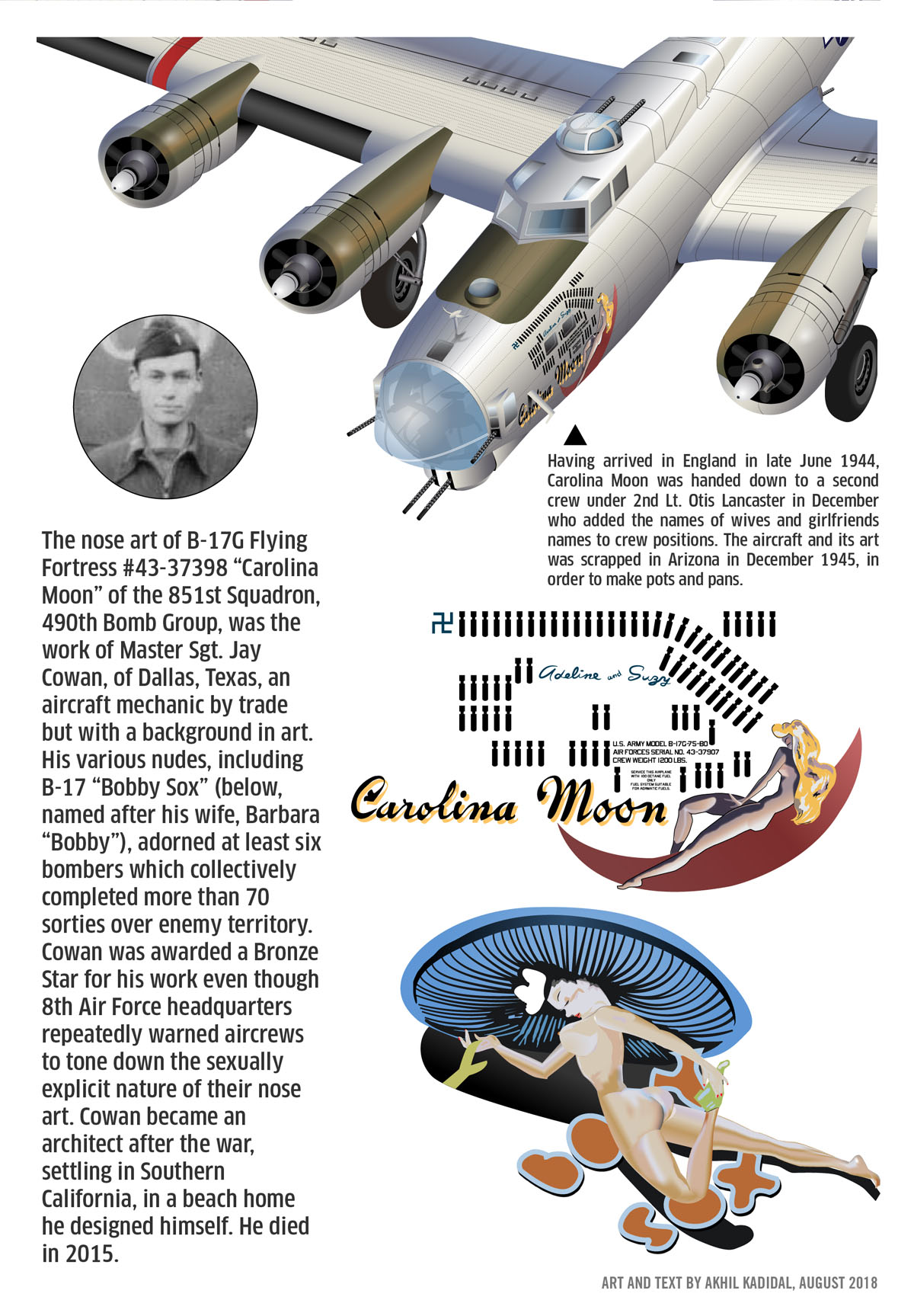
While nose art was classified by American psychiatrists as a projection of the violent male ego, aircrews likely saw them as a means to soften and feminize the brutal nature of warfare. By assigning a motif to aircraft, the airmen hoped to turn their machine into a living thing capable of graciousness and mercy. Aircraft became a “she,” a female entity which shared in their life and death struggles. Air Force headquarters, however, was appalled by the pornographic nature of these artworks. Yet, their fears for the inner souls of their airmen and potential of their wholesale transformation into ribald, roughened warriors so far gone into the realm of immorality that they would be incapable of returning to the fold in civilian life, was in many ways, as ludicrous as sending them out to drop bombs on populations in the first place. As actor Marlon Brando’s character, “Colonel Walter E. Kurtz,” succinctly points out in Francis Ford Coppola’s Apocalypse Now Redux (1979): “We train young men to drop fire on people but their commanders won’t allow them to write “Fuck” on their airplanes because it’s obscene!”
Perhaps, in demanding that aircrews tone down the explicit nature of their artwork, 8th Air Force headquarters was also trying to protect the innocence of the English youth, who were bombarded daily with images of nude women soaring over their rural villages and homes on canvases of airborne aluminum.
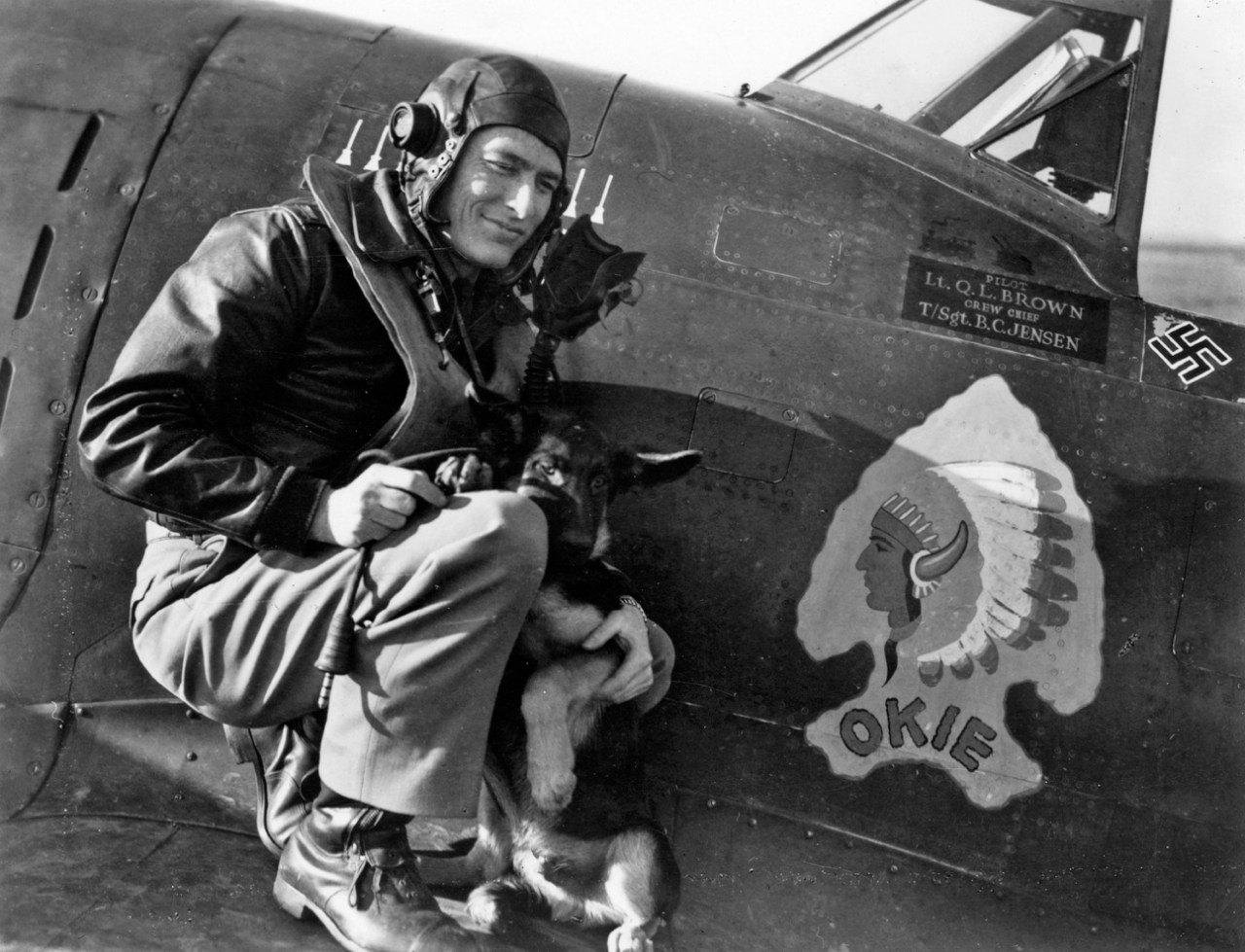
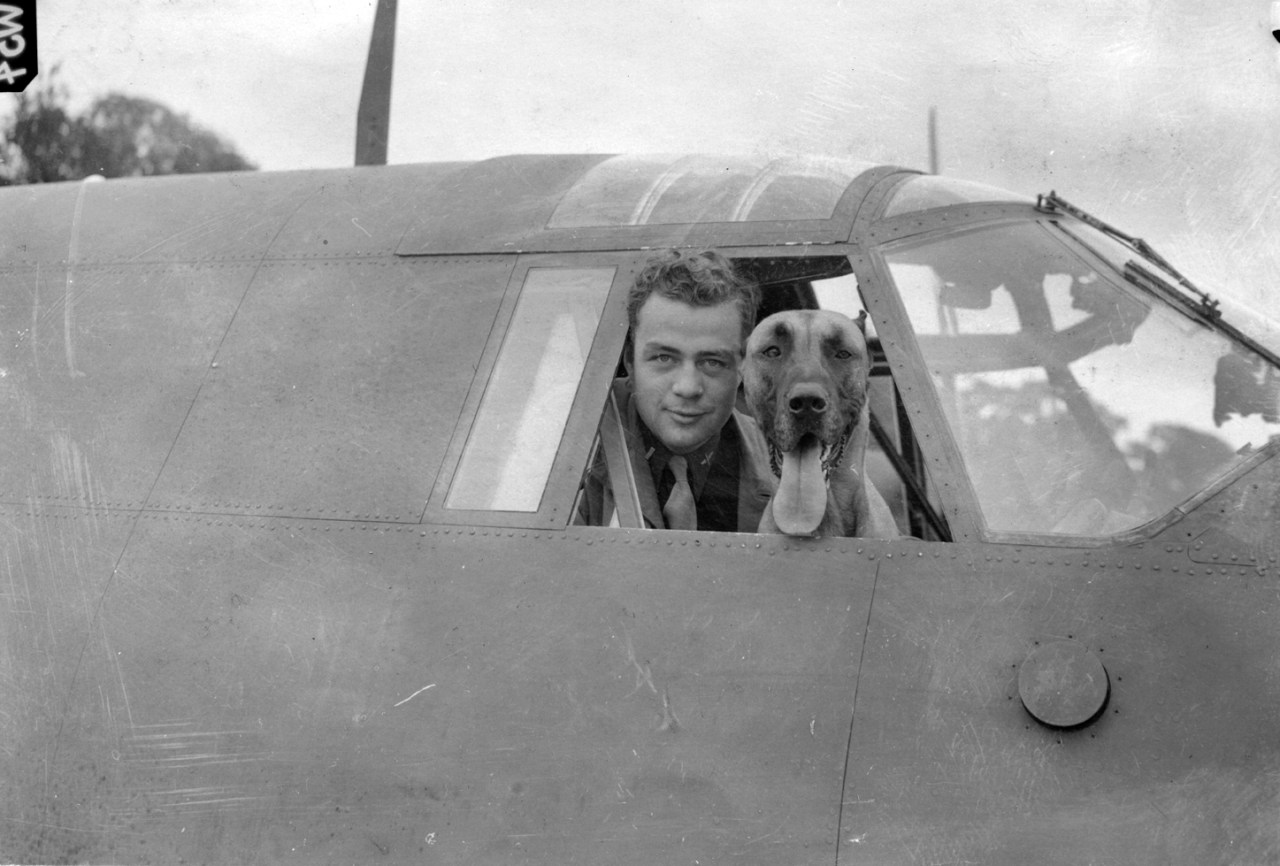
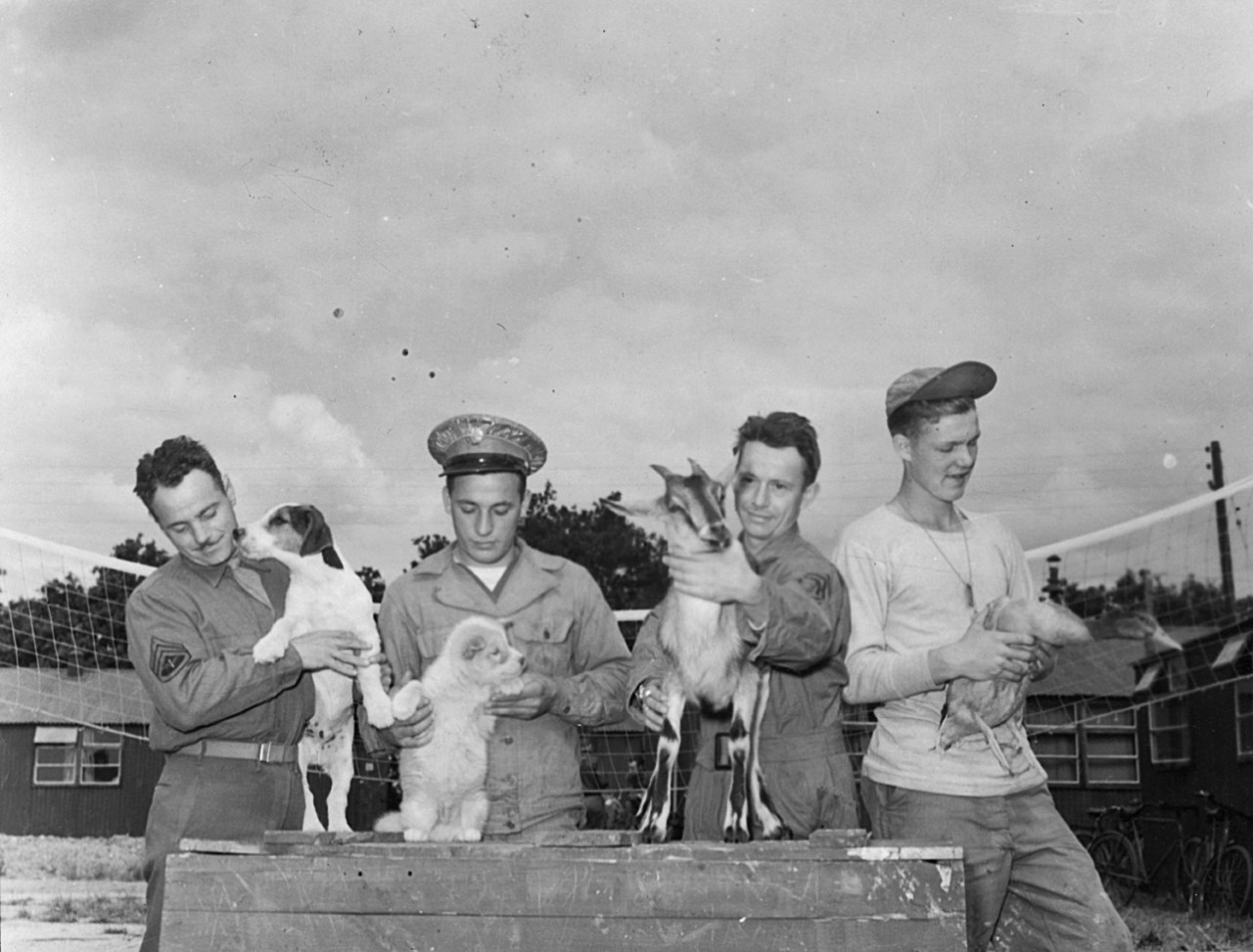
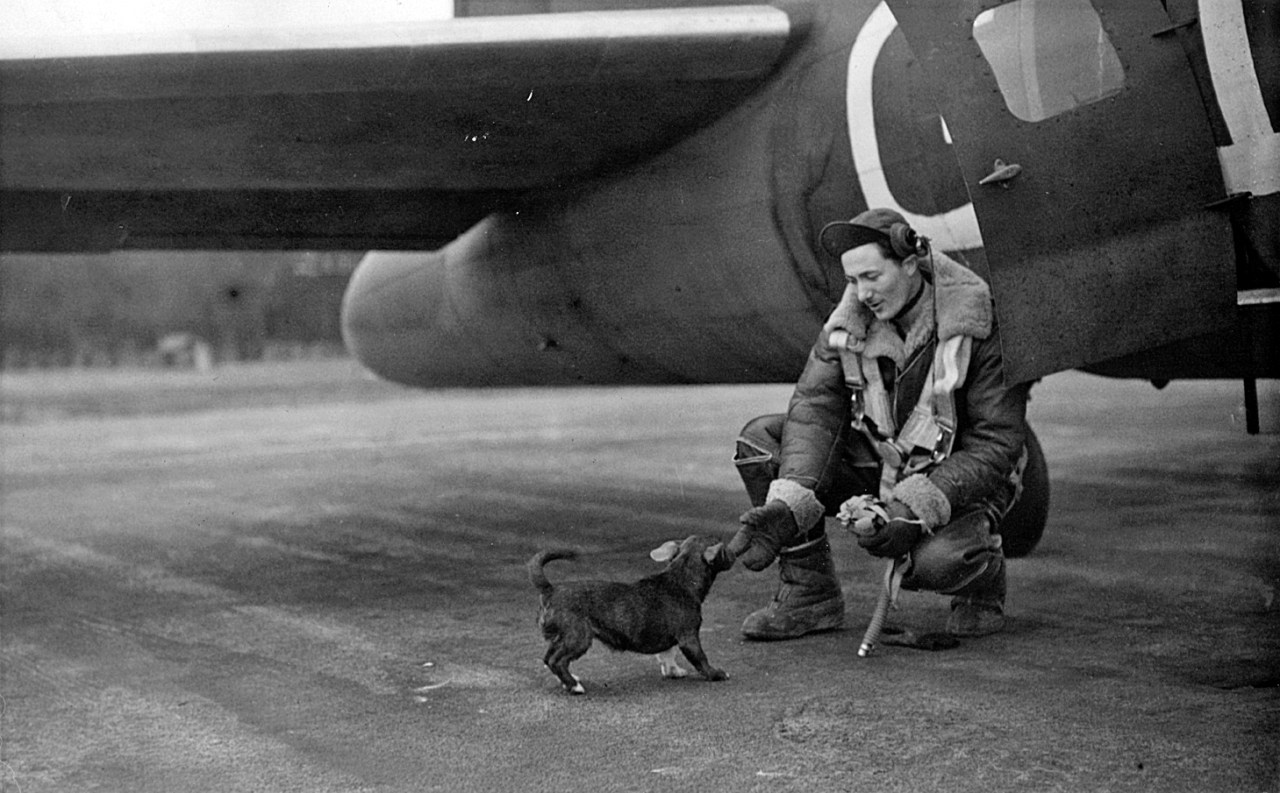
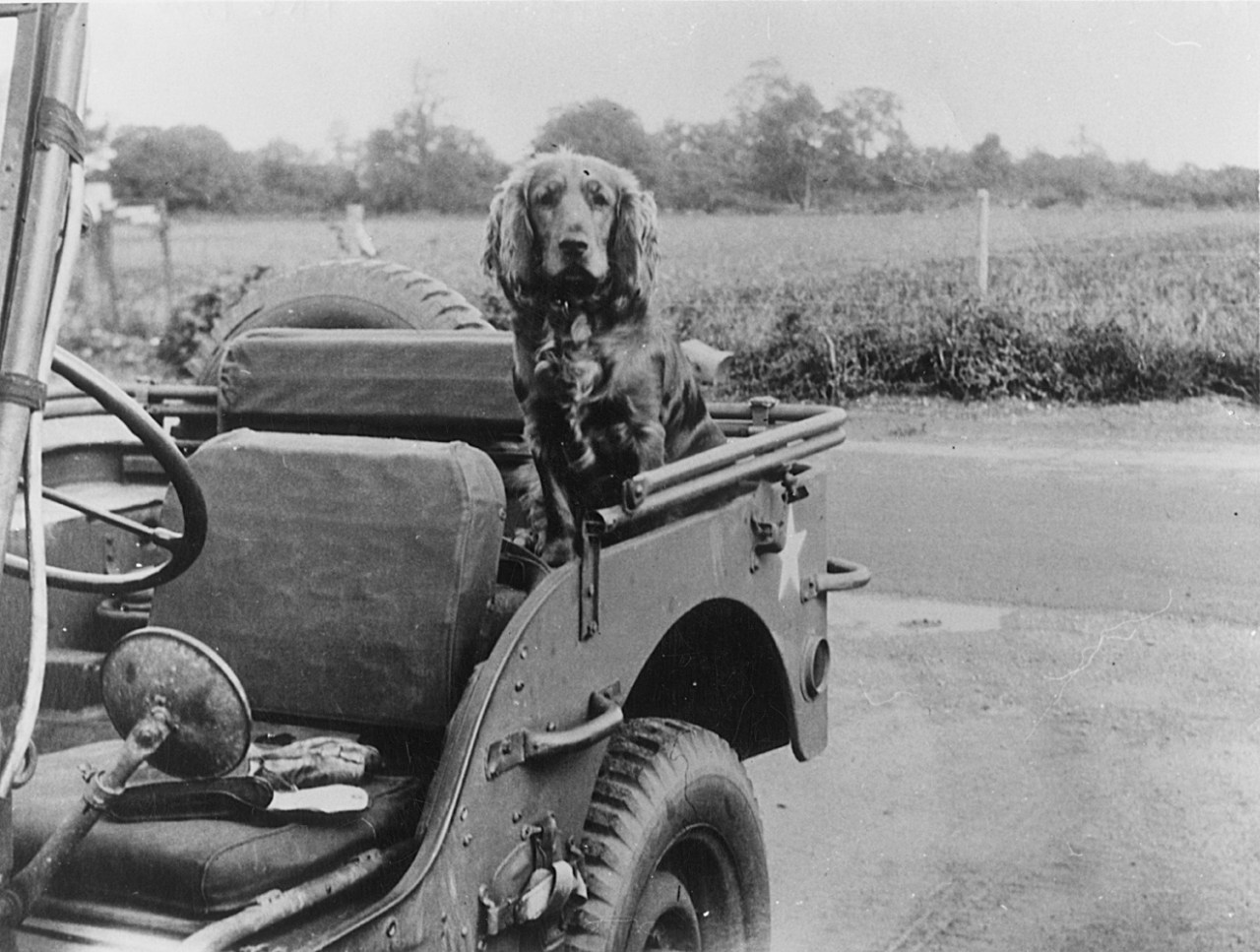
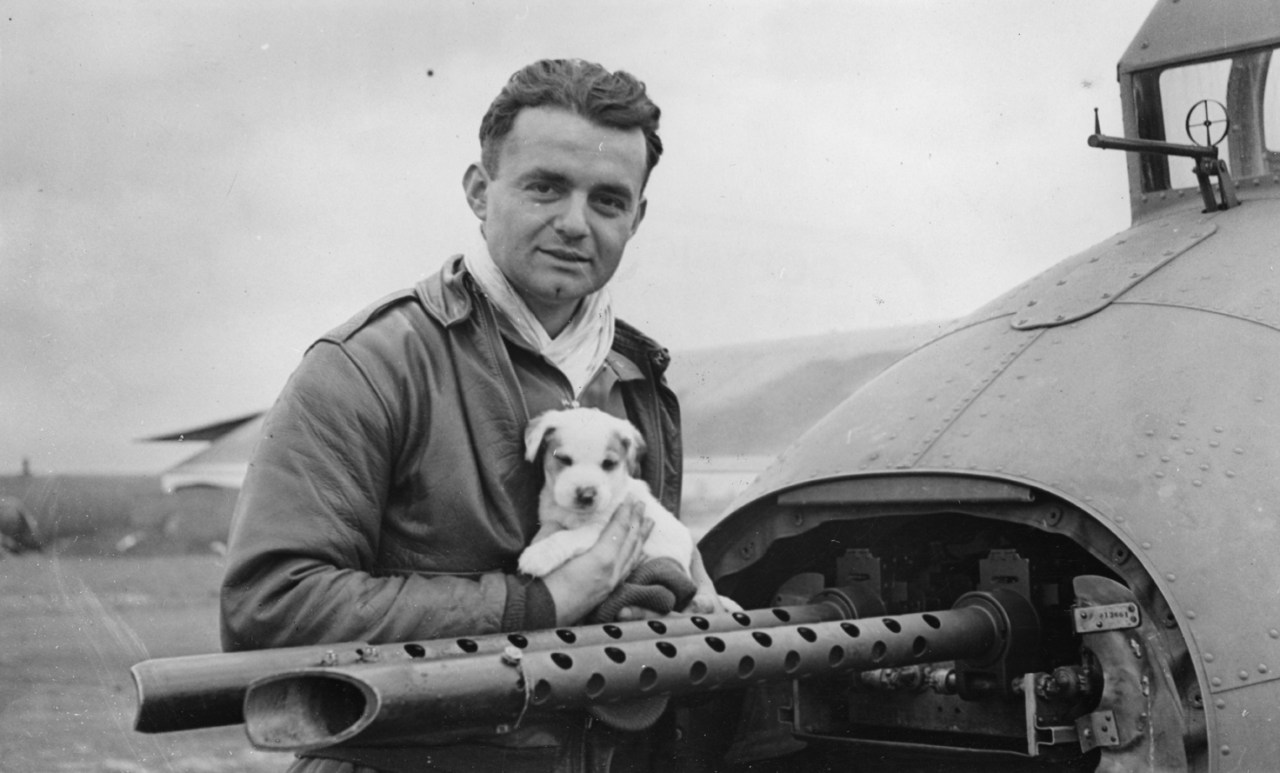
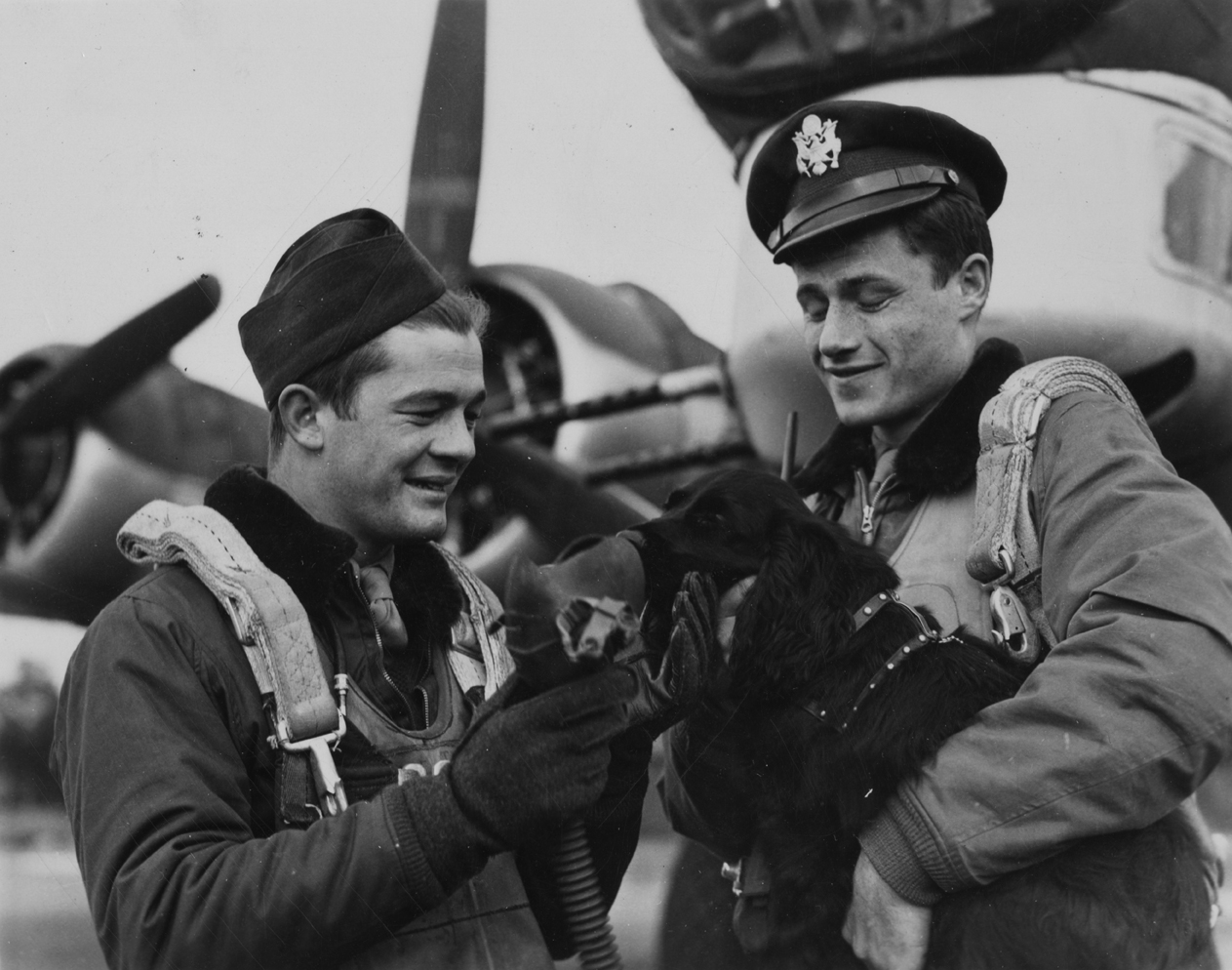
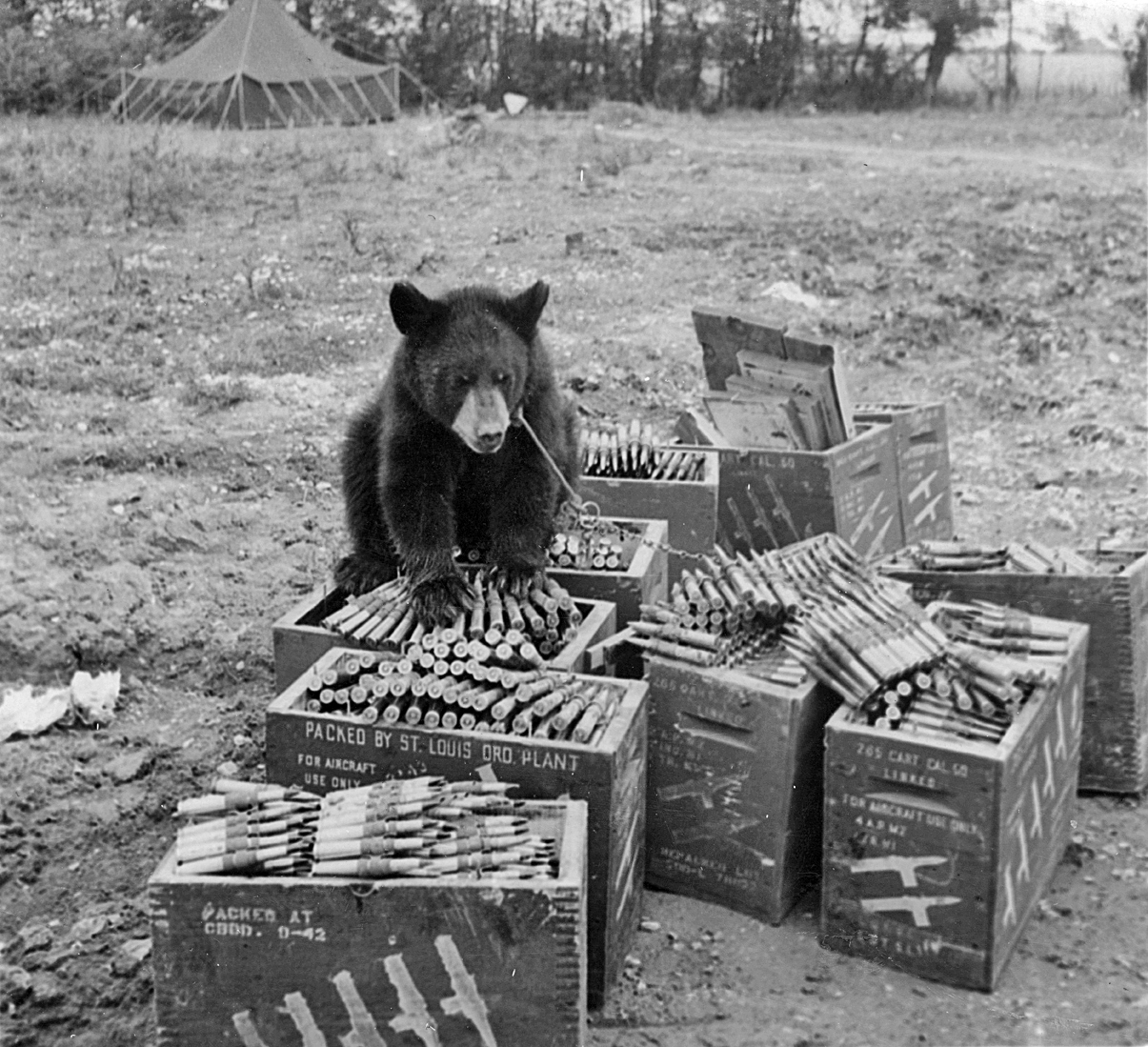
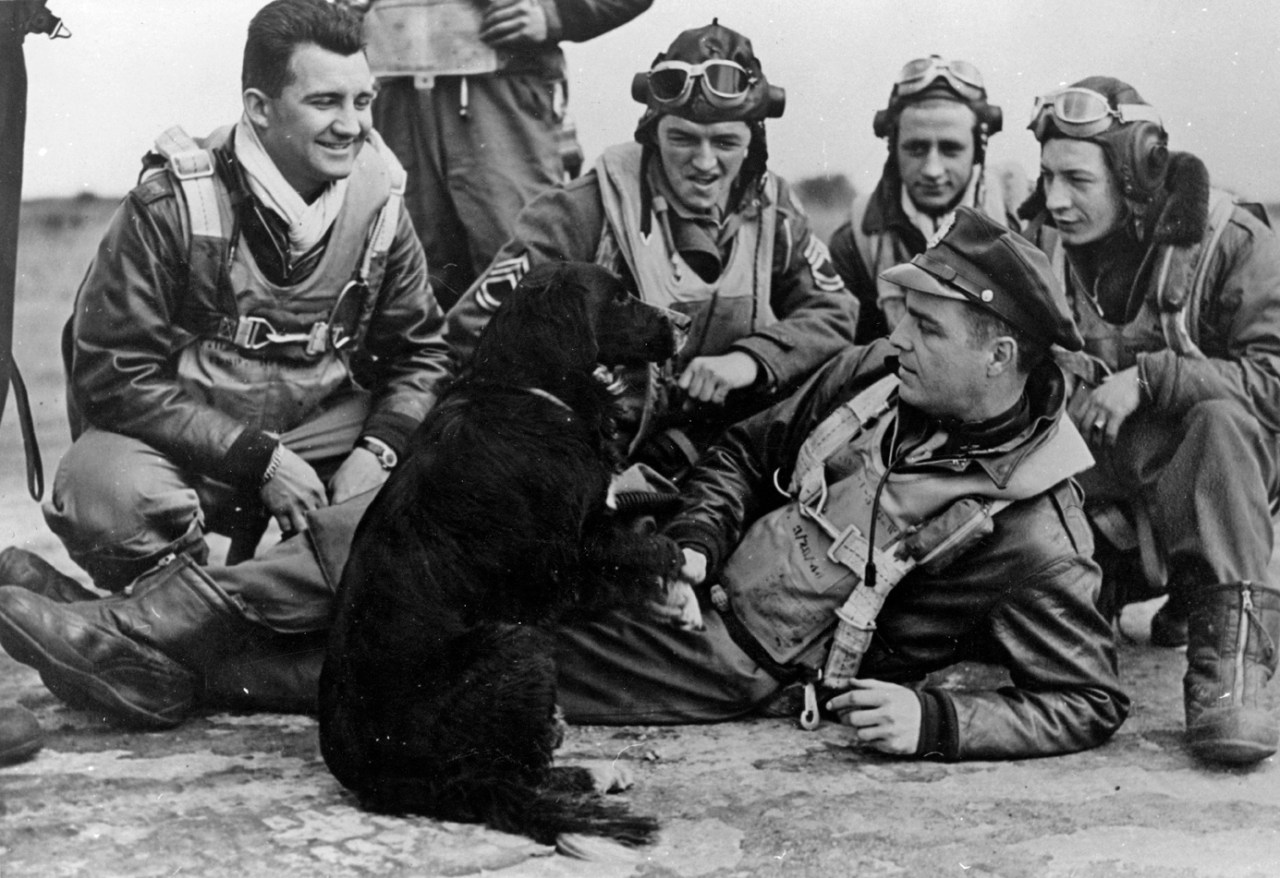
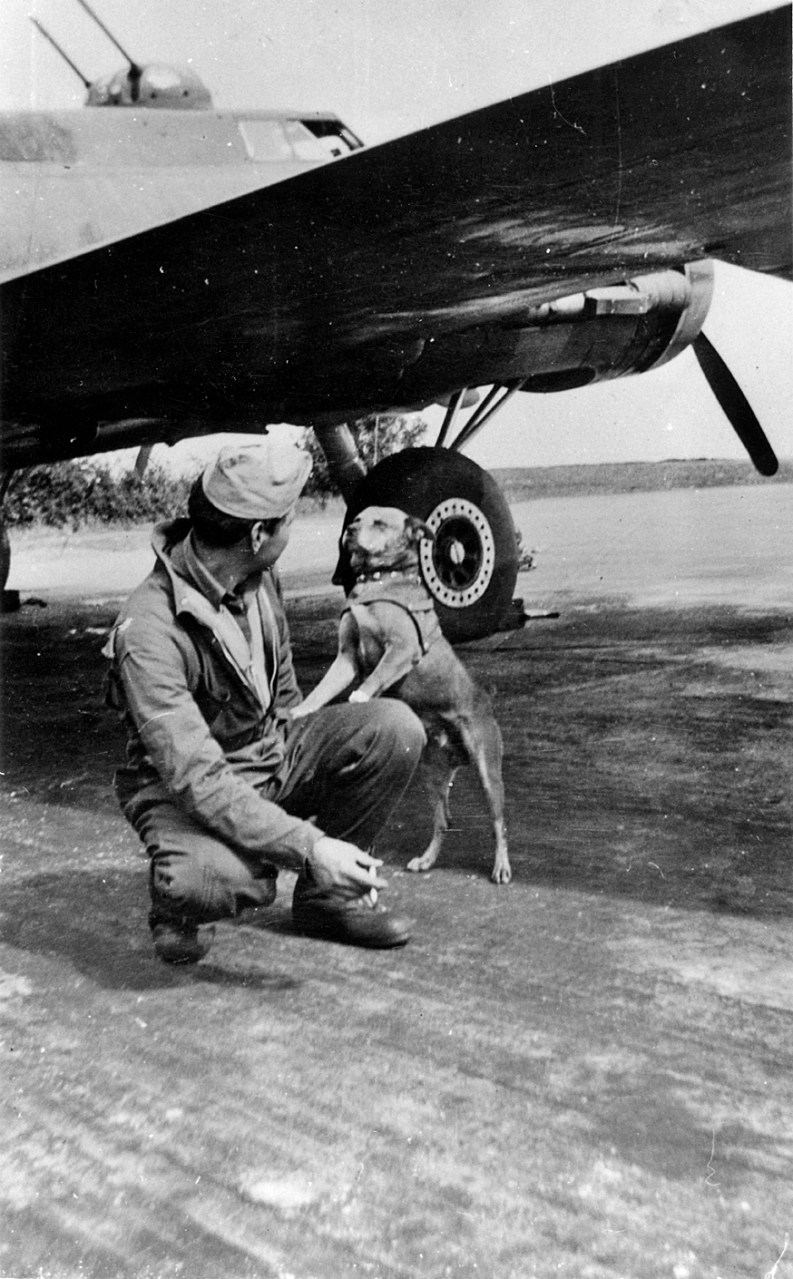
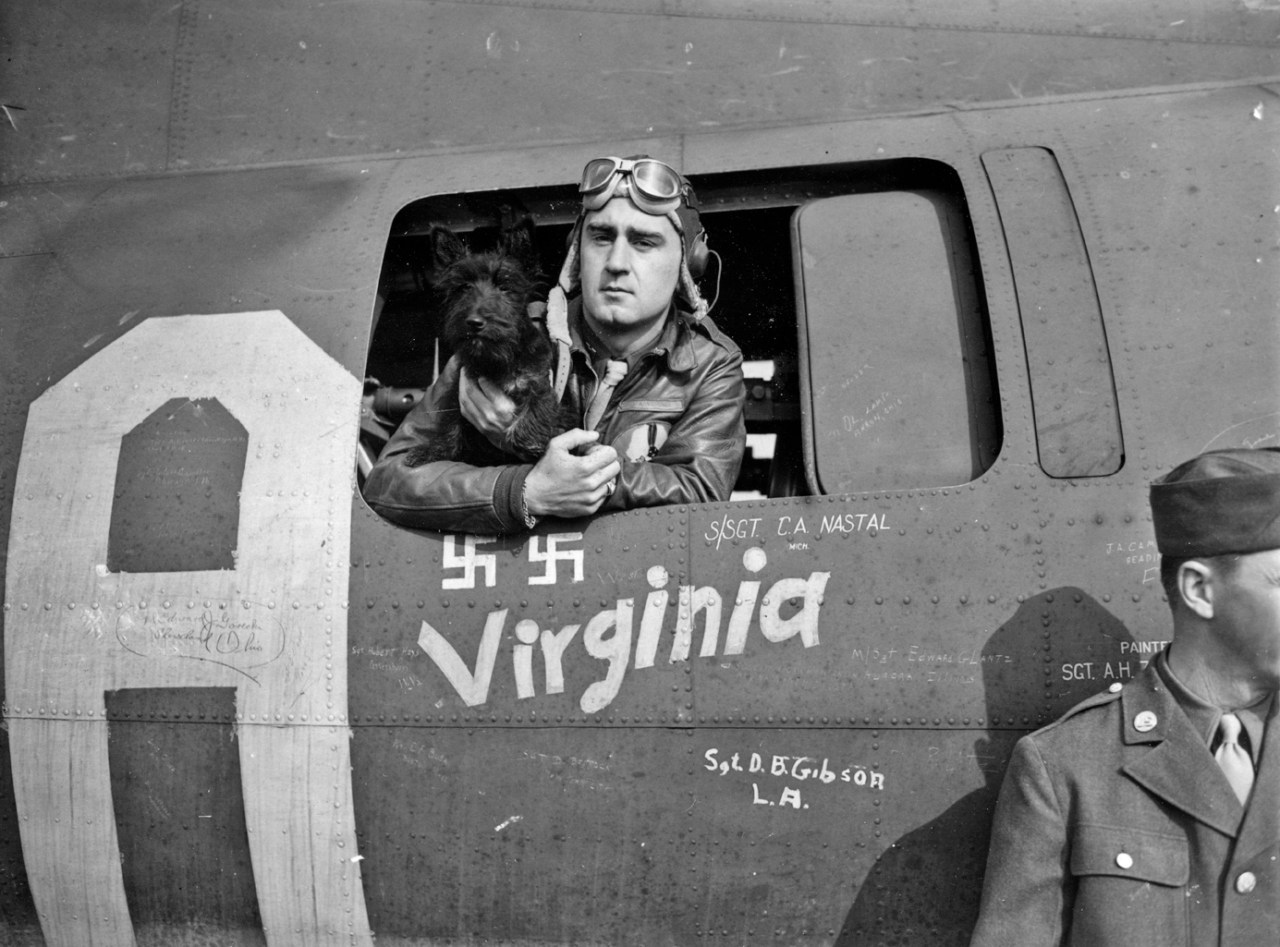
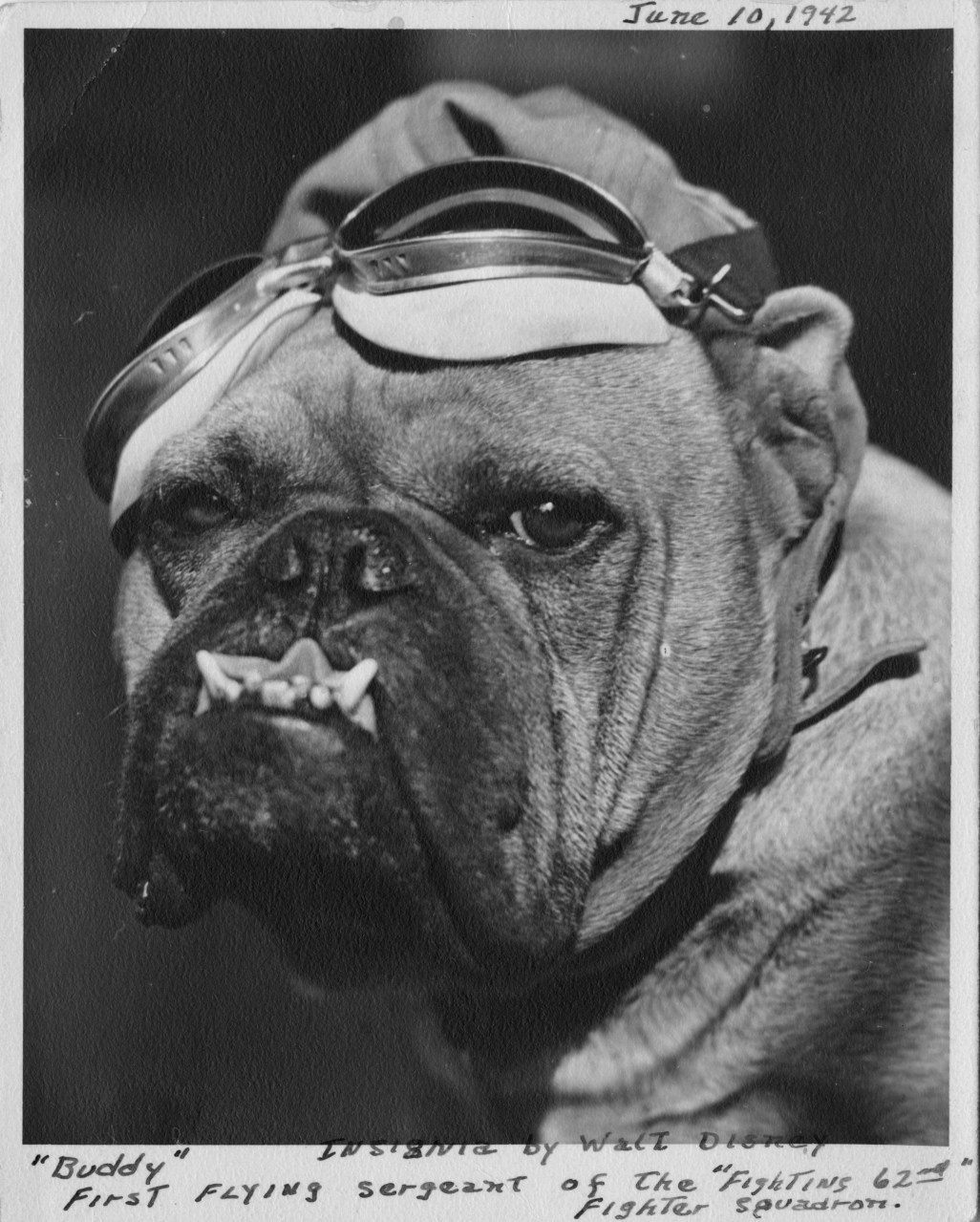
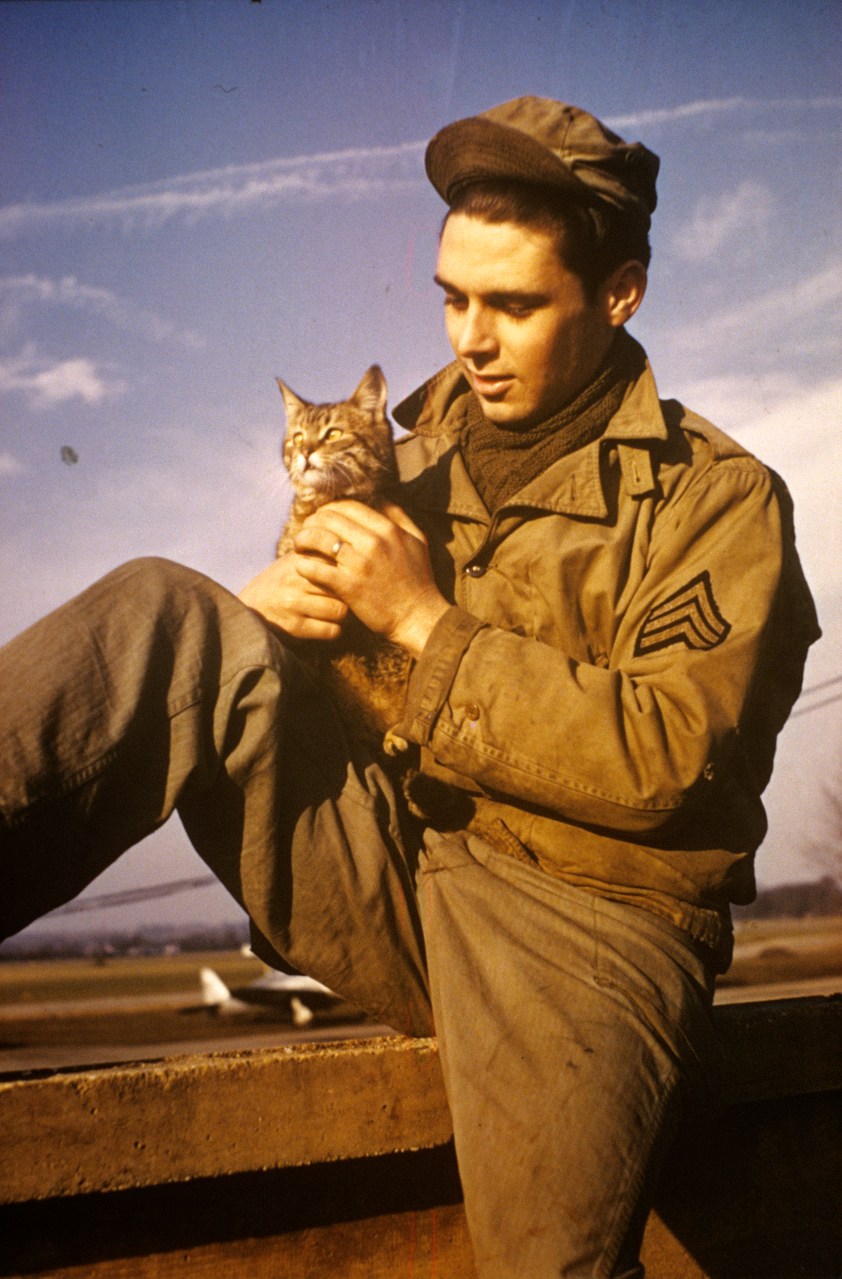
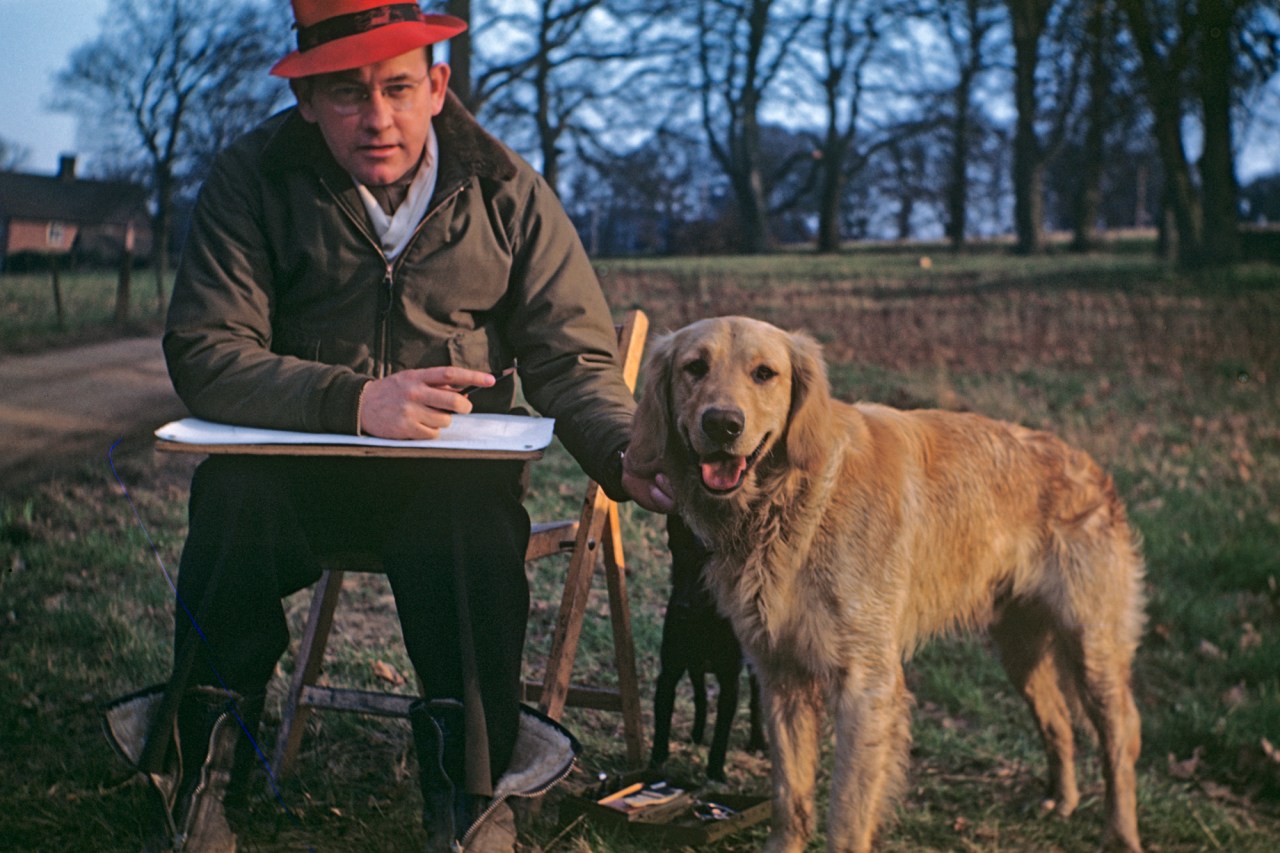
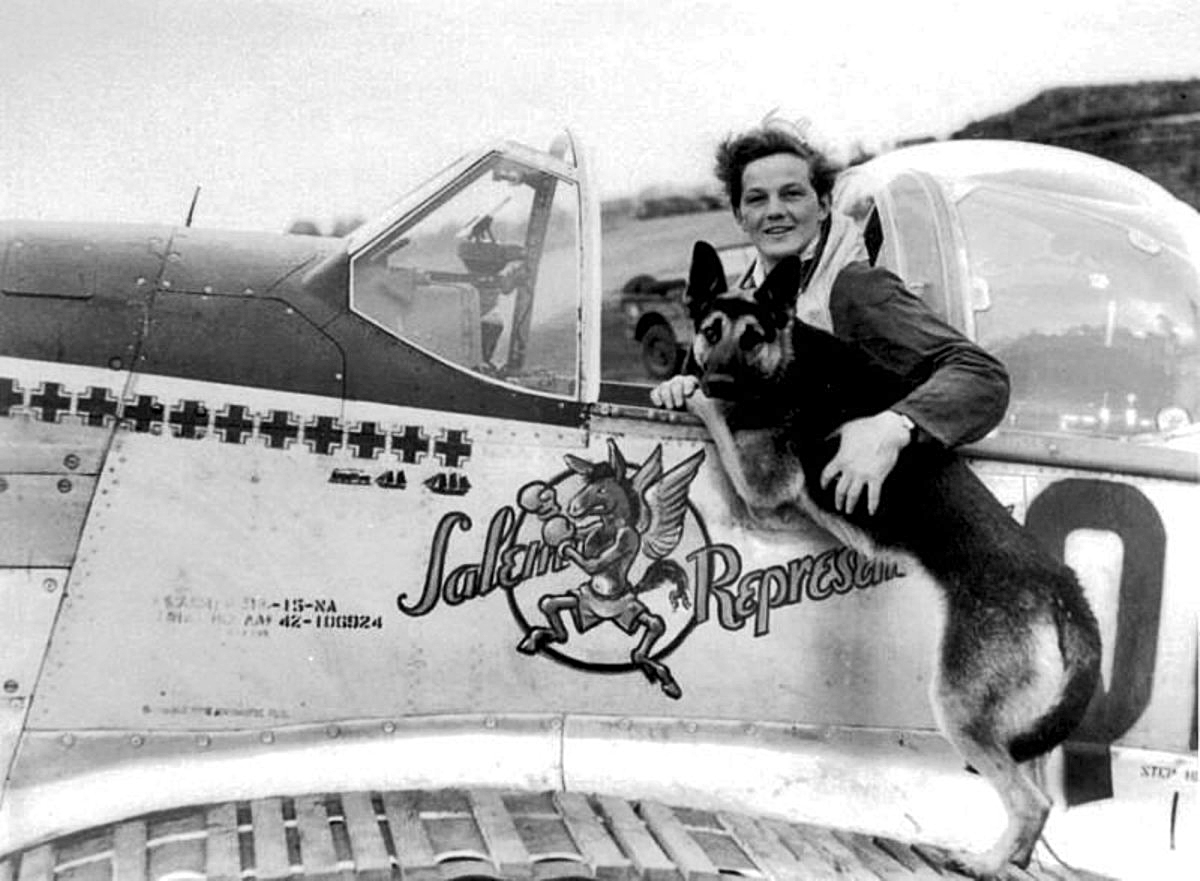
The high stresses of air combat prompted men to adopt a variety of animals for emotional support. Every combat group had an animal mascot, and nearly every hut in every squadron had at least one pet, usually a dog, although there were exceptions as the following photographs show:
The following is an excerpt from my 267,000-word manuscript on the battle for Malta, which remains in work. This post was updated in August 2023. | Header painting above by Rowland Hilder, 1942
When the Italian dictator Benito Mussolini bought his country into the Second World War in June 1940, he did so believing he could wrest control of the Mediterranean Sea from his rivals, Great Britain and France.
For those Italians who dreamed about a new Roman Empire stretching to the oceans, the Mediterranean was mare nostrum (our sea). Only one immediate hurdle stood in their way — the tiny British bastion of Malta, just 60 miles south of Sicily, occupying a strategic place in the narrows of the central Mediterranean, a rocky aircraft carrier from where the British could launch attacks on Italy and her territories and a natural anchorage for their Royal Navy from where it could project power in the region.
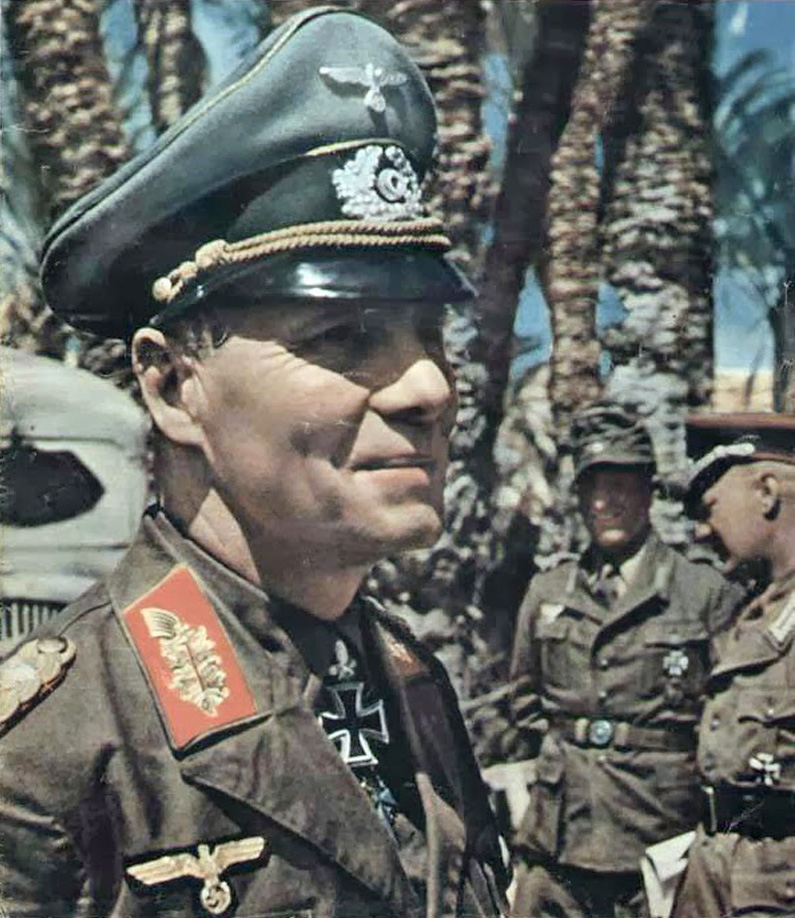
Mussolini was determined to crush the island. But he (and later the Germans) had badly underestimated the fighting spirit of the islanders. Although outnumbered and outgunned, British planes and warships manned by volunteers, veterans and misfits from across the British Empire and the United States harried Axis aircraft and wreaked havoc upon their convoys. This hindered the movement of supplies to North Africa where a skilled German General, Erwin Rommel, was campaigning to seize Egypt and ultimately, the oil-rich territories of Persia.
Adolf Hitler and Benito Mussolini in 1938. (Hugo Jaeger/Time & Life Pictures/Getty Images)
The Axis responded by trying to blast Malta off the map and starve it into submission.
Kept alive through a tenuous and erratic supply line — vulnerable convoys sailing from Gibraltar and Alexandria, Malta hung on, wielding massive influence on the battles raging in North Africa and sparking fierce naval clashes which gutted the Axis merchant fleets and scarred the Italian Regia Marina – that other Royal Navy.
The phrase “naval battles of World War II” may conjure imagery of the Pacific, but more surface engagements were fought in the Mediterranean than in any other place during the war — 50, compared to 36 in the Pacific and 49 in the Atlantic. The siege of the island lasted for nearly two-and-a-half years. The siege eclipsed all the great sieges of modern history (barring Leningrad) as the defenders fought a lonely, heroic campaign, a private little war against the might of two Axis militaries
Over its 900 days of siege, the lonely island began to thwart distant Rommel and preserve the Allied war effort. It found itself confronted by the weightier concerns of saving its people not only from a deluge of bombs but also the prospect of mass starvation as its defenders reached breaking point time and time again.
1940, THE JACKALS
Nazi Germany’s emergence as a military superpower was a result of its conquest of Poland, Norway, the Low Countries and France in 1939-40. However, this feat of military prowess threatened to mitigate the two-decades of Italian empire-building. Such feats by the German dictator, Adolf Hitler, also threatened to eclipse the reputation of Benito Mussolini as the strongest man in Europe.
“Every time Hitler takes a country he sends me a message,” Il Duce complained to his inner sanctum. It propelled Il Duce (as he was known to his people) to embark on a dangerous path to rival Germanic military successes with Italian conquests in the Mediterranean.
It did not help that Mussolini’s relationship with Hitler see-sawed from loathing to love. Despite his suspicion of the Nazis, he could not ally himself with Germany’s great rival, Great Britain, because he had been angered by a British naval blockade as retaliation for his conquest of Ethiopia in 1936. That blockade had been enforced by units operating out of Malta. Neither could he turn to France, whom he regarded as yet another rival for dominion over the Mediterranean. Instead, he forced himself to ally with Nazi Germany, and began making tepid preparations to enter the war in mid-1940.
With France on the back foot and with the British Army hemmed in at Dunkirk by June 1940, Italian military leaders believed that the “state of prostration of our adversaries,” presented Italy with the chance of a quick, short war, in order to stake a claim of the spoils.
Italy, however, was in no shape to make war. The country was heavily dependent on imports from the British Empire, and was bogged down by a corrupt bureaucracy and an inefficient arms industry. Convinced that the war would end in September 1940 with the German conquest of Great Britain, Mussolini made half-hearted plans to contain the British Mediterranean Fleet. His plan was to subdue Malta – a strategically important British base, which, like Italian Sicily, had dominated the central Mediterranean for five centuries.
Malta’s position in the narrows of the Mediterranean made it vitally important – a fact that the Italians and the Germans were quick to recognize. (Akhil Kadidal)
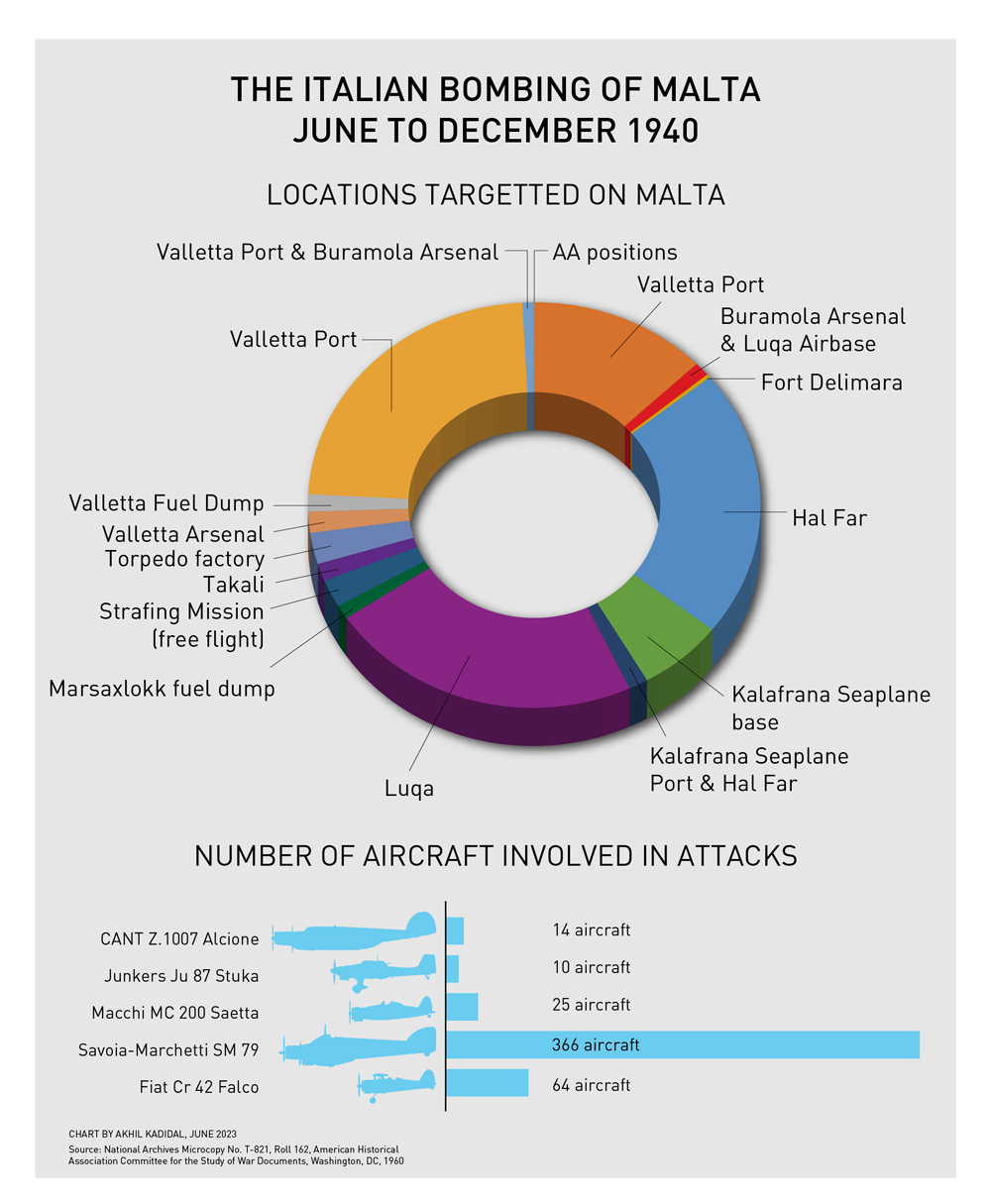
The Italian Air Force (the Regia Aeronautica) recommended pinning the island down with air attacks until the Italian Army could secure Egypt.
The plan seemed sound. But when, on June 10, Mussolini announced his declaration to make war against Britain, and in a speech to the Italian people, described the coming conflict as a clash of ideologies, nationalism versus democratism, and as a “gigantic struggle…of the fecund and the young peoples against barren peoples slipping to their sunset,” ordinary Italians appeared strangely sullen and uninspired.
The declaration of war threw Malta into confusion. Not only were the islanders perplexed by Mussolini’s decision to go to war against the British but few believed that the Italians, their friends and brothers in peace, would attack them in war.
A consumerist culture, the island was in no position to withstand a siege. It imported £5 million (equating to £418.1 million in 2023) worth of goods annually from Britain, and what was worse, it was no position to defend itself. The British Royal Navy having had decamped for Egypt in 1939, followed by the single flight of the Royal Air Force (RAF) based on the island. The island’s military chiefs could count on just a few small warships, a few thousand under-equipped British and Maltese troops, and a paltry collection of anti-aircraft guns for defense.
The island had almost no aircraft and certainly no fighters to thwart the 200 Italian combat aircraft gathering on nearby Sicily. When several crates with Gloster Gladiators, an obsolete type of biplane fighter aircraft were discovered at a naval storehouse, senior British officials on the island ordered their immediately assembly. All this happened even as distant London debated pulling out of the Mediterranean all together. Mussolini’s gamble, it seemed, was on the verge of paying off.
The biplane Gloster Gladiators were unimpressive, seemingly held together by string but the pilots are unanimous in praise of their mounts. Said one pilot, Flying Officer John Waters: “They could turn on a sixpence and climb like a bat out of hell. Other aircraft all had their nasty little ways, but the Gladiator had no vices at all.” Other pilots described the aircraft as a flying tank but the Maltese likened them to donkey carts. (BAE Systems)
As the declaration of war was relayed over the radio on the evening of 10 June 1940, the island’s governing council made a last-minute attempt to place its military forces on alert.
It opened all available air-raid shelters across the island and prepared the population for the possibility of massed air raids. Few Maltese, however, were taken in by the government’s worry. Many islanders were convinced that the islands’ small size made them difficult targets to bomb. A group of Maltese accosted RAF men in Valletta, demanding that they ratify the idea that the odds of a bomb hitting the island were a “million to one.” The airmen agreed. Malta was too small to hit.
Pre-war Grand Harbor at Valletta (Malta’s capital) in relative peace. The deep water harbor was instrumental in making the island an valuable naval base. Much of the fortifications of the harbor front were built by the Knights of St. John, carefully constructed over a period of three centuries. (photo source unknown)
This mentality, in part, prompted the collapse of an elaborate plan by the Governor, Sir Charles Bonham-Carter, to evacuate the residents of the heavily populated Grand Harbor area and the capital, Valletta, to the countryside. But Bonham-Carter was not unduly worried. He knew that the bombs would achieve what his edicts had failed to do so far.
On the morning of June 11, a Tuesday, the Maltese were awoken sounds of gunfire and explosions. The bombing caught the early morning shifts of dockyard and municipality workers in the open. But casualties were relatively low — seven men killed. This raid, the first of eight that day, threw the Maltese into panic. Their sense of vulnerability was made more acute by the fact that their Italian brethren had betrayed them and that the RAF’s quartet of old biplane Gladiator fighters had failed to score.
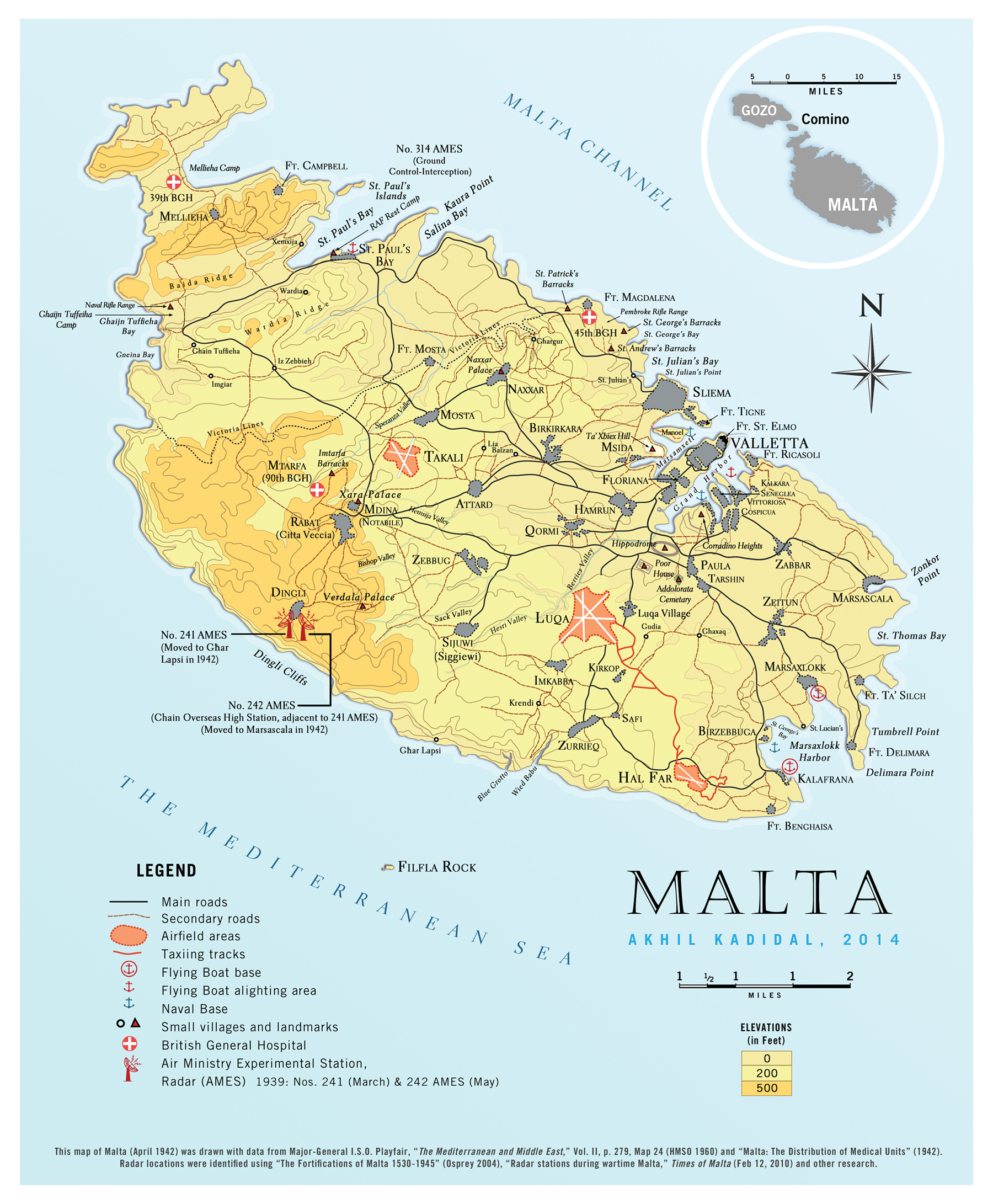
Malta in 1940 was a rocky “aircraft carrier” with three airbases which could support a sizeable number of aircraft. However, the airbases required improvements and enlargement to reach their full potential. The nearly treeless island was vulnerable to bombing but the limestone architecture of its towns, villages and cities would help to mitigate casualties. (Akhil Kadidal)
Great hopes had been pinned on the Gladiators. The first three aircraft were named “Faith,” “Hope” and “Charity.” A fourth, perhaps appropriately, was allegedly nicknamed “Desperation.” The nicknames were said to be the brainchild of Flying Officer John Waters to honor St. Paul’s declaration following his shipwrecking on the island in February 60 AD. In reality, the naming of the Gladiators, like so much of the Malta story, was the product of wartime propaganda and myth. Evidence suggests that a Maltese newspaperman actually coined the names in 1941 — long after the Gladiators had vanished from the scene. Legend claimed that the Gladiator pilots had initial suggested naming the aircraft: “Pip,” “Squeak” and “Wilfred.”
By the morning of June 12, Malta was paralyzed. Streets were deserted. Shops and offices were closed as the Maltese refused to leave their homes. But then something unexpectedly happened. No Italian aircraft appeared that day and the Maltese began an great exodus. As many as 80,000 residents of the Grand Harbor area fled their homes for the countryside, justifying British fears that one of the biggest problems on Malta, aside from the threat an Italian invasion, was internal collapse.
Those Maltese with no relatives in the country sought refuge in recently opened shelters and vigorously embraced the task “of going to ground.”
The Maltese repurposed the island’s old tunnels for re-use as air raid shelters. Conditions were sparse. For children it must have been a world of initial adventure later punctured by intense tedium. (Everett Collection Inc./Alamy Stock Photo)
An Italian wartime propaganda poster shows Regia Aeronautica SM79 Sparviero (Sparrowhawk) bombers raiding Malta. (image source unclear)
When the biplane Gladiators once again failed to halt Italian bombers on the 13th, the island’s RAF chief, Air Commodore “Sammy” Maynard, cabled the Air Ministry in London, requesting modern fighters. The Air Ministry, however, was busy carrying out preparations to the defend the British Isles. German air units were gathering in France to mount what would become known as “The Battle of Britain.”
No aircraft are initially sent to Malta, but the Gladiator pilots finally began to show their mettle when they shot down a handful of Italian aircraft. Overnight, they were heroes, their photos gracing homes across the island, placed next to images of Jesus and Mother Mary.
Mussolini’s optimism over the course of war started to evaporate when the Regia Marina also began to suffer heavy losses in the Mediterranean. Nevertheless, he proceeded with inane domestic policies framed with a short-war timetable in mind. Over half of the army was discharged so that they could return to the agricultural sector while thousands of skilled Italians who could otherwise be employed in the Italian armaments industry, languished without jobs.
By late September, despite his commitments in North Africa, Mussolini still had 80,000 troops available without a war to fight. Instead of commandeering every available ship and packing them with troops to invade Malta, Mussolini sent them east, into Greece, expecting a lightning victory to rival German military conquests in the west. When his son-in-law, Count Ciano, asked him why, he retorted: “Hitler keeps confronting me with accomplished facts. This time, I will pay him back with his own coin.” Malta, he hoped, would simply be acceded to Italy following the German defeat of Britain.
The arrival of General Irwin Rommel in North Africa created a crisis for the British-Commonwealth armies in Libya and Egypt. (Signal magazine)
Within six weeks, the Greeks counterattacked, driving the Italians back and hurling Mussolini’s reputation to new depths. In the deserts of Libya, Mussolini’s armies were cut-off and reeling under the blows of a British counteroffensive. Just when it looked as though Mussolini would also lose his Libyan colony, the British Prime Minister, Winston Churchill, stripped the British desert army of its most experienced units and sent them to Greece.
This ill-timed decision coincided with the assembly of a German expeditionary force in southern Italy under an ambitious German General, Erwin Rommel, who was preparing to reinforce the beleaguered Italians in Libya. Malta, having no offensive weapons, was powerless to intervene.
Neglected by Britain and fast running out of supplies and aircraft, Malta was in crisis by mid-summer. London hastily dispatched a shipment of 12 Hawker Hurricanes, a relatively modern monoplane fighter, plus a three-freighter convoy codenamed MF2 to serve as the litmus test for future convoy runs.
The arrival of the Hurricanes allowed Maynard to form a new fighter unit (261 Squadron). The freighters, however, ran into Italian bombers and suffered damage. They nevertheless punched through to deliver 40,000 tons, which was only half of what is required. In June 1940, Admiral Andrew Browne Cunningham, the Lord Nelson-like chief of the British Mediterranean Fleet, had estimated that two 40,000-ton convoys were required each month to keep Malta up to its pre-war standard of life. A system of rationing should have been introduced at the declaration of war, but the governor and the ruling council had felt that it would not go down well with the population. Now, with just six to eight months’ worth of food left, the island would pay a price for their indecision.
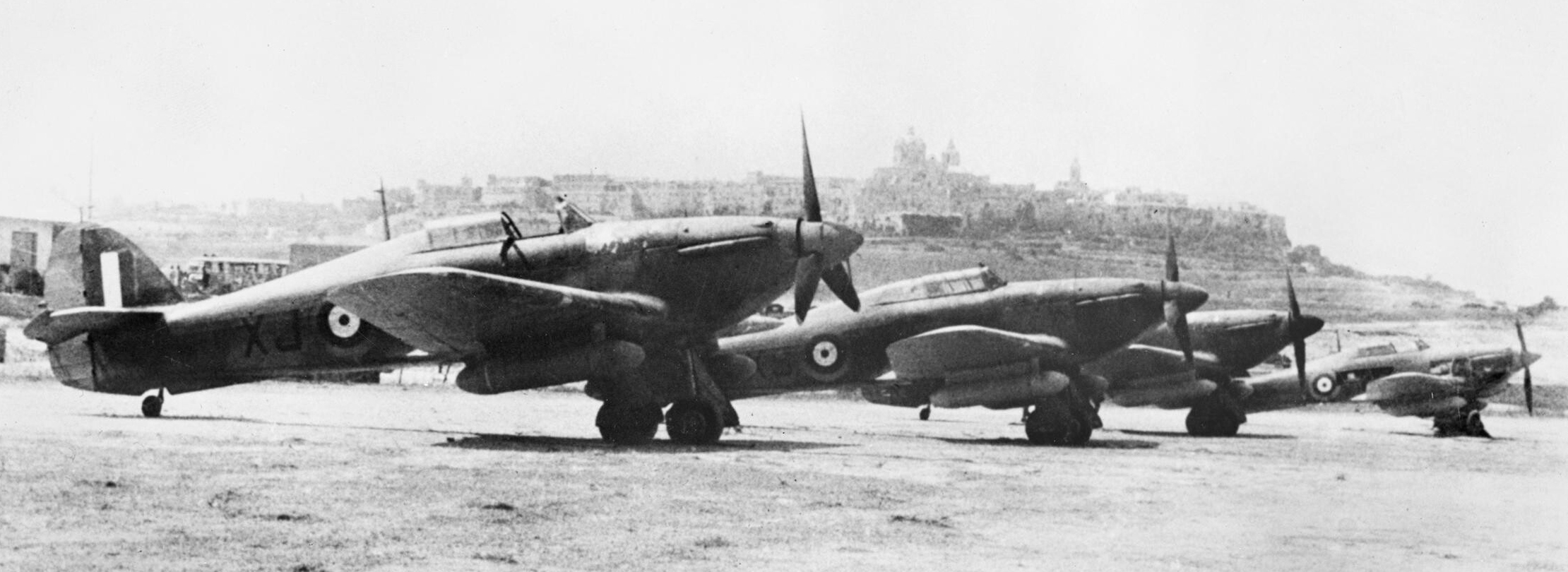
Hawker Hurricanes of 261 Squadron at Luqa air base, at the heart of the island. (IWM CM 2270)
Under pressure from Churchill to knock the Italian Regia Marina out of the war before the Germans could enter the theater of operations, Cunningham intended to use a second Malta-bound convoy (codenamed MB5) to draw out the enemy. The Italians declined the challenge.
Emboldened by their lack of resolve, London began to stream reinforcements to Malta, including reconnaissance aircraft to monitor sea lanes and Italian harbors, medium bombers to bomb Rome and Naples in retaliation for the Italian invasion of Greece, coastal aircraft to hit their navy and more Hurricanes plus anti-aircraft batteries to defend the island.
These arrivals came at a time of declining air attacks (there were just 18 air-raid alerts on Malta in December 1940, compared to 53 in June). When a third supply convoy (MF3) arrived that November, bringing in additional weaponry and normalizing food stocks on the island, Cunningham was free to focus on a decisive strike against the Italian Fleet. He hoped this would render the British masters of the Mediterranean.
Dusting off an old attack plan first proposed in 1935 at the height of the Abyssinian Crisis (when it looked as though Britain might be in a shooting war with Italy), Cunningham moved his newest aircraft carrier, HMS Illustrious, 300 miles off Italy. The intention was to conduct a daring raid to sink Italy’s capital ships at their moorings at the great naval harbor of Taranto, on the heel of the Italian “boot.”
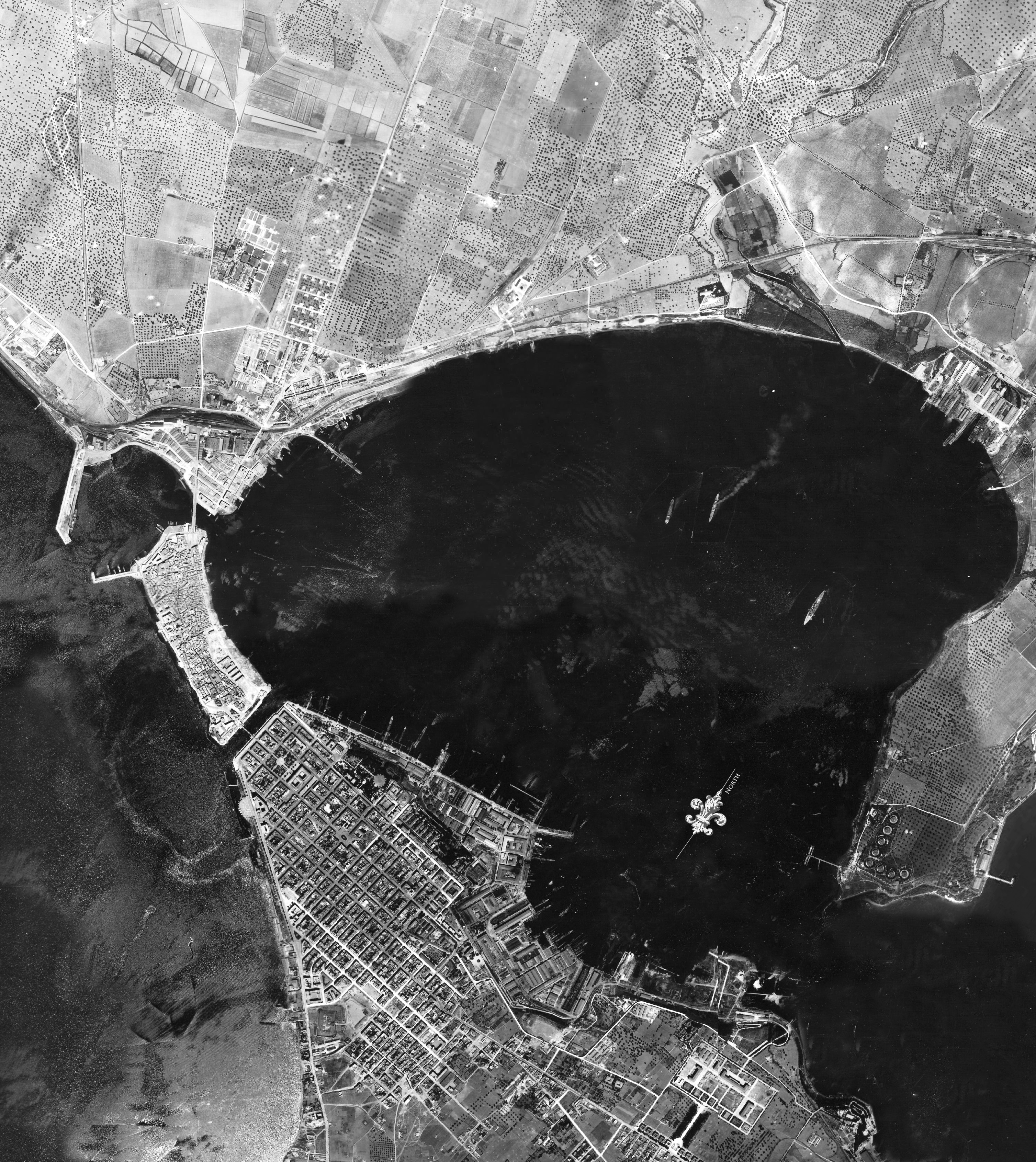
A reconnaissance image of Taranto harbor in 1941.
Two dozen Fairy Swordfish biplane torpedo-bombers launched from Illustrious after nightfall on November 12. Despite the fragile nature of the antiquated Swordfish, the raid was a spectacular success.
In a single night, three of Italy’s battleships were put out of action, one permanently. The Conte di Cavour lay beached in the shallows, her decks awash. The Caio Duilio was out of action for six months and the Littorio was partly sunk. She was destined to spend the next five months in a dry-dock. One cruiser, the Trento, leaked oil and two destroyers, the Libeccio and the Pessagno had their hulls fractured. Two auxiliary ships were also damaged. The seaplane base and the oil storage depot were in shambles. Overnight, a mere 20 obsolete biplanes had altered the balance of naval power in the Mediterranean. And the price for this endeavor was two Swordfishes lost.
In London, a cockney newspaper seller announced the news: “Eyeialian fleet done in. No more macaroni.” But the attack would prove not to be decisive. Two of the crippled battleships would return to active service in a year’s time.
The strike served as a glaring demonstration of the battleship’s supersession as the primary naval weapon by aircraft and aircraft carriers. The British Admiralty was slow to grasp this lesson, although the Americans and the Japanese had not. Days after the raid, amid the great scenes of destruction, a diminutive man could be found trawling the ruins, writing in a notebook, his face congealed in concentration and study. He identified himself as Lt. Takeshi Naito, assistant air attaché at the Japanese embassy in Berlin. The implications of the raid were clear to the Japanese who were ready to apply the same lessons to another shallow-water harbor on the side of the world — Pearl Harbor.
As 1940 came to a close, Malta was socked in by a rare snowstorm. This, coupled with a temporary cessation of Italian air raids in recognition of Christmas, prompted authorities to lift the curfew. Music halls, cinemas and bars across the island reopened for round-the-clock business.
Fliegerkorps X order of battle in March 1941. (Akhil Kadidal)
The Maltese thronged the streets of every village, town and city. Both sides were in such détente by the end of the year that an RAF intelligence officer on Malta regularly called his counterpart in Sicily to discuss the events of the day. New arrivals from Britain, especially new, battle-hardened veterans of the Battle of Britain, were unimpressed. Many were openly contemptuous of the casual nature of operations on the island.
“It is hardly a serious business or warfare like the Battle of Britain,” said one pilot, Sgt. Cyril “Bam” Bamberger.
A sense of contempt also pervaded Germany over the blitheness of their Italian allies. The German propaganda minister Josef Göbbels angrily wrote that the Italians were millstones around German necks, having “brought the entire military prestige of the Axis crashing down in ruins.”
A German air corps, Fliegerkorps X, was transferred from Norway to Sicily to help regain control of the skies over the central Mediterranean and allow Rommel’s command, the Afrika Korps, to reach Libya unimpeded. The fighting prowess of the Italians was already suspect, notwithstanding the fact that their existing fighters, notably the Macchi C.200, were out-matched by Malta’s new Hurricanes.
General Hans Geisler of Fliegerkorps X decorates one of his men in the Mediterranean. (Signal magazine)
Under General Hans Geisler, Fliegerkorps X began deploying to Sicily from 10 to 14 December. Over Greece, Italian fighter units had been able to claim a two-to-one victory-to-loss ratio. Over Malta, these ratio had slipped badly in favor of the RAF. The arrival of Fliegerkorps X prompted the Italian Regia Aeronautica to rest its crews. Many Italian aircraft on Sicily were withdrawn to the mainland. This was initially a setback to Fliegerkorps X. The Germans did not have enough short-range reconnaissance planes on Sicily and their strength was slow to build up. On 9 January 1941 — a day before Fliegerkorps X officially began operations against Malta — Geisler had only 156 planes on Sicily. By early March, however, aircraft strength had reached 510 planes, of which roughly 340 were combat ready.
Their presence made an immediate difference and escalated the scale of the combat against the island. Geisler used fast German Junker Ju88 medium bombers, backed up by Italian Savoia-Marchetti SM79s to bomb Malta from high-altitude.
The days of Malta’s private little war were about to become a thing of the past.















































 Achilles the Heel